The Winding River
With daring corners, luxurious villas, and a breathtaking landscape design, Magarigawa is Japan’s ultimate private racecourse. The Porsche GT Circle provided 20 drivers from nine countries with exclusive access to this work of art and embodiment of Japanese harmony.
They feel like the chosen few – informed and up to the task. Having studied the site plans, logistics, and aerial shots, they believe they have what it takes mentally, physically, and technically to conquer and prevail. But it all comes down to fortune and fate. And so they log in to the Porsche GT Circle portal from all over the world at 5:00 p.m. Central European Time. Only the first 20 to register will be given the extraordinary opportunity. “All I could do was hope and pray,” recalls Olivier Reimann of Belgium. “But then bingo!” And now he’s headed for his dream destination, Magarigawa, the “winding river” and the holy grail of Japanese racecourses, located along a country road through fields of rice and villages an hour and a half south of Tokyo.
Asia’s green hell:
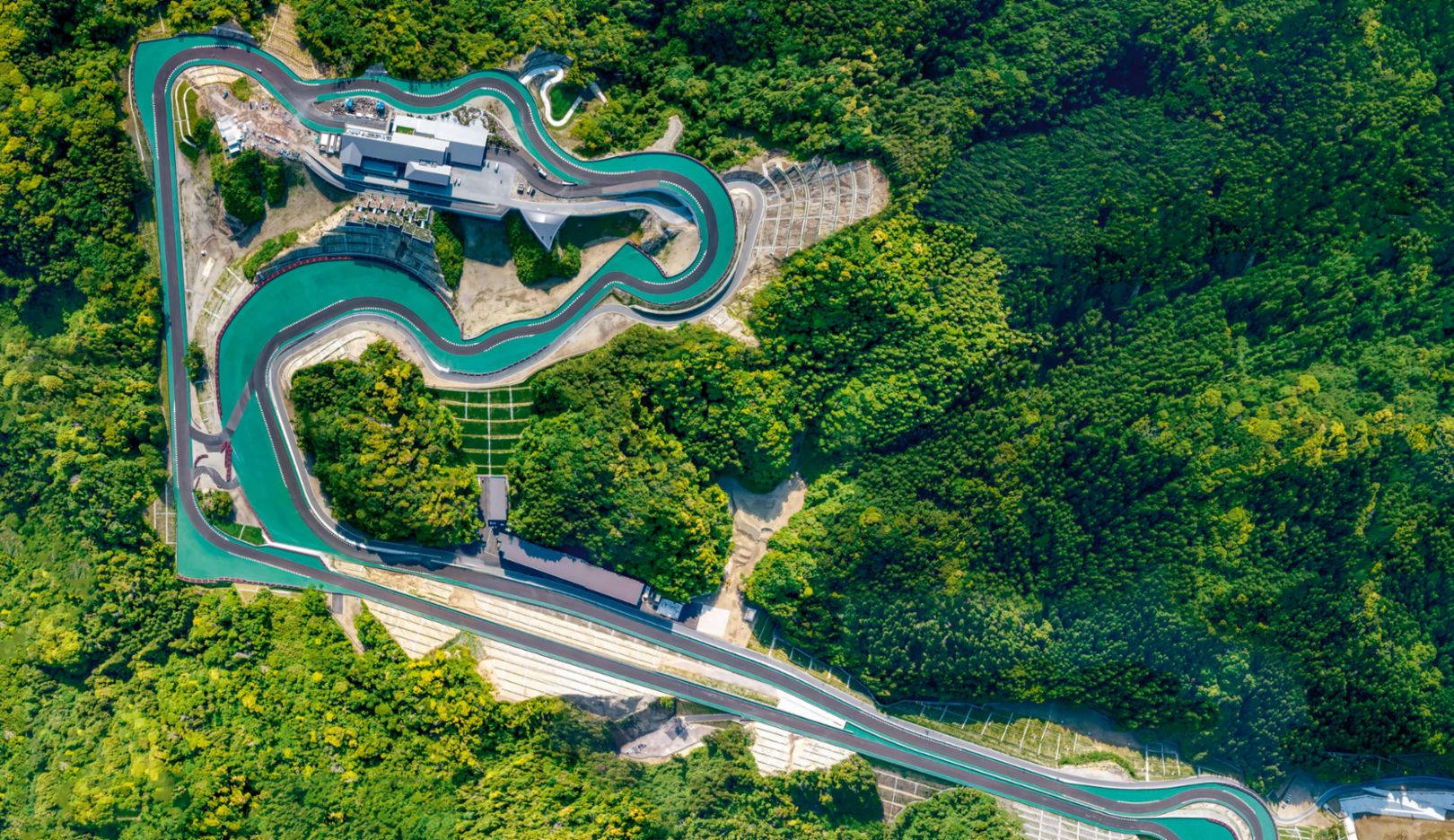
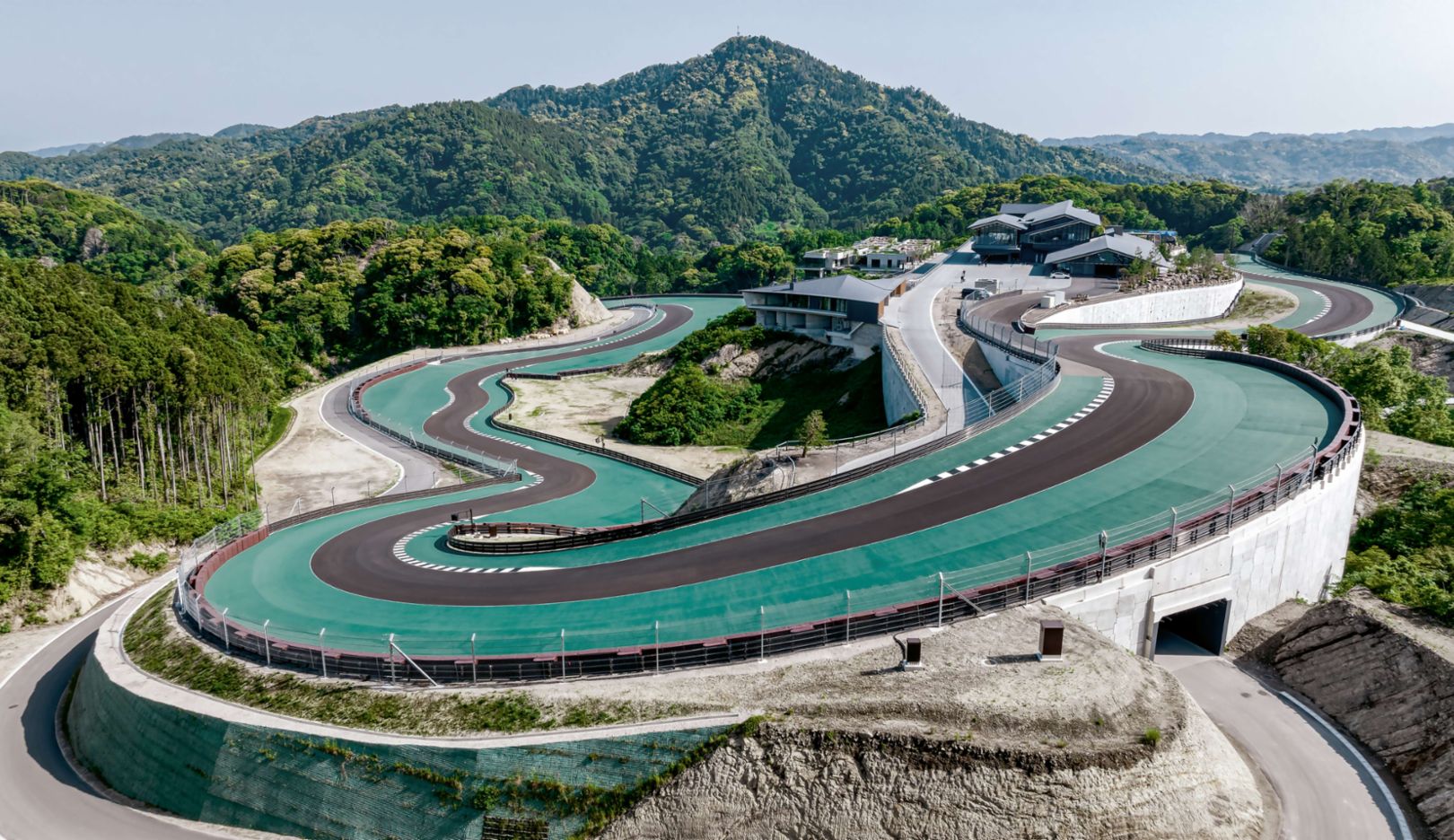
Seen from the air, the private Magarigawa racecourse is reminiscent of Nürburgring due to its natural surroundings. The 3.5-kilometer circuit was designed by Hermann Tilke.Racecourse specifications
Length: 3.5 kilometers
Corners: 22
Longest straight: 800 meters
Uphill: 20%
Downhill: 16%
Elevation change: 250 meters
Top speed: 280 kmh
Approaching a legend
Behind him is the Porsche caravan with the rest of the 20 globe-trotters. “I can’t wait to see what’s in store for us this time!” says the Vice President of Porsche Club Belgium. Reimann, who has motorsport in his blood, has already explored many international racecourses, including Nürburgring, BILSTER BERG, and Silverstone. But Magarigawa? It just might be a legend. We turn off into a narrow tributary valley, its steep slopes adorned with scrub, ferns, and gnarled trees. The morning fog clings to the moist asphalt, mingling with the deep roar of the engine between the wheels. “Yes, yes, fate,” says Reimann. “When we were expecting our first child, I told my wife, ‘If it’s a boy, we’ll name him Ferdinand, in honor of the legendary engineer.’ And my wife said, ‘OK, and if it’s a girl, her name will be Mercedes!’ It was a boy, and our loyalty to Porsche was sealed.”
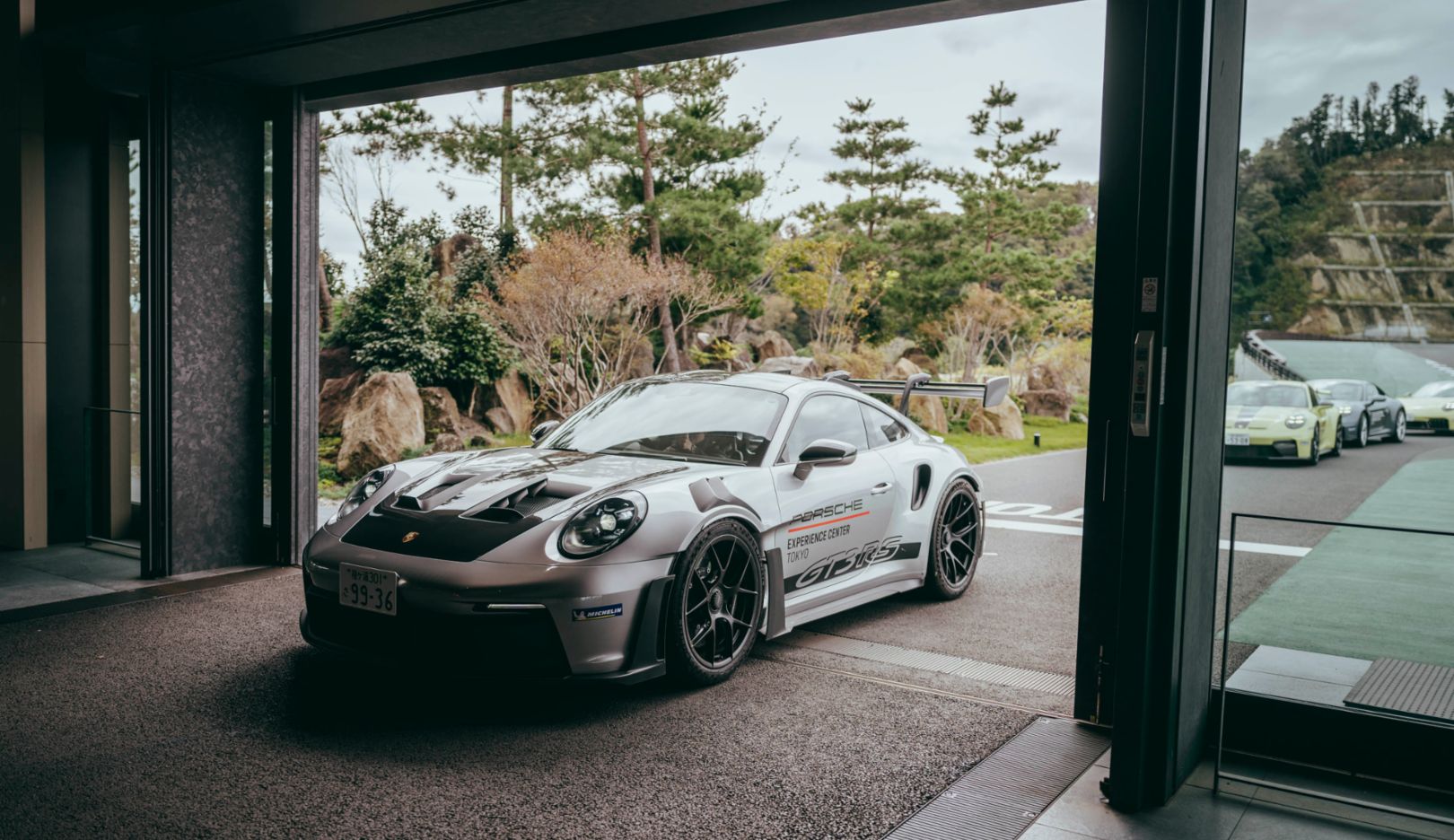
The darkness of the forest gives way to light as they reach the site entrance, with its steel gate, camera, and intercom. Reimann sticks his head out the side window of the 911 GT3 RS (992) and calls out in the stillness, “Porsche GT Circle!” The entrance gate rolls off to the side and the cars proceed. Behind the metal fence, which keeps the undergrowth at bay, there are winding, towering concrete walls with a honeycomb pattern – and in front of it, manicured lawns, delicate maple trees, and, seemingly at random, bizarre boulders covered in soft moss. We reach our destination, but there’s no sign of the 3.5-kilometer racecourse, the 22 curves, the club, or the hotel.
On the edge:
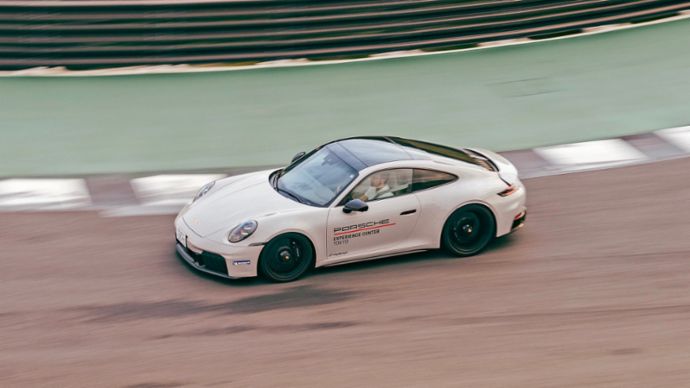
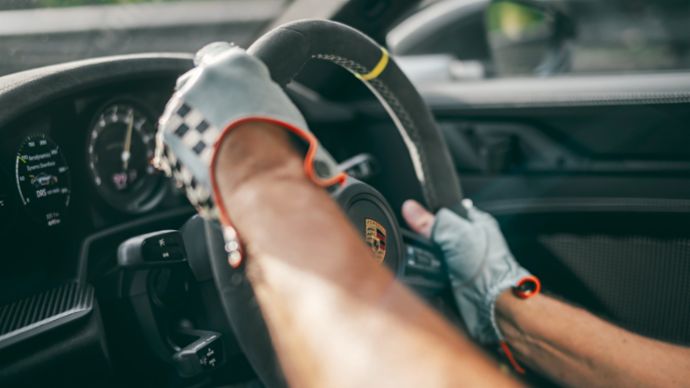
To navigate the 22 curves of Magarigawa safely and precisely, the participants wear special racing gloves, among other gear.We continue up a steep climb for another six minutes before reaching the crest, where a vast blue sky suddenly fills the windshield. Thick catch fences set into concrete ramps conjure images in the mind: a high-security prison, an international summit meeting, or James Bond. Why 007? Because the sleek, minimalist structures on the horizon could be mistaken for the secret lairs of Dr. No or Goldfinger. Once they reach the plateau, the sports cars line up in neat rows and park. A 911 GT3 RS (992), a 911 Carrera GTS (992), a 911 GT3 with Manthey Kit (992), and a 718 Cayman GT4 RS – all ready for a car chase worthy of the silver screen. An Australian climbs out of his 911 GT3 RS and introduces himself. “Hale. Mike Hale.” He seems to think he’s in a Hollywood movie, too.
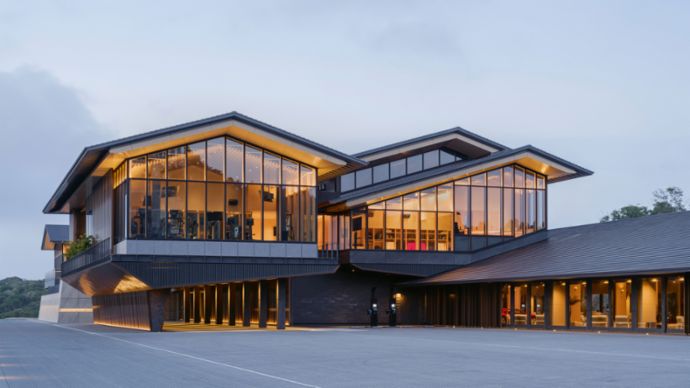
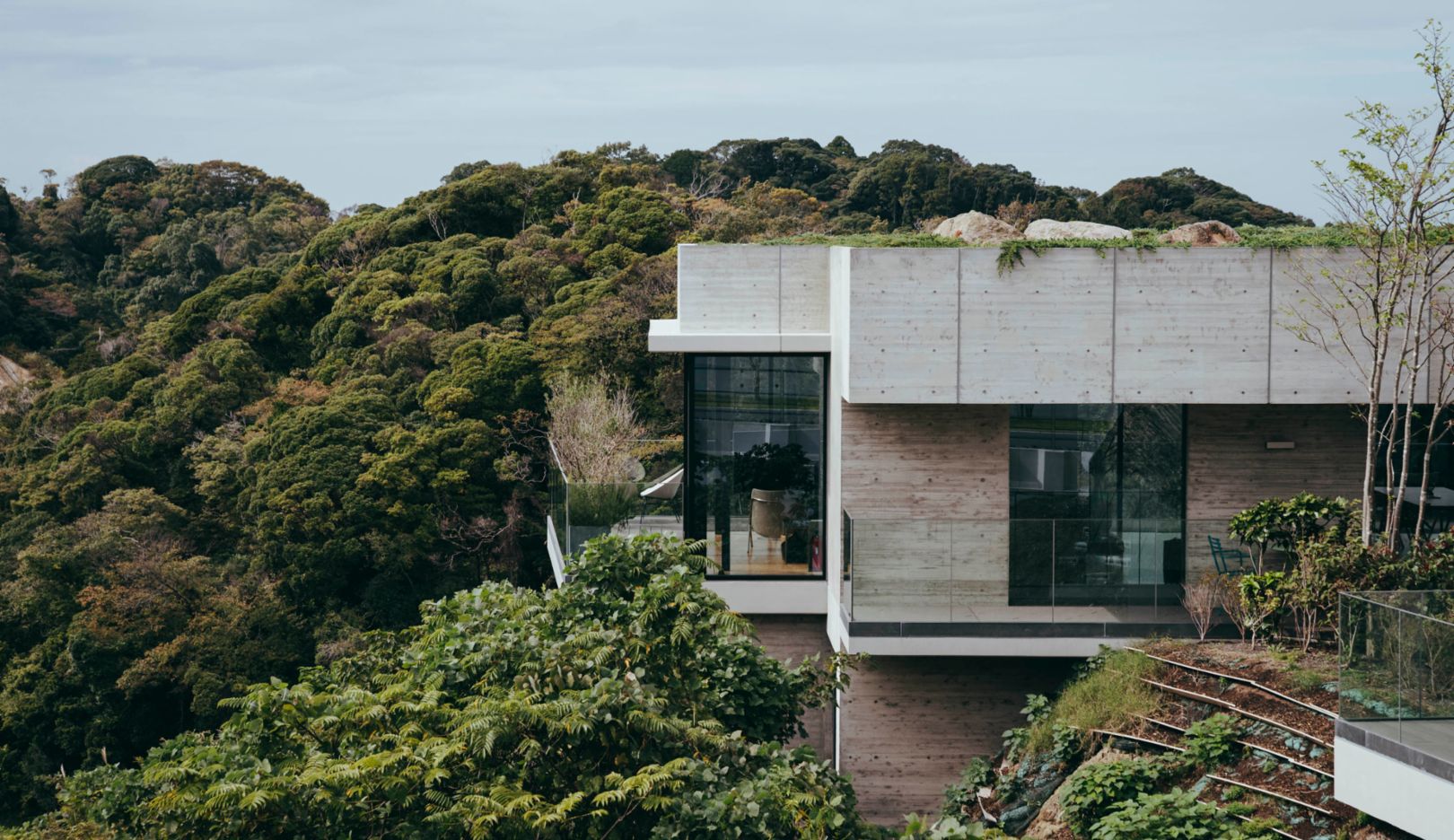
After a construction period of two and a half years, Magarigawa opened its doors on July 29, 2023, with a “festival of driving culture.” Around 3,500 fans got together to celebrate, surrounded by 500 sports cars, all of them shining examples of the Magarigawa collection. The exclusive private club is not a racing operation in a traditional sense. There are more than 400 members, 80 percent of them Japanese. A total of 70 members of staff maintain the clubhouse with restaurant, lounge, pool, thermal bath, and driving simulators. Ten guest villas with a view of the racecourse elevate the complex to an immersive world with the comforts of a spa.
Wellness just off the course:
The Magarigawa control center is located inside the clubhouse, where futurism and the interior design reflect Japanese aesthetics. Engawa, the founding principle of Japanese spatial design, has also taken hold in the thermal bath, where nature melds with the interior architecture (below).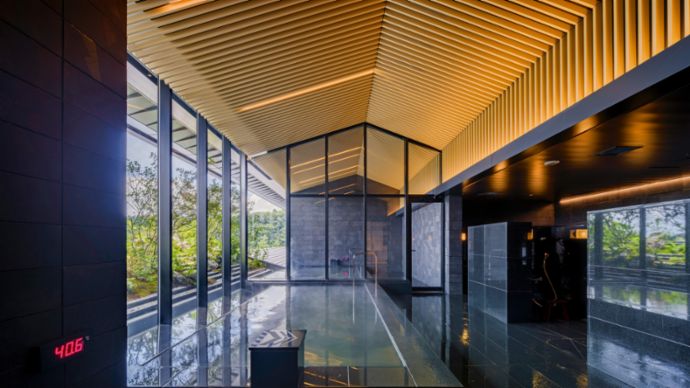
But whose idea was it to transform a square kilometer of wilderness into a luxurious racecourse resort for around 200 million euros? The initiator and owner is the president and CEO of a company that deals in European luxury cars and industrial plants, among other things. His Japanese modesty demands that he remain anonymous. In his stead, his work of art, Magarigawa, speaks for itself, blending harmony and joie de vivre with moments of awe and mindfulness. Existence is fleeting, but here it seems to stand still, feels close enough to touch, and leaves worries far behind.
Mike Hale, the Australian from Sydney, would agree. He folds his arms and turns slowly in a circle, like the falcons above him. The panoramic view extends all the way to Tokyo Bay and Mount Fuji, Japan’s holy mountain. Hale, who has trained in three different careers, takes in his surroundings. “A sculptural object with blasted rock faces – it reminds me of the ‘land art’ movement in Arizona and New Mexico. And the black and green dragon serpent, the race circuit, a bridge between nature, purpose, and design,” says the architect. “Risk and fun all in one? Seems pretty complex to me,” he argues, donning his lawyer hat. And the philosopher in him is moved by the boulders scattered around as if at random.

Paddock:
Behind the door of the opulent garage, GT Circle participants are getting ready for the driving sessions.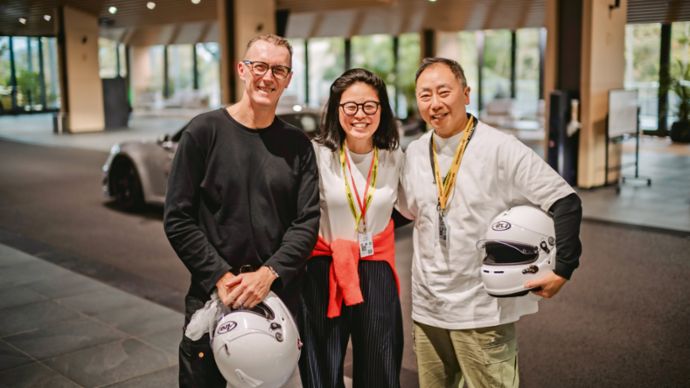
From community to friendship:
Australian Mike Hale, and Li-Yu and Anthony Kam, Chinese from Hong Kong (from left to right), met at the GT Circle event on the winding course.Hale knows what they’re doing here. Developed over centuries, Japan’s sense of beauty respects stones as creatures with a soul, their shapes molded over the eons by wind, river, and volcano. A prize find for trained rock hunters who often spend years searching on behalf of discerning collectors. Distance doesn’t matter in the least, as many of the heavy rocks end up at the other end of the kingdom, like here in Magarigawa.
The landscape architect Hachiro Sakakibara, who despite his 80 years is still internationally active, arranged them, as if on a stage, in the garden world he designed himself. The concept is a reflection of the stringent rules of Ma, the Japanese space concept, as well as his gut instinct. “I took every aspect into account, from the sky, the mountain range, and the flat roofs of the villas to the angle and orientation of the giant rocks surrounded by plants,” he explains. “I first decided instinctively how to suspend the colossal boulders from the crane, and then conducted the lowering maneuver much like a concertmaster.” Sakakibara’s last name, which basically translates to “holy evergreen tree in the field,” makes him the perfect fit for the job. While he was responsible for the microcosm of the landscape, the 71-year-old German civil engineer and project developer Hermann Tilke was in charge of the Magarigawa macrocosm. Tilke’s career path is paved with 80 international racecourses, which he either modified or rebuilt, including 20 with Formula 1 specifications. What proved to be a great help was his experience as a race car driver – one who never shied away from challenges, not even 24-hour races at circuits like Nürburgring and Bathurst. With 150 employees and branches in Germany, China, Mexico, Bahrain, and the US, his company builds apartment complexes, hotels, and administration buildings.
Harmonious design:
The 3.5-kilometer racecourse blends in perfectly with the topography of the surroundings. The route through the mountainous landscape is reminiscent of Nürburgring Nordschleife.Japanese romanticism
The guests receive a warm reception at the front desk in the clubhouse. The staff are dressed in black pantsuits, with not a single hair out of place, and have eager, welcoming smiles on their faces. Mathias Menner of the Porsche Community Management receives the guests. He initiated this journey, too, for the Porsche GT Circle. With his modest demeanor, ready ear, and humorous advice, it’s plain to see that he’s no stranger to Japan. Quiet and unobtrusive, he simply keeps watch over the proceedings.

The heroes and their helmets:
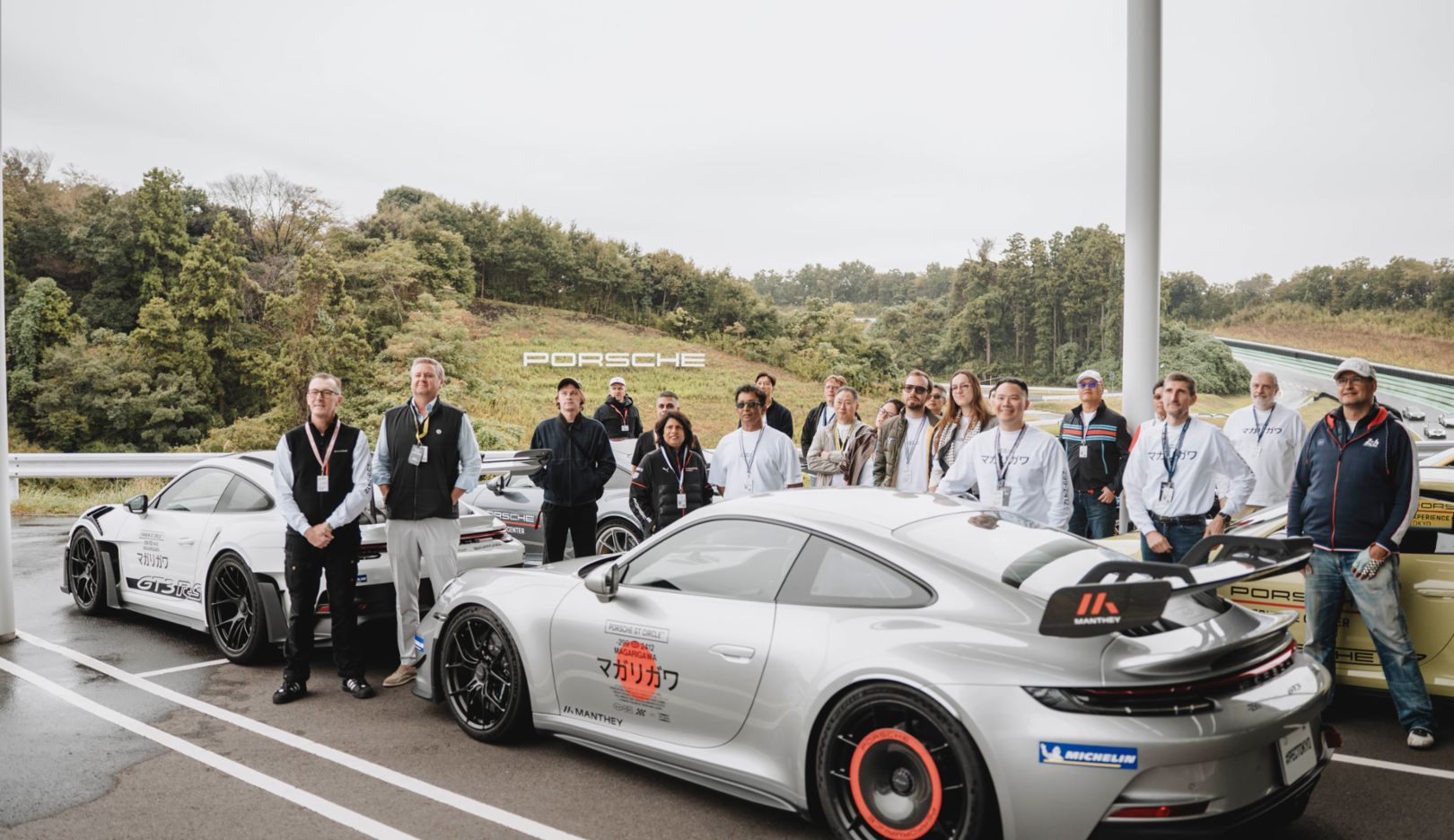
The warm-up comes with additional lessons. Indiran Padayachee (2nd from left) listening to the instructor, with the Magarigawa-design racing helmets raring to go (below).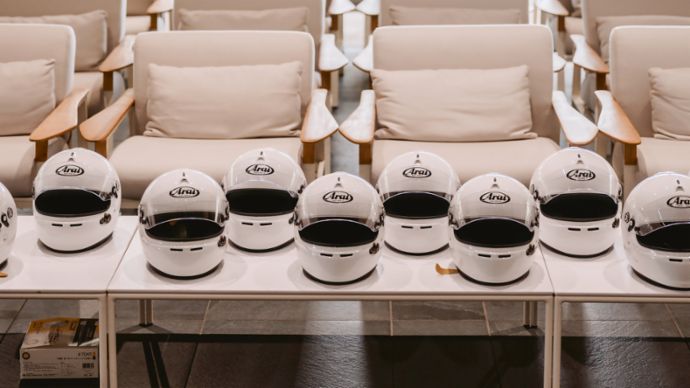
The GT Circle is active around the world and organizes extraordinary driving events, allowing the community to share their passion for Porsche as well as their experiences with high-performance driving. Exclusive access to Porsche experts, a global network, and events with a familiar touch take the experiences to a whole new level. Every owner of a GT vehicle can register in the GT Circle using their vehicle identification number. The program also features track days, plant visits, premieres, design and technology briefings, road trips, simulator sessions, and selected lifestyle and hospitality formats. Spectacular motorsport events like those at Magarigawa offer the ultimate experience – for an extraordinary community that’s approachable, intimate, and driven by performance. “One of our fans is celebrating an anniversary today,” Menner says. “‘Congratulations’ still needs to be written out in chocolate on the plate.”
The clubhouse lobby is illuminated in a muted light, with the understatement of a museum installation. The lack of a ceiling draws the eyes upward, where, in its place, there’s a blackish grey 12-meter-tall sculpture with thousands of bamboo weaves that resemble a cloud of fine fishnets and organically shaped loudspeakers. The Japanese bamboo artist responsible for the sculpture is Hajime Nakatomi. A glass-framed staircase clings to the wall as it makes its way down to a black stone of immense weight, yet another rock that has somehow made the journey to Magarigawa. Worn smooth over millions of years and unearthed from a riverbed, it now finds itself in the age of man, serving as a stepping stone. Naturally formed white veins of quartz flow through the rock much like the racecourse meanders through the landscape, paying homage to the Magarigawa name. The word “gawa,” which translates to “river,” in the second half of the name is rendered in abstract form in Japanese in the logo.
Credo behind the wheel:
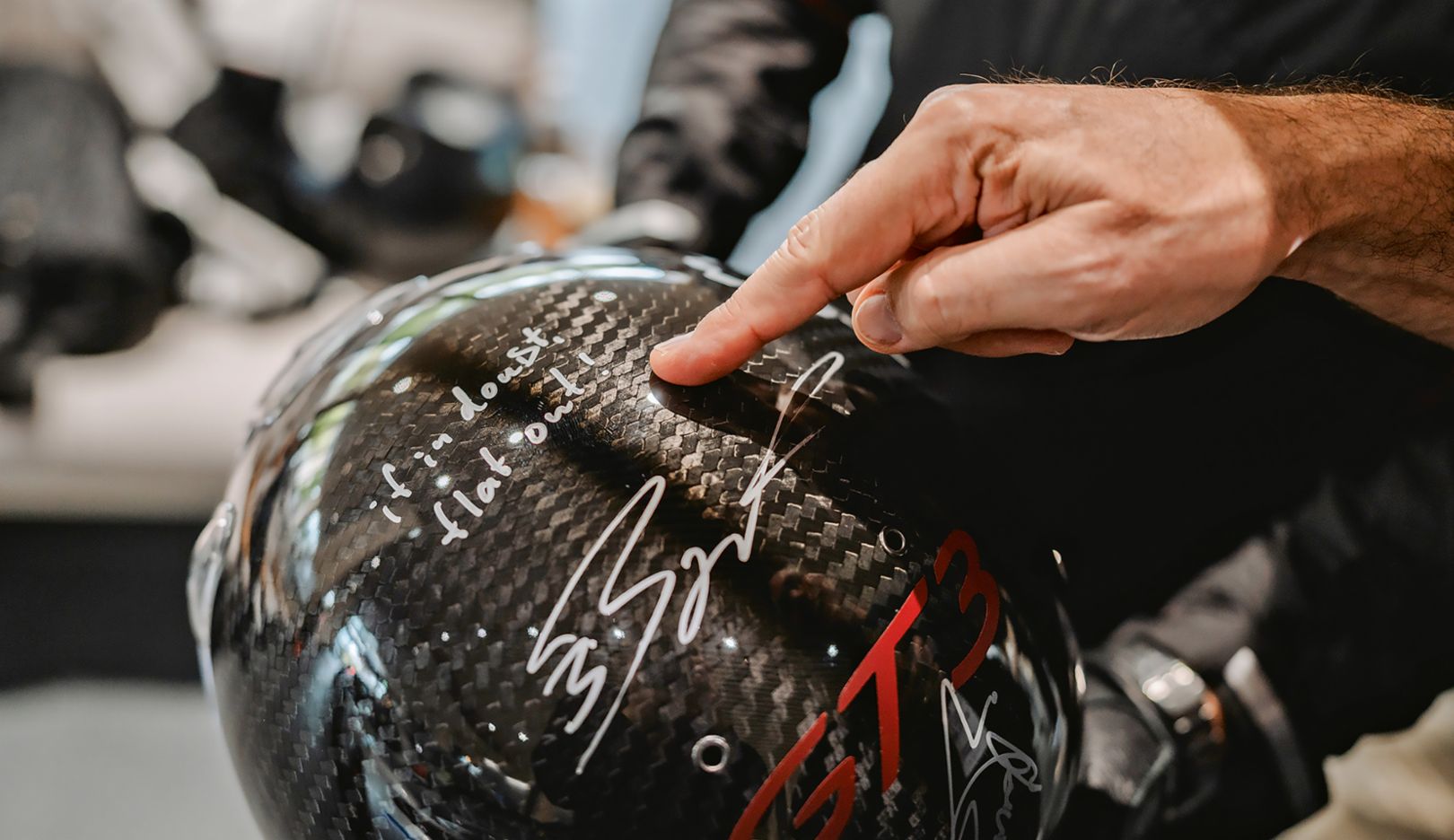
“If in doubt – flat out!” – the guiding principle is always present.Anthony Kam and his wife Li-Yu, Chinese from Hong Kong, step onto the gentle behemoth with almost a sense of reverence. Like the Japanese, they cherish the visual power of their characters, which were adopted by Japan. Once on the second floor, the couple encounters a wide glass front, where interior design and the outside world meld together in the spirit of engawa – the founding principle of Japanese spatial design. It’s the buffer zone between nature and indoor living. The transition between them is intentionally seamless, even merciless, whether it’s tropical summer or ice-cold winter. To this day, sliding paper screens are still the ultimate barrier in traditional Japanese houses, gossamer-thin and white as snow. Of course, the temperature is always pleasant in the elegant dining room at Magarigawa. But the illusion that it extends to the infinity pool and beyond to the racecourse and world of plants and then all the way to the mountains is pure Japanese romanticism.
Eager to test his skills on the 22 curves, Anthony Kam grows impatient. As does Bernhard Krönung. You can tell just by looking at the German with the white beard that nothing fazes him. He’s the senior manager of a security company. “My father was a car mechanic in the 1950s and even back then had the opportunity to work on Porsche engines. That’s where my passion comes from. My everyday car is the Taycan Cross Turismo. But I drive the 718 Spyder on sunny days and take the 944 S2 to classic car events.” Joined by Anthony and Li-Yu Kam, Krönung makes his way down to the paddock next to the lobby.

The chosen few:
Olivier Reimann, Vice President of Porsche Club Belgium, and Bernhard Krönung, senior manager of a security company based in Germany (below), are two of the 20 GT Circle members gaining exclusive motorsport experience at Magarigawa.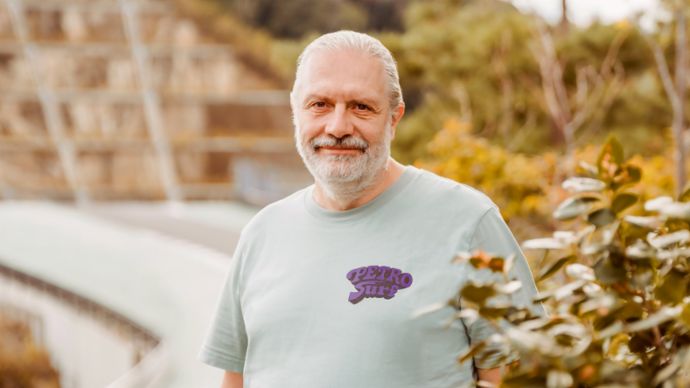
Straight up into the clouds
Hot tires fill the air with the smell of rubber, as 20 engines unite in a symphony of sound. Olivier Reimann and Mike Hale complete the hot laps without incident under the supervision of the instructors. The day before, there was a warm-up at the Porsche Experience Center (PEC) in Tokyo, where the racecourse featuring elements of Suzuka, Nordschleife, and Laguna Seca is shorter than Magarigawa, but also offers training zones, including a drift circle, an off-road course with a steep descent, and flooded low-friction surfaces. There are currently 10 PECs worldwide, which provide the opportunity to gain some initial experience on the racecourse. “I wasn’t prepared for the emotional effect of Magarigawa,” says Hale, once again the philosopher. “Focused, in the flow, surrounded by harmonious landscape design – I was almost driven to tears at 250 kmh in the 911 GT3 Manthey.”
“Come on, get in! You just might have your own out-of-body experience today!”
Indiran Padayachee
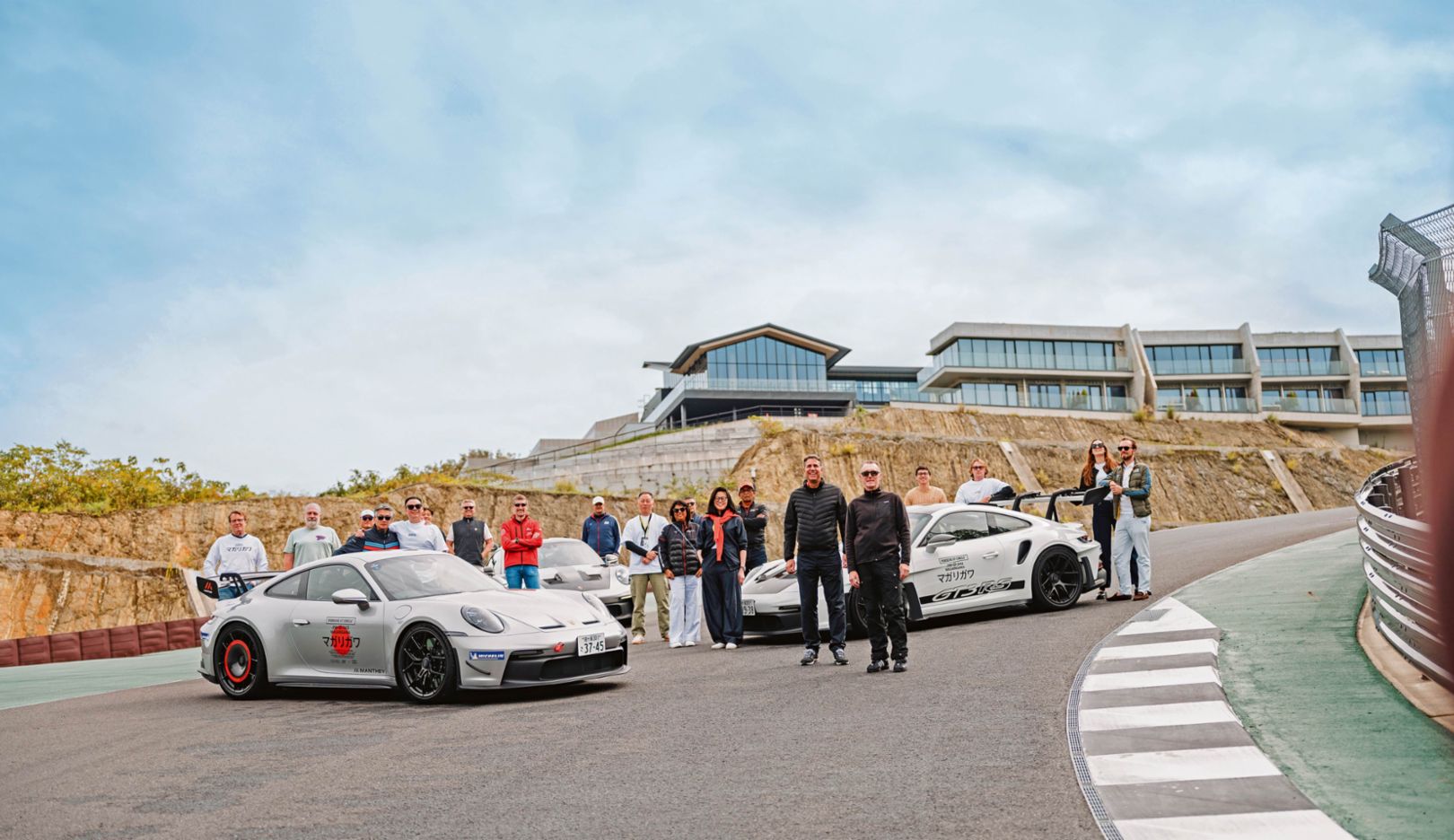
In search of the racing line:
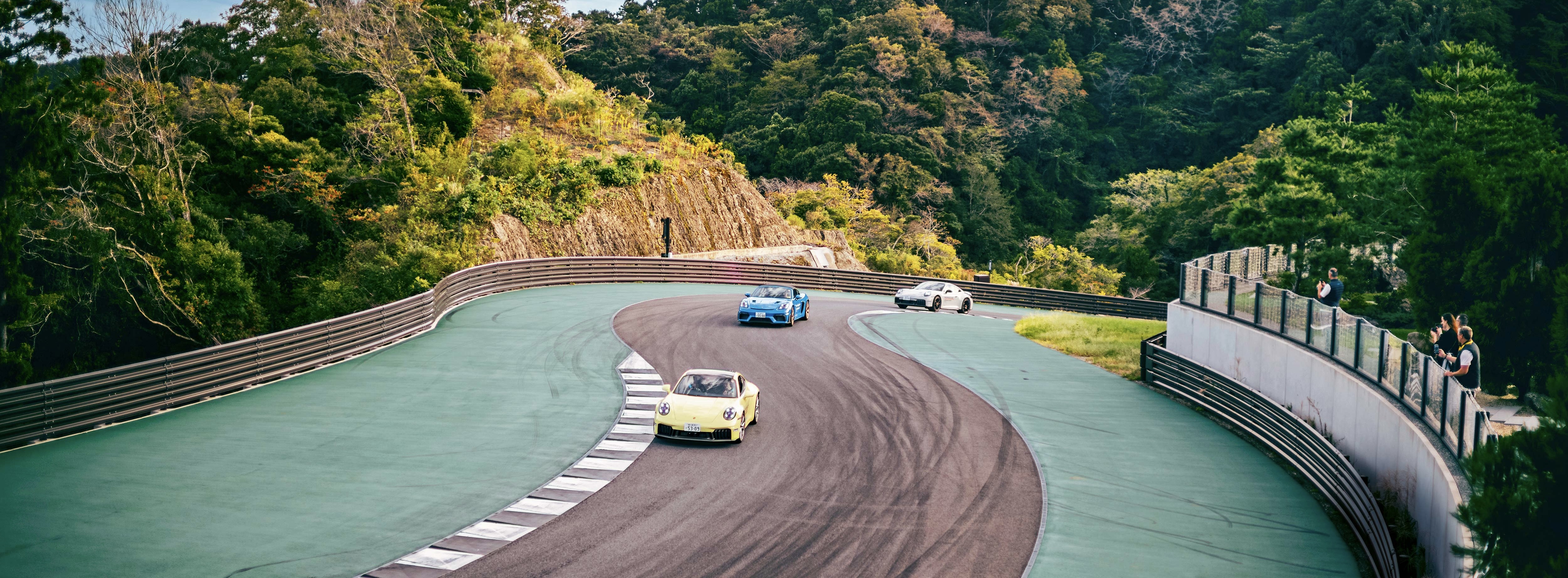
Theory, then practice. The track walk provides participants with the opportunity to get acquainted with the course.Indiran Padayachee, who comes from India, nods in agreement. Hills and valleys in short succession and elevations of up to 250 meters combine with extreme curves, catapulting him into a transcendental state of mind for seconds at a time, as he says. “Come on, get in! You just might have your own out-of-body experience today!” The course begins with a 180-degree curve, before transitioning into two straightaways. Padayachee steps on the gas – the g-forces are overwhelming in the tight corner – and then loops around in the opposite direction. The greenery, the concrete slopes, the mountains, the sky – everything’s a mix of pastel colors. He reapplies the brakes, zigzags up the hill, shoots past the villas, and goes full throttle through the off-chamber curve up to the highest crest. Here, it feels like you’re driving blind straight up into the clouds, hoping that a car hasn’t stopped on the course ahead. “So, how was it?” asks Indiran Padayachee with a laugh. “I think we can skip the driving simulator.” He takes a stroll to the Magarigawa villa with roof garden reserved just for him. It’s early in the day, but there are so many activities to choose from. Hot spring? Karaoke? Wellness spa? He enters the hallway, where a 911 GT3 with Manthey Kit glistens in a huge glass case. He continues into the living room and takes a deep breath, a brief respite before diving headfirst again into the meandering river that is Magarigawa and taking full advantage of the course. He pauses momentarily at the window front and sees Mount Fuji towering over the racecourse far off in the distance. Engawa in its purest form.


Exclusive experience program
Download the GT Circle app here. You can register using the Porsche ID and vehicle identification number.