The Next Generation
Porsche Formula E pilots will have a new model, the 975 RSE, for the coming season. Christophorus took a deep dive into the technical development of the GEN4 race car at the Weissach Development Centre.
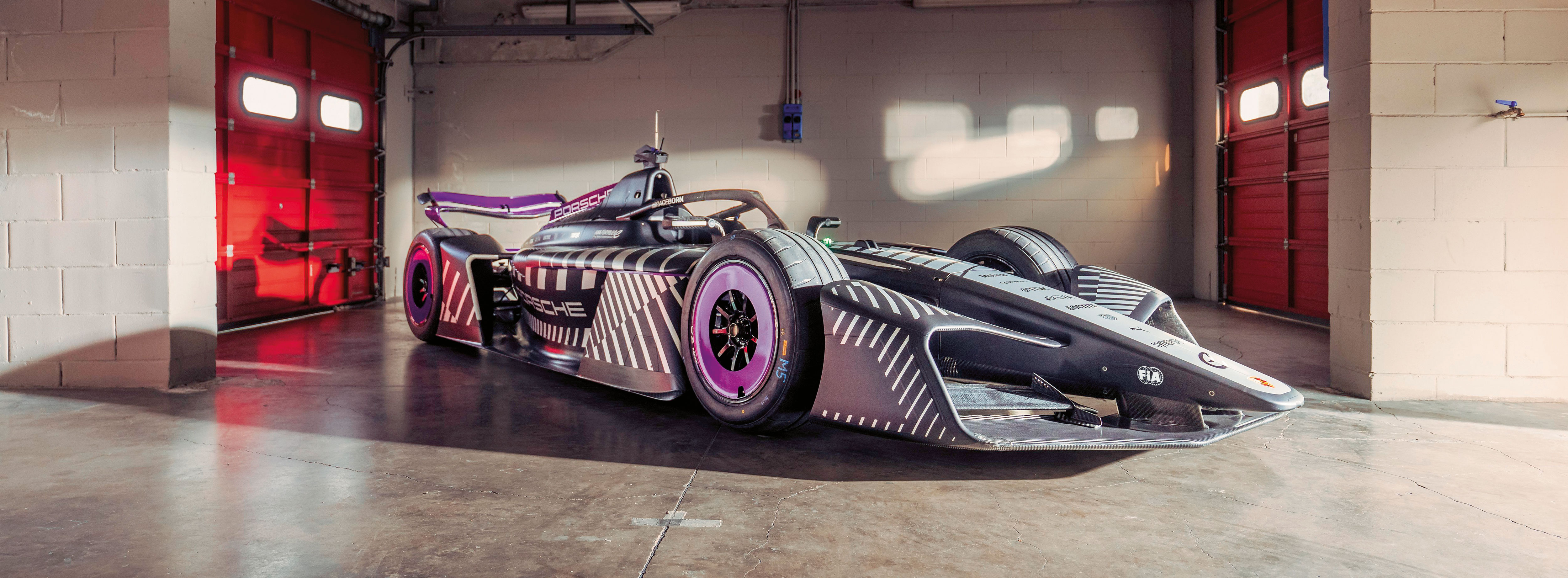
Nico Müller, Formula E factory driver since 2024, has dubbed the new Porsche 975 RSE race car “the Beast,” which coming from a professional race car driver must be a compliment. And why not? A maximum of 600 kW (816 PS), a top speed of 335 kmh, and acceleration from 0 to 100 kmh in 1.8 seconds – these values are enough to put a smile on any race car driver’s face.
The mission is clear: to build on the success of the predecessor, the 99X Electric. The name alone, 975 RSE, says it all, as it pays tribute to Porsche Motorsport’s 75th anniversary this year – another success story destined to be shaped by electric racing in the future. The groundwork was laid when Pascal Wehrlein clinched the world championship title for drivers in the 2023/2024 season – a first for the Porsche factory team. The Porsche Formula E team went on to win the manufacturers’ and teams’ championships one year later. And with Wehrlein ahead in the drivers’ standings and the factory team leading the way in the manufacturers’ standings (as of May 2026), things continue to hum along.
The GEN4 race cars represent consistent optimization of the earlier champion vehicles. They’ll enter the 2026/2027 racing season with big wings and plenty of downforce, for a design that’s visually closer to Formula 1, but more importantly will drastically improve grip for faster cornering. “Formula E has become so fast in just around a decade that we now need aerodynamic downforce,” says Olivier Champenois, Technical Project Leader Formula E at Porsche Motorsport. “But there’s no downforce without drag, which increases energy consumption. To further address this topic, we have two aero packages with different body components: a low-downforce package with less drag for racing and a high-downforce package with more downforce for qualifying, where energy consumption doesn’t matter. We’re talking about up to 150 percent more downforce than before.”
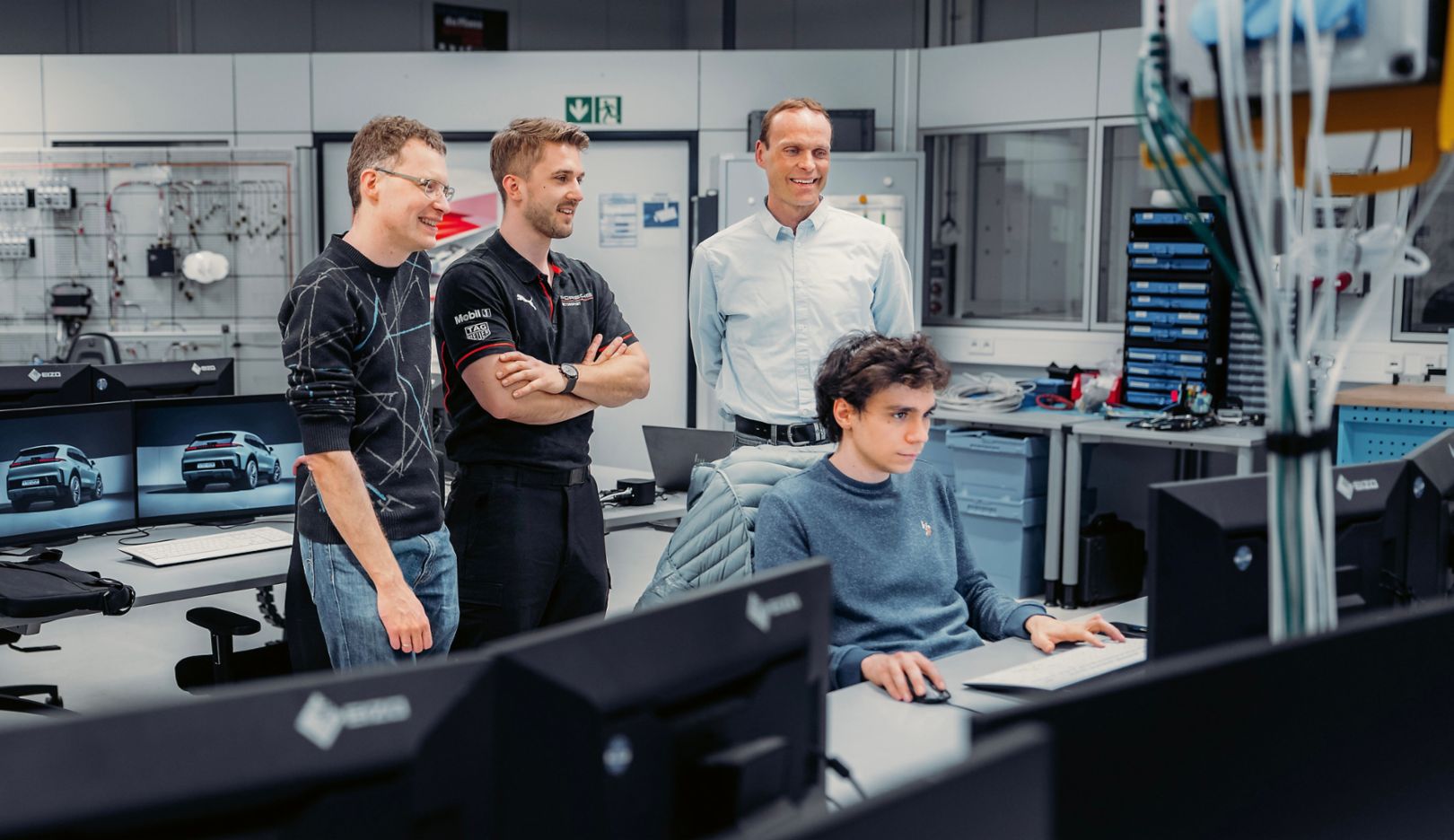
Made in Weissach:
The team headed by Olivier Champenois (in the light-blue shirt) writing the software for the Formula E race car at the Porsche Development Centre.Formula E may now have more in common visually with Formula 1, but it surpassed Formula 1 efficiency long ago. Powertrain efficiency is over 97 percent for the current 99X Electric of the GEN3 Evo generation and below 55 percent for the Formula 1 race cars of the last generation. That’s because, in Formula E, kinetic energy generated during deceleration is fed back into the battery through energy recuperation. Because recuperation operates with up to 700 kW, the Porsche 975 RSE can fully cover a racing distance of more than 45 minutes with its usable battery capacity of 51.25 kWh. In fact, the battery contains just around half the energy needed for the race at the starting line, which makes Formula E unique. In other words, it’s the most energy-efficient Formula race car. Despite the new aerodynamics, which generate more downforce and are more susceptible to wind than before. “The 975 RSE produces 71 percent more peak power than its predecessor,” explains Champenois.
Durability up, weight and costs down
What makes Formula E so challenging is the limited amount of energy, specified by the rules, from which the developers and drivers must extract the maximum. The many standardized race car parts stipulated by the FIA also limit the opportunity to improve vehicle performance with in-house parts and developments. The approach with standardized parts has changed very little from GEN3 to GEN4. The chassis, aerodynamics, tires, and battery are all the same for each team. Because the levels of efficiency are approaching perfection, other factors have moved up in the GEN4 specification sheet, including potential weight reduction, durability, and costs – as is the case for electric vehicles on the road. “Although we’re developing more components in-house, the overall weight of our parts package could not increase by more than five kilograms,” says Champenois. “But we were able to make many parts lighter.”
The 975 RSE concept phase began in 2024, and the team initiated the simulator work in the same year.
Porsche was also working on the GEN3 in parallel. The team continued fighting up until the end of the season in 2024, ultimately securing the drivers’ world championship title with Pascal Wehrlein, at the same time it was developing the GEN3 Evo, an upgrade of the GEN3. Race car development closely mirrors the development of production sports cars in terms of agility and the myriad demands. You start with the existing vehicle, launch the product upgrade, and lay the foundation for the next generation. However, the cycles in racing are much shorter. “We were given the first official data on the new vehicle generation in summer 2024,” says Champenois. “That was a milestone in development.” At long last it was time to kick off detailed calculations and initial testing – purely in digital form to start with.
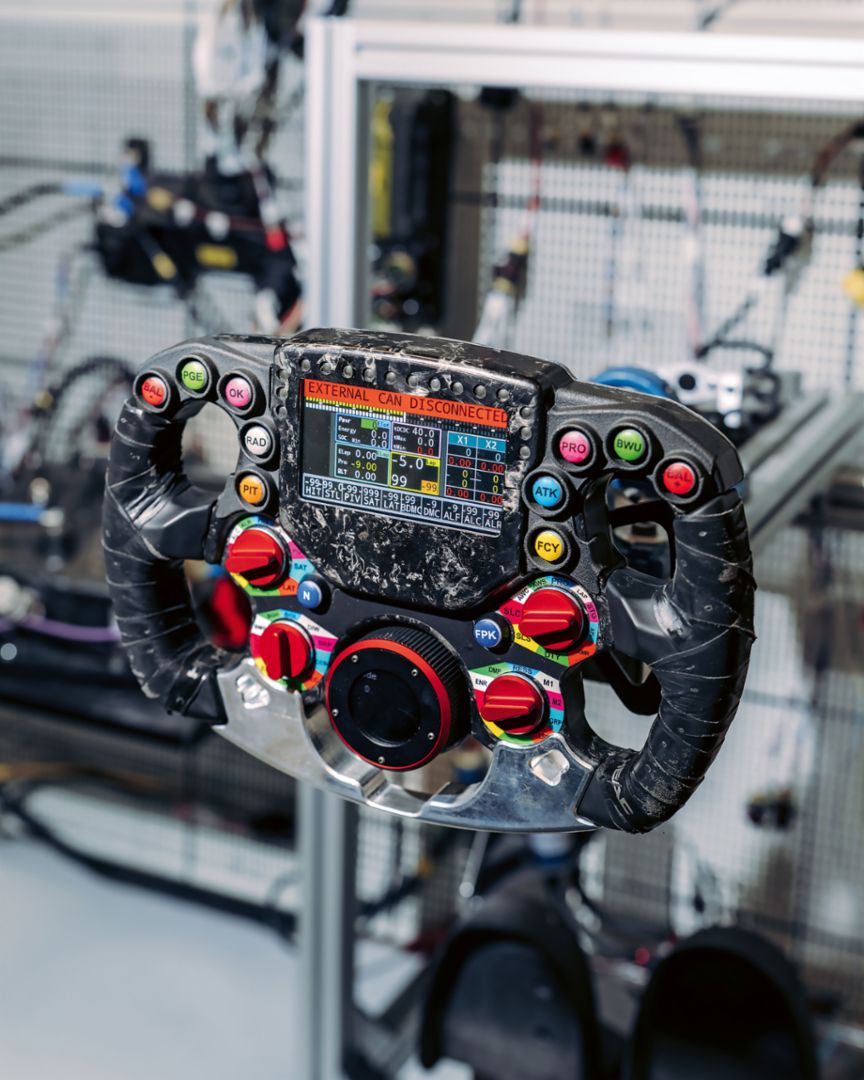
Predecessor:
The current steering wheel of the 99X Electric provides drivers with access to a huge number of race car components, and it will be no different with the 975 RSE.The engineers began with the powertrain of the final iteration of the GEN3 Evo vehicles. Porsche was able to incorporate elements developed in-house: the rear-axle electric motor, the transmission, the differentials, the driveshafts and other powertrain components at the rear axle, and cooling and chassis components at the rear. Not to mention all the operating software, which has established itself as an essential technical guarantee to success in Formula E. The 975 RSE’s control units contain more than 1.5 million lines of code, broken down into well over a hundred individual modules, each of which fulfills a specific purpose. “This software maximizes the power we have at the wheel,” says Olivier Champenois, highlighting the significance of the internally developed software. “And that’s why it’s so important to develop the Formula E software in-house. It allows us to respond faster to changes and new challenges and keep up with short development cycles.”
The company assumes responsibility for everything itself, he says, which keeps the knowledge within the company and with those employees specifically who support racing operations that season. “This in-house expertise is one of the most important performance differentiators for manufacturers in Formula E.”
A whole new level of recuperation
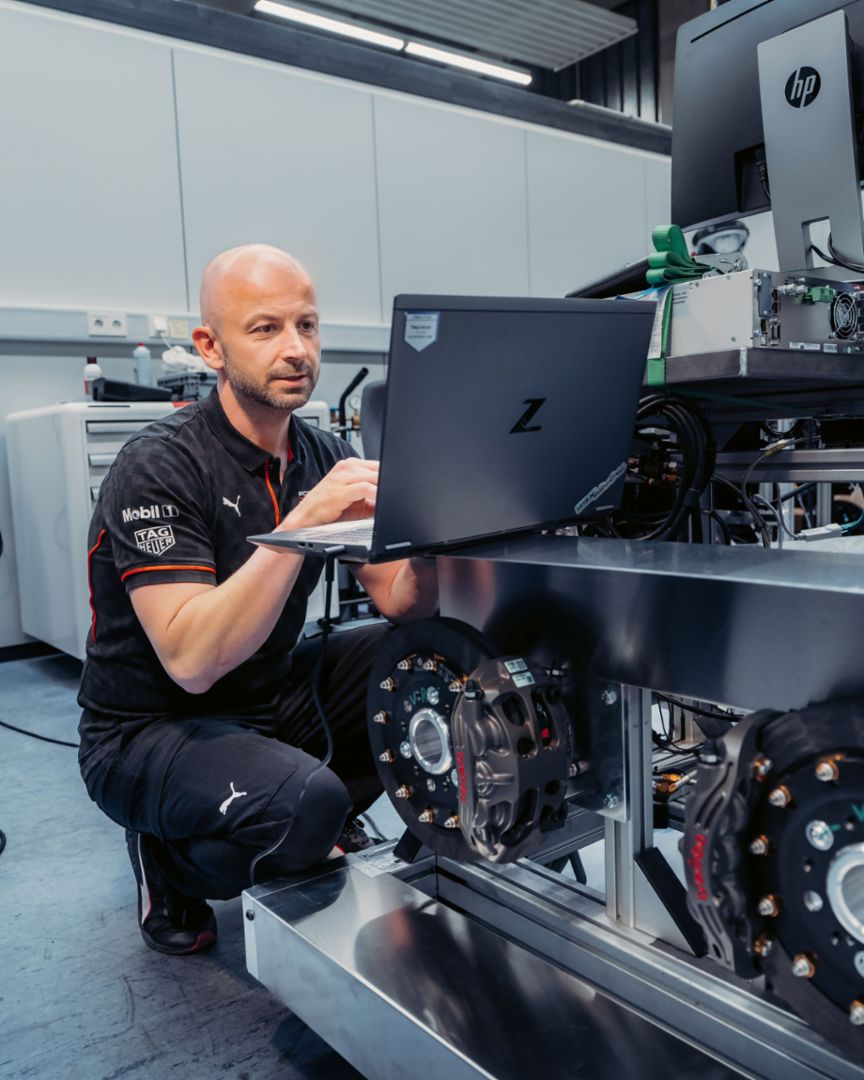
Pedal assembly test bench:
Even though deceleration is primarily achieved through regenerative braking, the mechanical brakes must meet the highest standards – especially since the braking force is often extremely high.The software also controls, of course, the energy that the wheel feeds back into the battery when the brakes are applied. That is the key performance factor on the racecourse. Recuperating lots of energy ahead of curves allows you to go full power on the next straight. The 975 RSE’s permanent all-wheel drive supports recuperation power of up to 700 kW. In fact, around 50 percent of the racing energy used by the new Formula E race car comes from recuperation – quite an impressive figure.
The oil-cooled permanent magnet synchronous motor at the rear axle has proven to be a true recuperation marvel and can alone recover energy with power of up to 350 kW. And the fact that it doesn’t overheat in the process is all down to direct oil cooling, whereby coolant – in this case, nonconductive oil – flows directly along the stator windings. In other words, where the heat is generated.
An electric motor with water jacket cooling offering the same performance values would have to be around 1.5 times larger. A nearly identical form of the 975 RSE’s direct oil cooling is also used in the Cayenne Turbo Electric – a development for both the series vehicle and racing, which is typical of Porsche. This close collaboration also extends to the test benches at the Porsche Weissach Development Centre, which put both sports car and race car components through their paces.
The test lab
Components undergo testing on the test bench when engineers want to assess their performance and durability before a complete vehicle is available. These components – for example, the steering wheel and chassis and drive sensors – are integrated into the electronic loop, a digitally simulated vehicle environment. This loop, which experts refer to as “in-the-loop testing,” replaces components like control units and therefore enables testing in the lab, even if the physical vehicle exists only in fragments. The scope of this testing has further expanded with the new generation. “The GEN3 was already complex in its own right, but the GEN4 systems are much more so,” confirms Olivier Champenois. Due in part to new levels of freedom in calibrating and controlling the axle differentials. After all, every test scenario that can be reproduced on the test bench reduces development costs. The connection to series production is visible here, too.
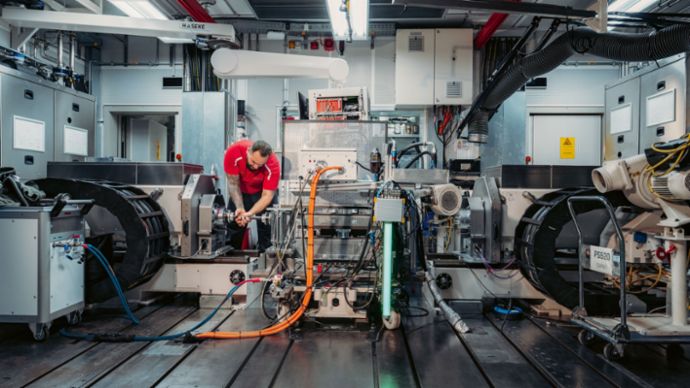
Test bench in the loop:
For every GEN4 race car component, success on the track begins with stringent testing on the bench. They need to be as durable and yet lightweight as possible.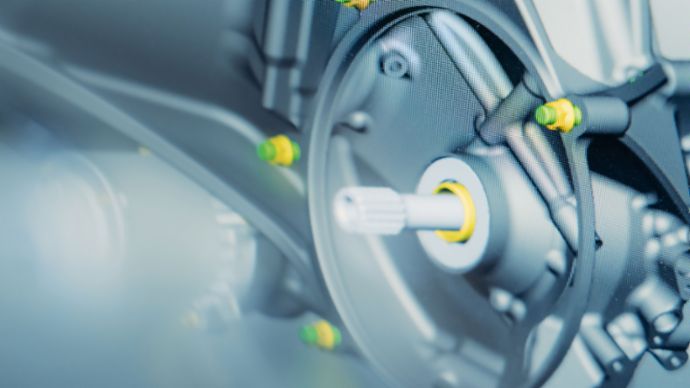
Photorealistic:
The digital twins of the drive components can be viewed from every angle on the screen and broken down into their individual parts.From simulation to reality
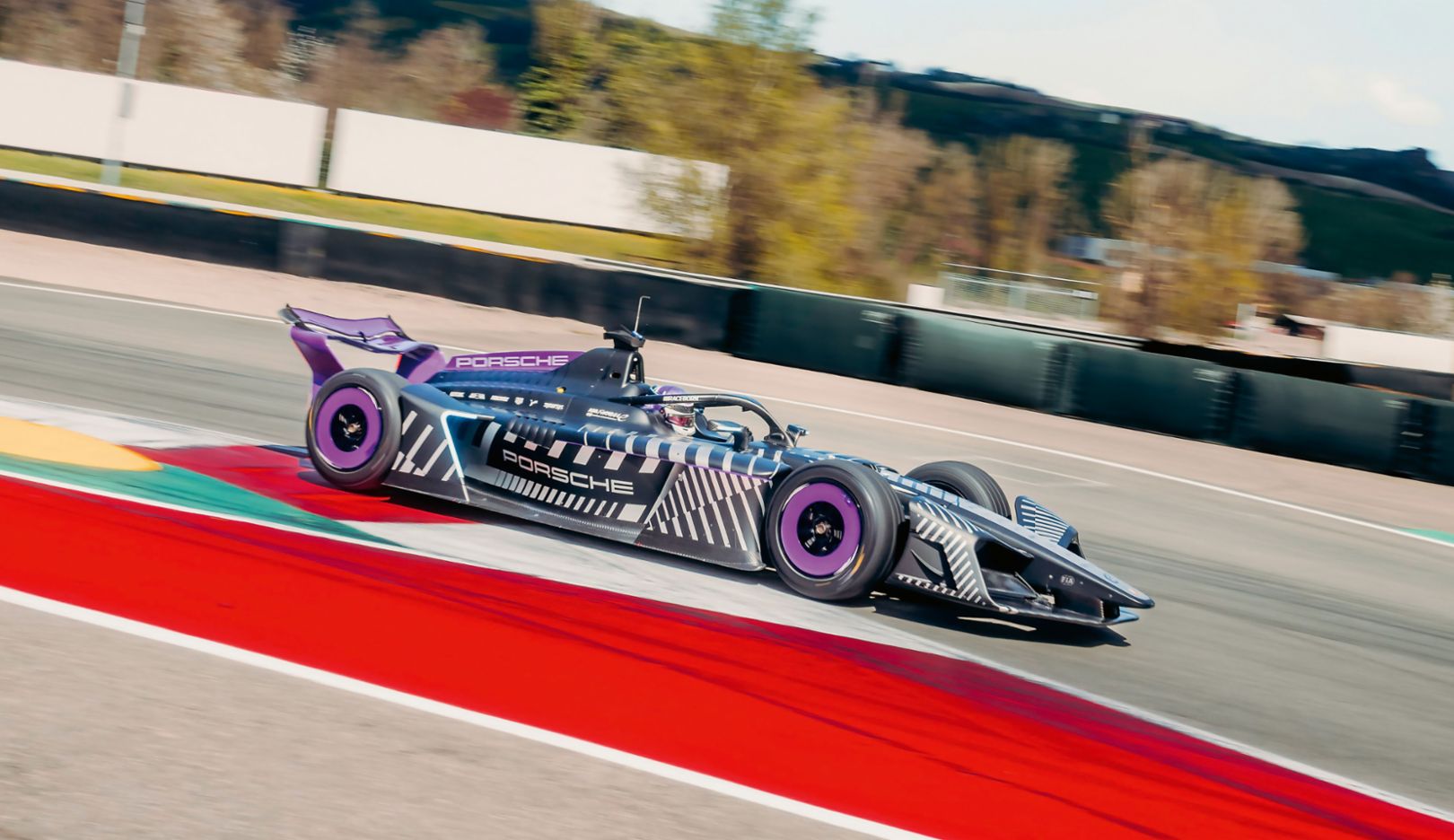
But the test bench is not reality. Despite state-of-the-art digital tools, it still falls short of reality by two to three percent, which is what makes test-driving indispensable. This is especially true in racing, where minimal deviations from the ideal can be the difference between victory and defeat. Nico Müller and Pascal Wehrlein have therefore been testing the 975 RSE on the racecourse since November 2025 – for final calibration of all the systems.
Premiere:
The Porsche Formula E team plans to kick off the new season in December 2026 and set new benchmarks with the 975 RSE.While they’re both thrilled with the progress of their new model, what’s even more important is that it impresses the audience. And it’s looking promising. Olivier Champenois expects lap times on a par with Formula 2. Spectators will have the opportunity to see and experience this leap in performance, with cars that boast improved aerodynamics for faster cornering and accelerate with unprecedented ferocity thanks to optimized performance.
Fans will likely be able to see this for themselves starting in December 2026. That’s when the GEN4 will appear on the pre-grid, with the Porsche Formula E team anxiously waiting in the pit for the light to turn green – and Nico Müller and Pascal Wehrlein finally unleash the 975 RSE.