The Cup Whisperers
Porsche one-make series are a remarkable success story. This is where drivers from all over the world compete against one another in technically identical cars and where Porsche Juniors learn their trade. Lechner Racing from Austria has played a particularly key role in this. Christophorus traveled to meet the team at their headquarters.
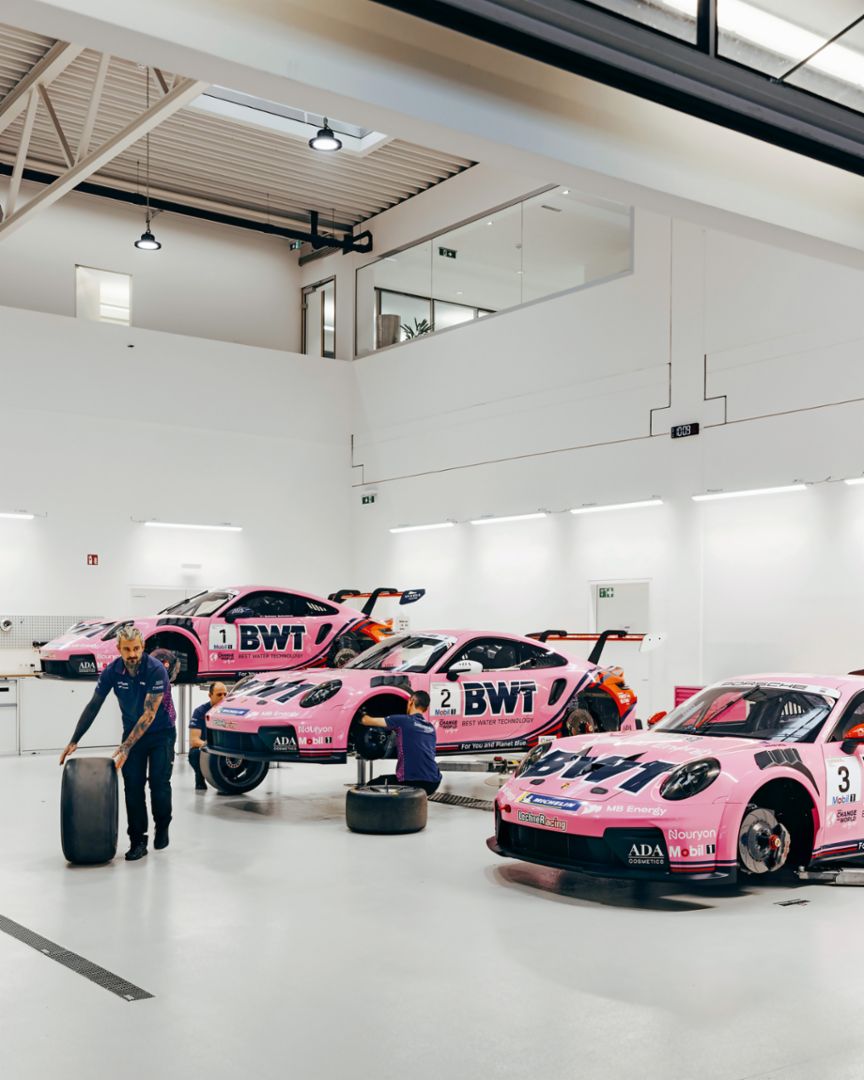
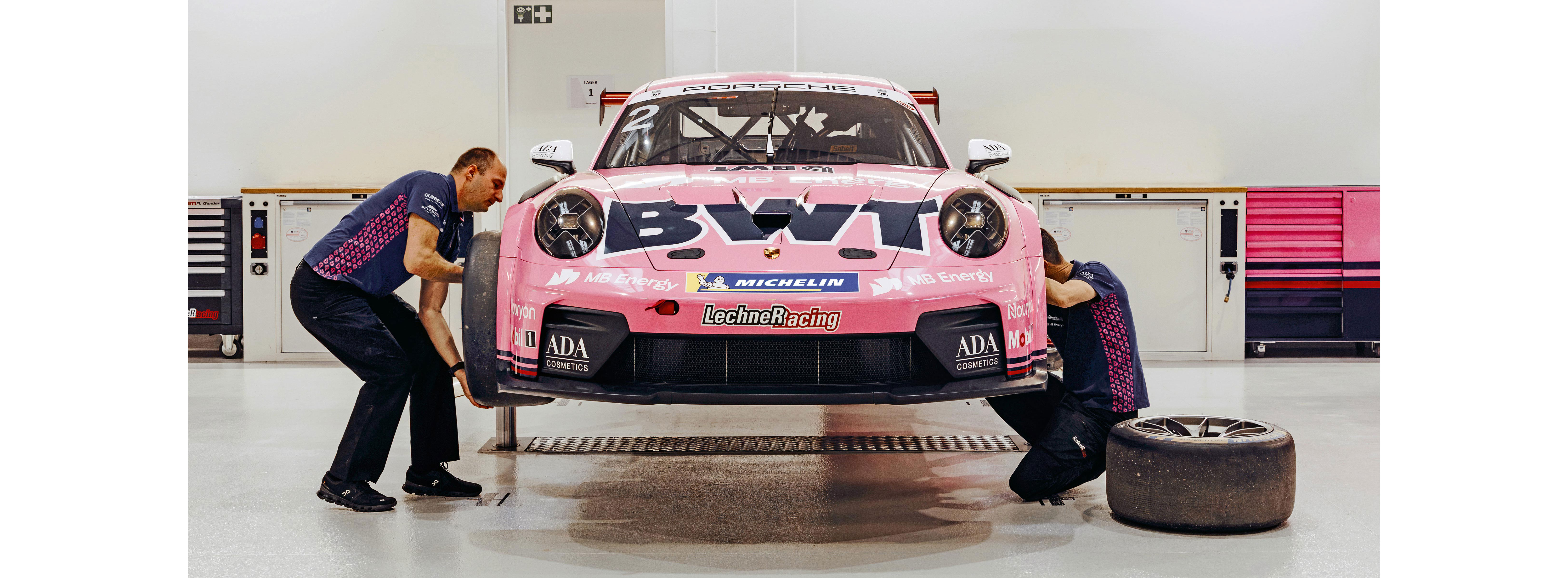
Freshly wrapped:
The 911 Cup cars being prepared for the new season. They will be driven by Robert de Haan, Marcus Amand, and Caleb Sumich from June 2026.The pink color of the three 911 Cup cars from the latest generation with race numbers 1, 2, and 3 cuts through the clinical white that dominates the hall. Even the floor is spotless: no specks of oil, not even a fingerprint on a toolbox – as though nobody has ever set foot here. Yet, there is a sense of warmth in the room. Walter Lechner takes a sip of his coffee, welcomes every employee individually, shakes hands, exchanges a few words. For some, this may just be the beginning of any normal workday. However, for the CEO, team principal, and head of technology at Lechner Racing, every day of carrying on the family tradition with the Porsche brand is a special day. His brother Robert, also CEO and team principal responsible for racing operations, is already in the office. The first meetings of the day at Lechner traditionally begin at 09:11 – a nod to their passion for Porsche. “The moment you no longer feel excited to see the cars in the workshop in the morning, that’s when it’s time to do something different,” says Walter Lechner.
50 years of history in the making
This mindset pays off. With 10 drivers’ titles and 13 team titles in the Porsche Mobil 1 Supercup, the pinnacle of one-make series racing at Porsche, Lechner Racing is the most successful team ever. What’s unique about one-make series racing is that everybody drives identical cars. No other team has left its mark on the Mobil 1 Supercup quite like the Austrians have; this is Formula 1 level performance. Success can sometimes feel like something distant and intangible. But in the company’s hometown of Thalgau, just outside Salzburg, set amid lush meadows and the Fuschlsee and Mondsee lakes of the Salzkammergut region, a different story is told: one of community, family, and a tradition that has taken shape over more than 50 years.
Walter Lechner Senior, who owned a disco and coffee shop in the 1970s, changed careers and trained at the renowned Jim Russell Racing Drivers School. He went on to found his own driving school in 1975 and become a successful racing driver and team owner.
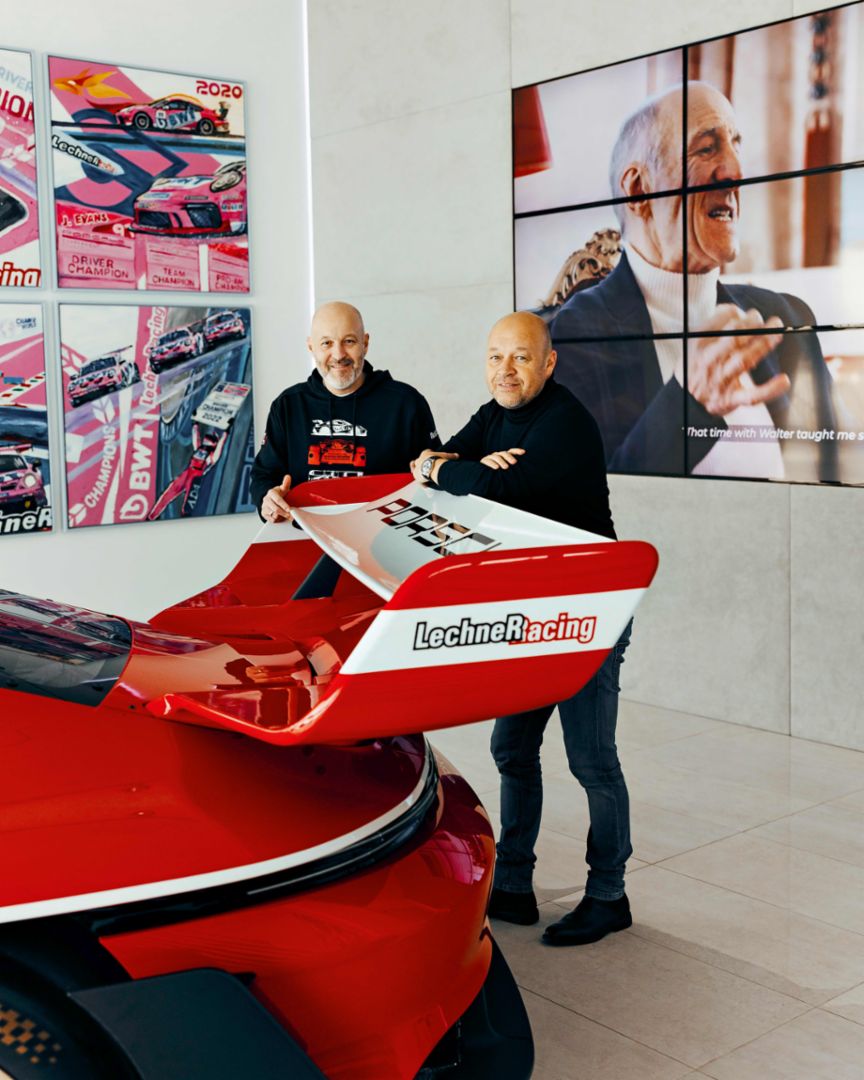
From cockpit to team principal:
Walter (left) and Robert Lechner were once racing drivers – now they manage the Lechner Racing team.Famous names such as Stefan Bellof, Toto Wolff, and Alexander Wurz all came through his school – along with his sons Robert and Walter. When his son Walter was about to switch to GT racing, offers came in from a number of teams. His father’s response was: “Let’s do it ourselves.” And so, in 2003, Lechner Racing embarked on its Supercup journey with Walter Junior at the wheel, its first title following two years later with Alessandro Zampedri.
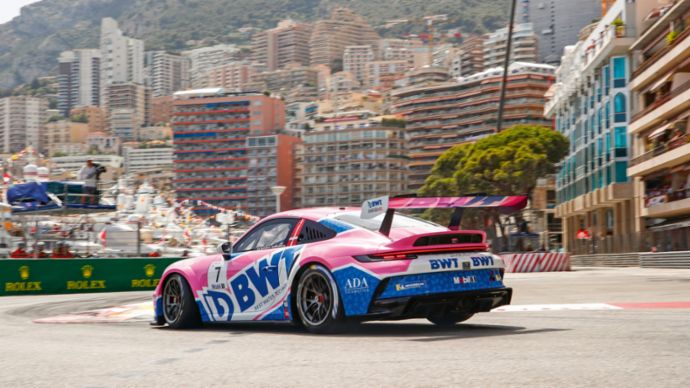
History:
Lechner at the Supercup race, held as a support event for the F1 Grand Prix in Monte Carlo. Above: Bastian Buus in 2022. Below: Patrick Huisman, race number 4, ahead of overall winner Alessandro Zampedri (3).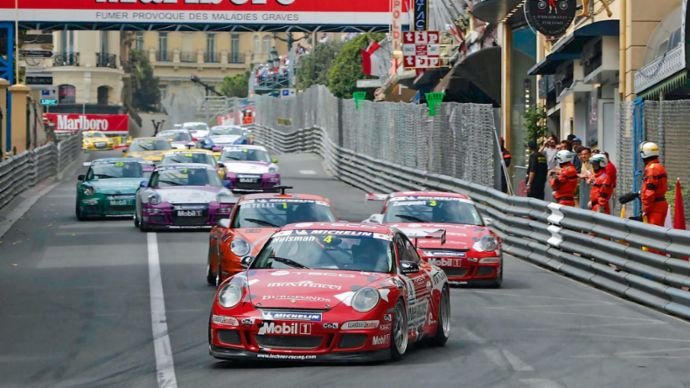
Talent rather than a battle of equipment
Supercup races have been held as support events during Formula 1 race weekends on tracks such as Monaco, Spa-Francorchamps, and Monza since 1993, with eight such races currently held per year. However, the idea of letting talent take center stage over the equipment goes back even further. Porsche created a race series based on this philosophy in 1986 with the 944 Turbo Cup – featuring identical cars and conditions, and using the racetrack as a testing ground for technology. In 1990 came the next step with the 911 Carrera 2, when the Carrera Cup Germany replaced the 944 Turbo Cup. Under the leadership of Herbert Linge and Jost Capito, the concept proved so successful that there are now 35 Porsche one-make series in operation, featuring more than 800 drivers in over 30 countries. They compete in cars that are technically identical, reflecting the Porsche philosophy of keeping motorsport and production models as closely aligned as possible. No racing car has been built in greater numbers than the 911 Cup. The latest generation is also based on the street-legal 911 GT cars and has the same 382 kW (520 PS; 911 GT3 (WLTP)*: Fuel consumption combined: 13.8 – 13.7 l/100 km; CO₂ emissions combined: 312 – 310 g/km; CO₂ class: G) 4.0-liter naturally aspirated engine as the 911 GT3.
The one-make series are a key part of the motorsports pyramid at Porsche and a cornerstone of the development of young talent. This is where up-and-coming drivers get the chance to learn the tools of the trade. “In a Cup car, with the field being so competitive as everybody has the same equipment at their disposal, you have to push to the absolute limit,” explains Walter Lechner, now sitting in his office on the second floor where he can watch over the workshop. “A few tenths of a second can mean the difference between first place and seventeenth. You need to keep the tires in their optimal temperature window and at the correct air pressure for two laps, without making any mistakes. The only way to learn this at this level is in a Cup car.” This means giving more than 100 percent and driving with the bit between one’s teeth. “You learn in a way that it becomes second nature to give it your all in other series as well.” Only a few fine-tuning parameters, such as track width, camber, and wing settings, can be adjusted. So there is more focus on the drivers than in other series.
It is therefore no surprise that the talented drivers chosen by Porsche for its official Junior Program traditionally come through the school of one-make racing. These races are the foundation on which Porsche has built its driver development program for decades. The objective is clear: not just to make drivers faster, but to accompany them on their way to becoming professionals and brand representatives.
Passionate about developing young talent
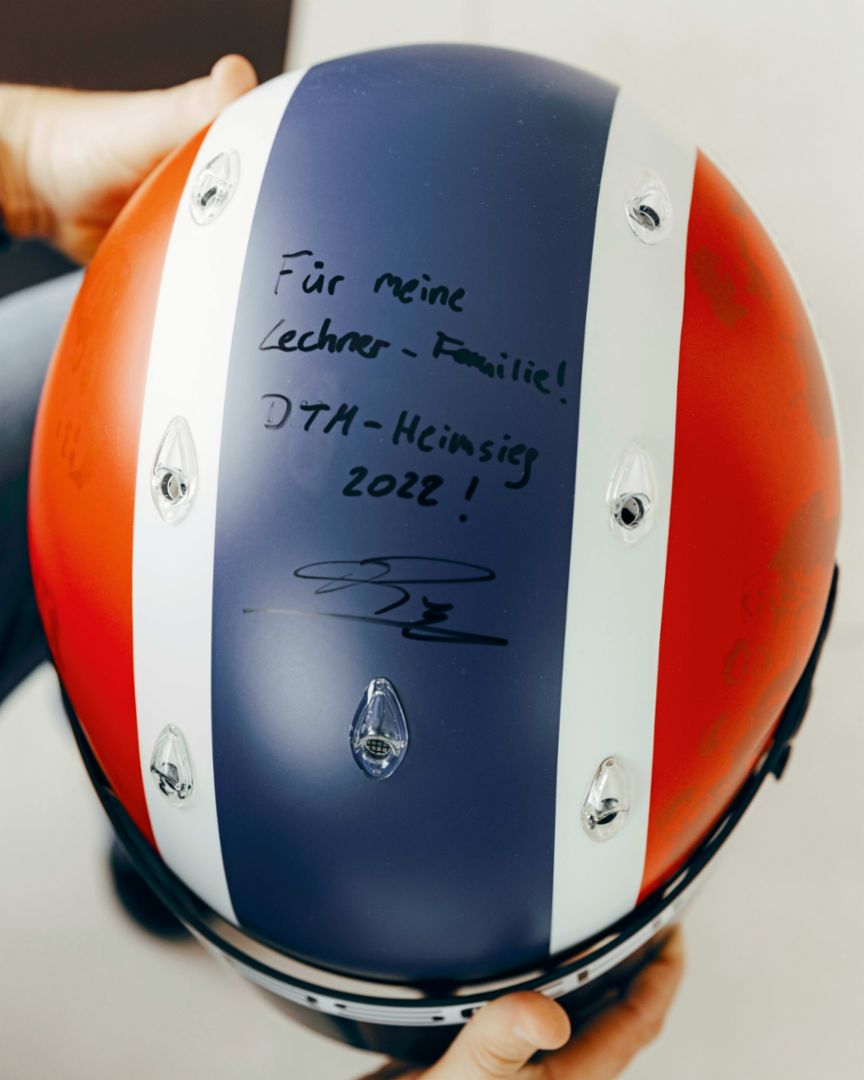
Souvenir:
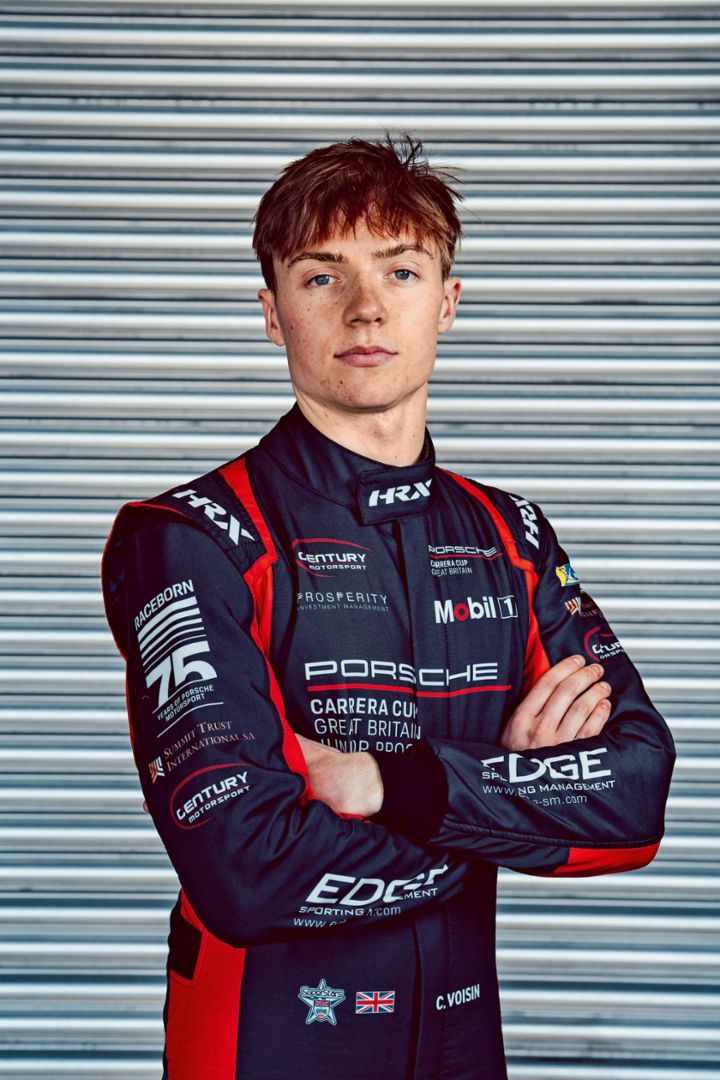
Thomas Preining’s helmet from 2022 recalls the design of Walter Lechner Senior.Many Porsche Juniors have learned their trade at Lechner Racing over the years. American driver Connor de Phillippi was the first to do so in 2014; then in 2016 Sven Müller claimed the Mobil 1 Supercup title with Lechner, and in 2023, Danish driver Bastian Buus pulled off the same feat. Future DTM champion Thomas Preining and current DTM champion Ayhancan Güven also raced for Lechner over the years. Porsche Junior Marcus Amand is currently behind the wheel for the Austrian racing team. The name of the 20-year-old Finn is already emblazoned on the pink 911 with race number 2. “The development of new talent has always been part of our DNA, ever since our team was founded,” says Robert Lechner.
Australian driver Caleb Sumich, who drives a 911 Cup with race number 3, visited the company headquarters just a few days ago. He joined Robert and Walter Lechner for lunch at the home of their mother Christine, where he was served Austrian schnitzel. Those who race for Lechner Racing are automatically part of the family. This may be the reason why the relationship with all the Juniors remains so strong today.
“They’re all highly qualified and have a winning mentality when they come to us, otherwise they wouldn’t have been selected as Porsche Juniors,” Robert explains. “We often take on the role of a sort of big brother. And sometimes that of a psychologist.”
One thing that makes Lechner Racing special is that both brothers were successful racing drivers in their own right. Few team principals can claim that. Robert was an established name in Formula 3 and his successes include overall victory in the Nürburgring 24 Hours. Walter was the youngest class winner in the 24 Hours of Le Mans. “This enables us to see both sides,” says Robert. “On the one hand, we’re team principal, but we can also see things from the drivers’ perspective.”
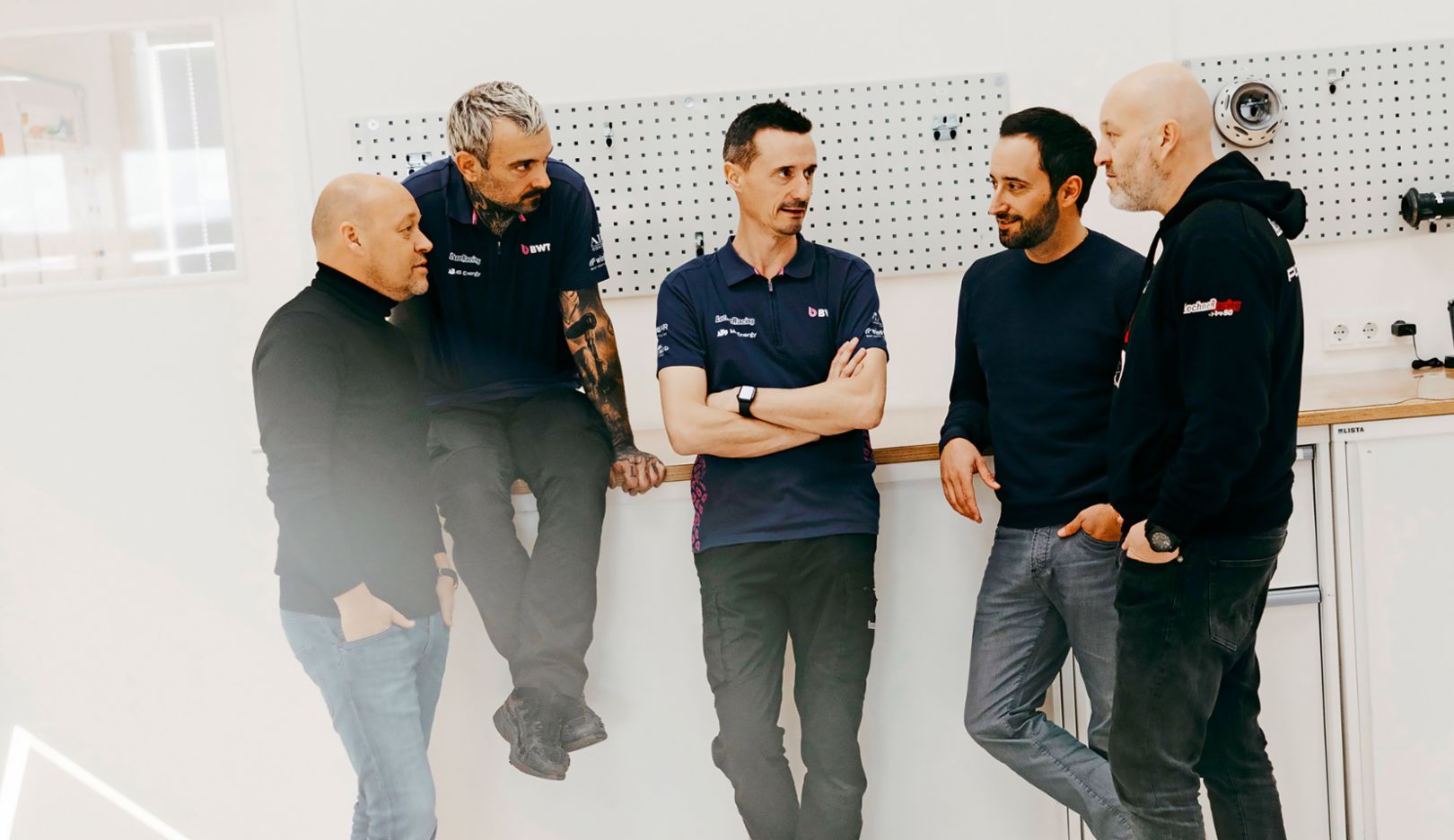
Teamwork:
When visiting Austria, the sense of warmth is immediately noticeable – years of success are only possible with a close-knit team. Here, Robert Lechner, Andoni Larumbe, Cédric Cartereau, Michael Schöch, and Walter Lechner (from left to right) in conversation.A racing series all of their own
Even on race weekends, it all stays within the family. There are just 10 team members on-site looking after the three Cup cars. The impressive record of 78 race victories speaks for itself. Focusing on Porsche one-make series racing for such a long time has developed the team into a specialist outfit. They are sometimes referred to as the “Cup whisperers.” After 23 years of competing in the Supercup along with occasional appearances in the Carrera Cup Germany, more than 15,000 Michelin tires have passed through their hands. A figure that highlights the team’s extraordinary wealth of experience. “Of course, that’s a big help to us,” says Walter. “Along with our understanding of how the grip on the track changes over the course of the weekend. A setup developed within a test is completely different from a Formula 1 weekend, when a huge amount of grip builds up.” Robert adds: “The most important aspect is always the people.” What he means by this is that, from the driver of the team truck to the mechanic to the racing driver, everybody needs to work together.
A shining example of just how fully Lechner Racing embraces the principle of one-make series racing is the Porsche Carrera Cup Middle East. A long time ago, Walter Lechner Senior, who passed away in 2020, recognized the potential of the region. It began as the GT3 Cup Challenge and has been held under the official title of the Carrera Cup since the 2023/2024 season. Lechner Racing plays a unique role in this – the team is both a promoter and oversees technical operations for the series. This dual role is also played by Porsche Sprint Challenge Central Europe. It is designed specifically for ambitious amateur drivers and young talents, who also compete against each other in Cup 911 cars.
But ultimately, everything leads back to Thalgau. To the spotless white hall where the pink Cup 911 cars are housed. To a workshop where perfection is a way of life – and everybody is greeted with a warm handshake. Perhaps this is the secret of Lechner Racing: Motorsport at the highest level is never just business here; it is always about family, too.
One-Make Series
Porsche Mobil 1 Supercup • Porsche Carrera Cups • Porsche Challenges • Porsche Trophies
515 one-make series seasons since 1990
35 one-make series in 2025
31 countries
819 drivers in 2025
5 continents
840 race cars in 2025
More information about Porsche one-make series is available here.