Power to the Max
Thanks to its electric drives, the Cayenne Electric boasts both remarkable and unexpected qualities. In the run-up to the world premiere, Christophorus takes a few laps on the Porsche Experience Center course in Leipzig.
Porsche instructor Timo Kluck, in the driver’s seat, has a faint smile on his face, which just might be a warning. And then comes the thoughtful reminder to rest my head against the headrest of the passenger seat, as the new Cayenne Turbo Electric will be taking off momentarily – with Launch Control.
Launch Control unleashes the full power of the now all-electric SUV – and suddenly you can feel the full force of 850 kW (1,156 PS; Cayenne Turbo Electric (WLTP)*: Electrical consumption combined: 22.5 – 20.4 kWh/100 km; CO₂ emissions combined: 0 g/km; CO₂ class: A). This is the absolute top level of three-phase power delivery. “In regular driving mode, the driver has complete control of 630 kW (857 PS),” explains Michael Schätzle, Head of the Cayenne Series. “And then the push-to-pass function1 adds another 130 kW (176 PS) for 10 seconds – for example, for fast passing maneuvers.” Launch Control then delivers power to the max, which means driving experience lever on Sport Plus, left foot on the brake, and right foot on the accelerator, with the pedal pushed to the metal. Once the brake is released, the car catapults ahead. This three-phase interplay means the Cayenne’s power can be adapted at any time and tailored to specific everyday requirements.
It takes special conditions – like those at the Porsche Experience Center in Leipzig – to unleash the full power. The stretch ahead of the electric SUV is unobstructed, straight, and long – three attributes essential to letting Launch Control do its thing. When 850 kW (1,156 PS) of power is unleashed, it feels like the horizon is jumping at you through the windshield. It takes 2.5 seconds for the digital speedometer to soar from 0 to 100 kmh and 7.4 seconds to reach 200 kmh.
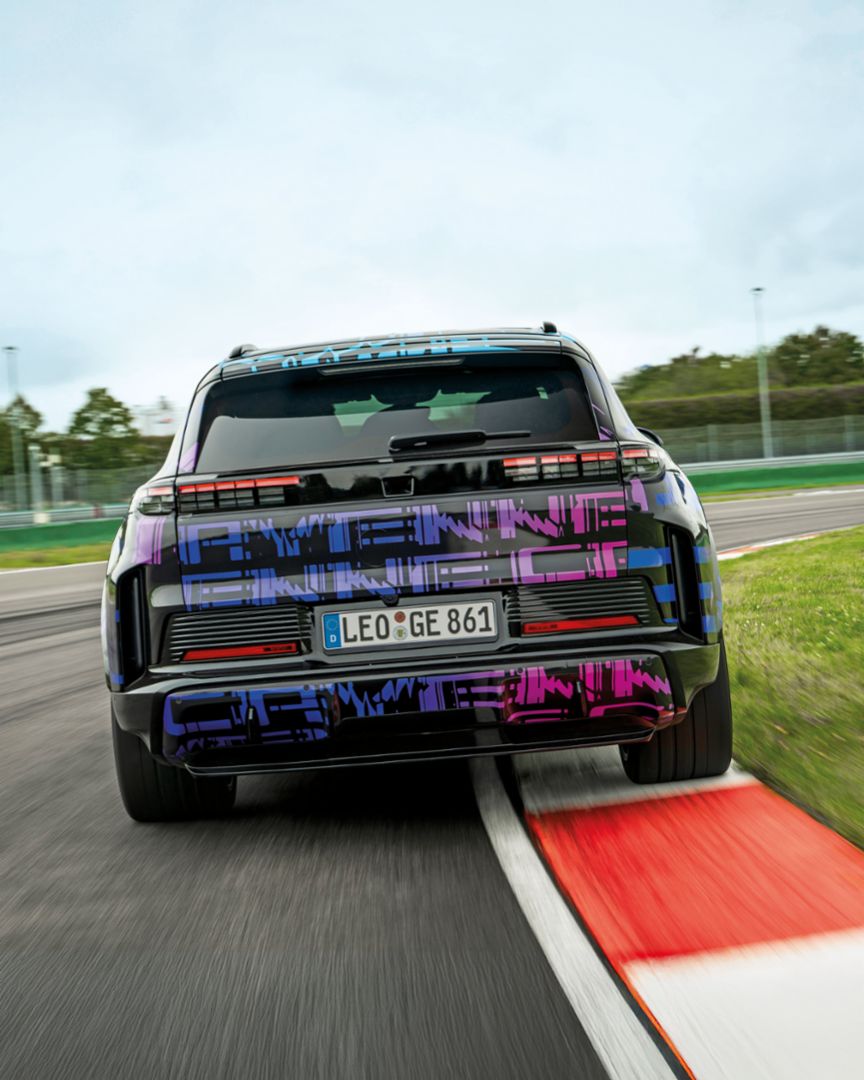
It’s difficult to comprehend the force with which the Cayenne Turbo Electric launches off the starting line. The Cayenne may be an SUV – but it’s also a sports car made by Porsche.
Flexible platform
This simply wouldn’t be possible without the powertrain and chassis components working in harmony, which Michael Schätzle is quick to confirm. “Sometimes you just get a car exactly right,” he says, looking at the SUV. That’s not exactly telling the whole story, as is the suggestion that anything was left to chance with the concept, design, and testing of the new Cayenne. Of course, that couldn’t be further from the truth.
After all, this Cayenne is not the first electric Porsche. The developers had the benefit of being able to draw on the experience of developing the Taycan and Macan Electric. In fact, the engineers were able to incorporate an assembly or two already in mass production at Porsche – like the PPE 41 platform. PPE stands for Premium Platform Electric and serves as a modular system for high-end electric vehicles in the Volkswagen Group. In its first stage of development, even the Macan relied on PPE 41.
What makes modular systems like this one so clever is their flexibility. They can be adapted to meet a wide range of requirements, including in their size, power, and even the weight or purpose of a model. Porsche adapted the Macan’s PPE 41 and created PPE 41 C for the Cayenne Electric, designed for even more power and practicality. After all, the Cayenne is also designed to be an extraordinary towing vehicle even in its electric form, with a capacity of up to 3.5 tons. An impressive figure for an SUV, regardless of the type of powertrain.
A towing vehicle like that requires power and an all-wheel drive, both of which the SUV has. “Our customers have always loved the high utility value of the Cayenne,” says Michael Schätzle. “So we decided we would accept no compromises when it came to developing the all-electric model.”
Oil direct cooling for the rear-axle motor of the Turbo
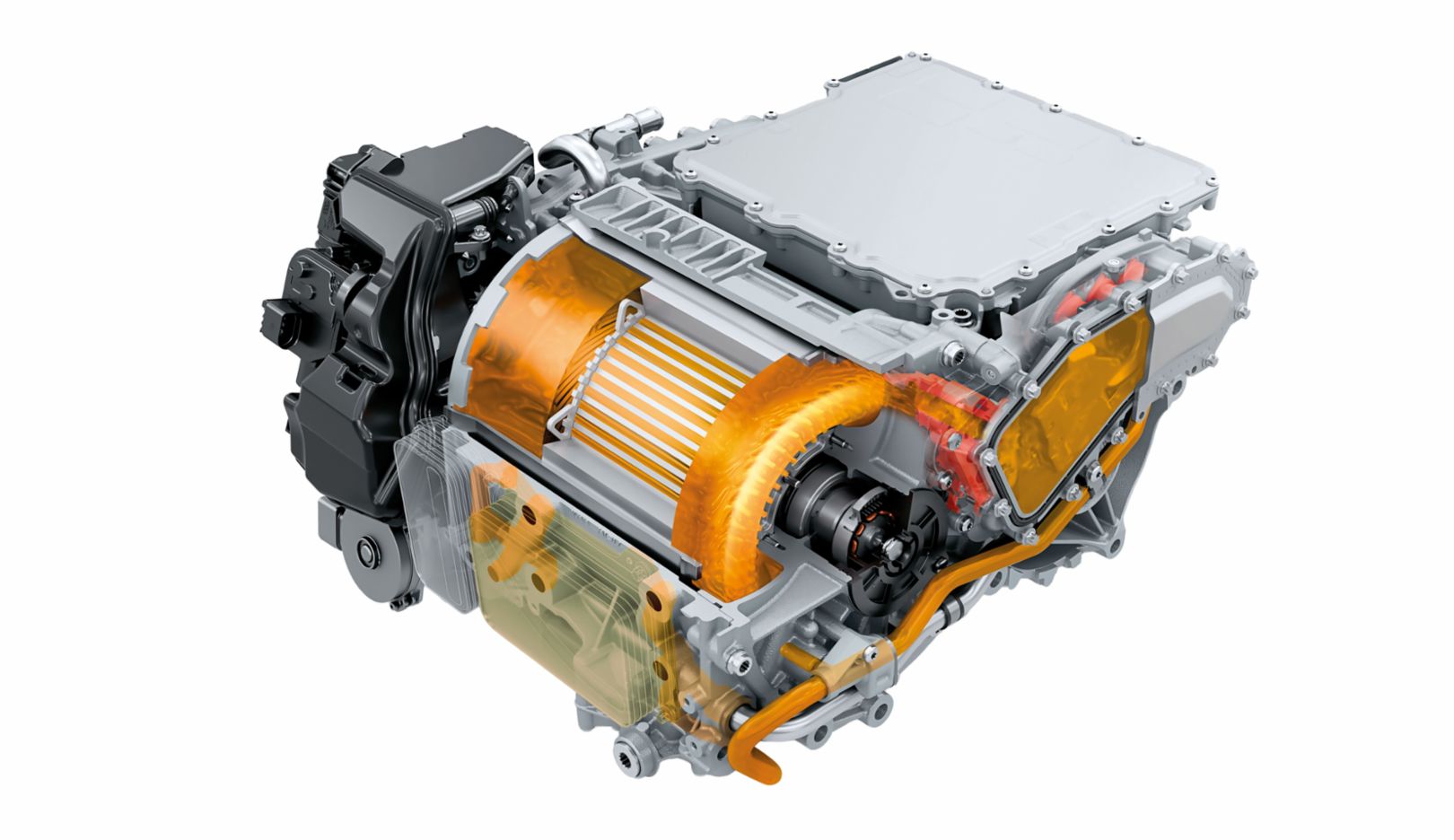
The Cayenne Electric has front- and rear-axle motors, the more powerful rear-axle unit in the Turbo version newly developed by the experts in Weissach and built in Zuffenhausen. This remarkable motor represents the next milestone in Porsche technology – a good fit for the Cayenne, which has already served as a technology platform for the sports car manufacturer in the past.
One of the highlights of the newly developed rear-axle motor is oil direct cooling. Direct cooling on the copper conductors has increased the efficiency of the electric motor to up to 98 percent, reduced installation space by up to 30 percent, and optimized long-term performance for the track. This oil direct cooling method is also used in the GT4 e-Performance racing prototype, a test vehicle based on the 718 GT4 Clubsport for the all-electric future of customer racing.
In the GT vehicle with a power of 735 kW (1,000 PS), direct oil cooling ensures that the power remains fully available in race mode for as long as it is required. Direct oil cooling is now also used in Formula E powertrains. “Formula E is our development lab for the future of electric mobility. This is where we gain valuable insights for our road-going sports cars,” says Dr. Michael Steiner, Deputy Chairman and Member of the Executive Board for Research and Development. “The new Cayenne Electric demonstrates how quickly this kind of technology transfer happens at Porsche – and how relevant our involvement in the electric racing series is for our production models.”
A powerhouse at the rear
The influence of racing technology is also visible in braking – or more precisely in deceleration – as the Cayenne Electric reduces its speed almost exclusively through recuperation in everyday driving. The electric motors transform into a powerful generator, feeding energy back into the battery – with up to 600 kW of power, just like the 99X Electric which has won multiple titles in Formula E racing. This not only increases range, but also protects the traditional friction brake, a feature of the new Cayenne, of course – also available as the optional Porsche Ceramic Composite Brake (PCCB).
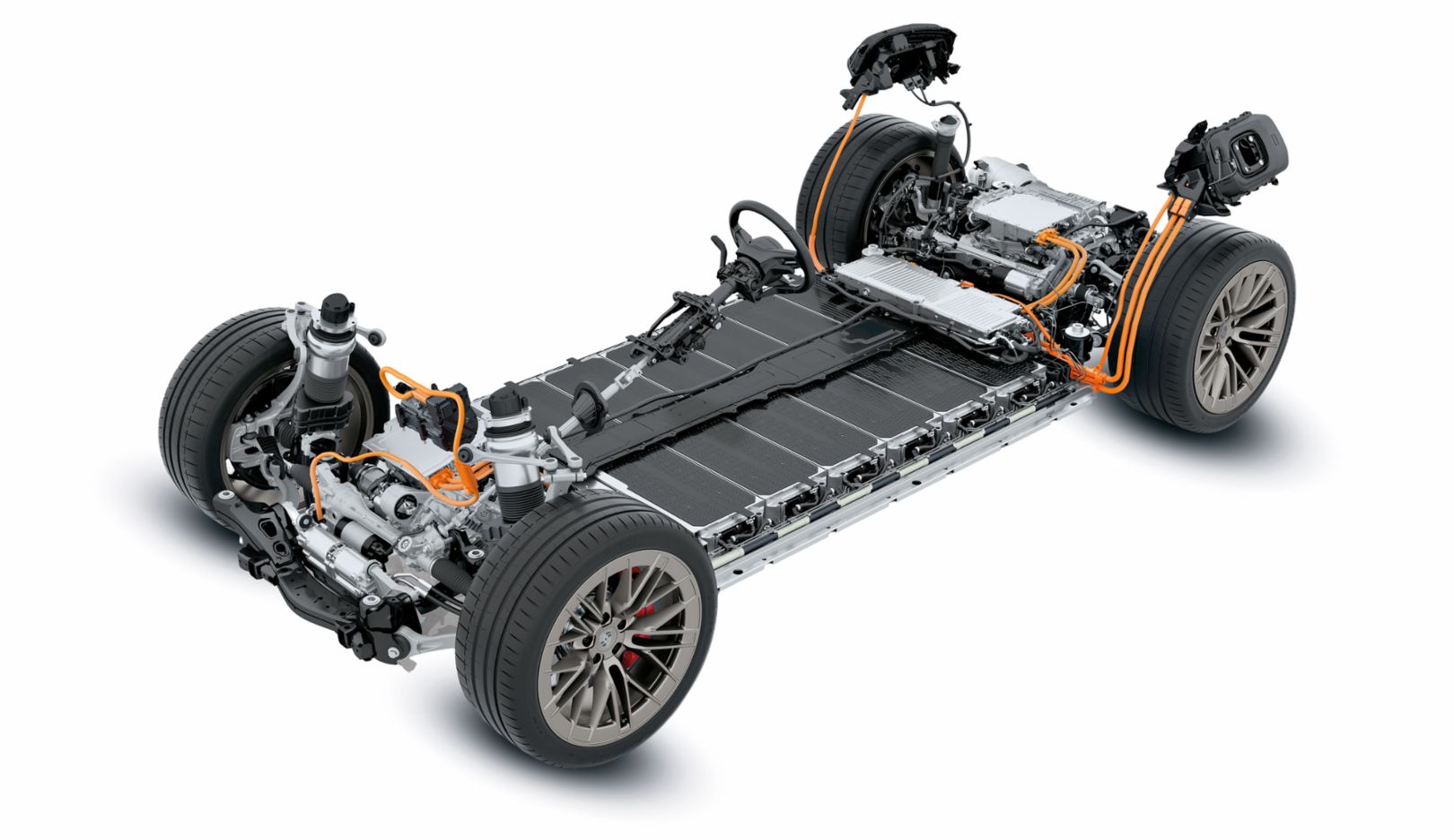
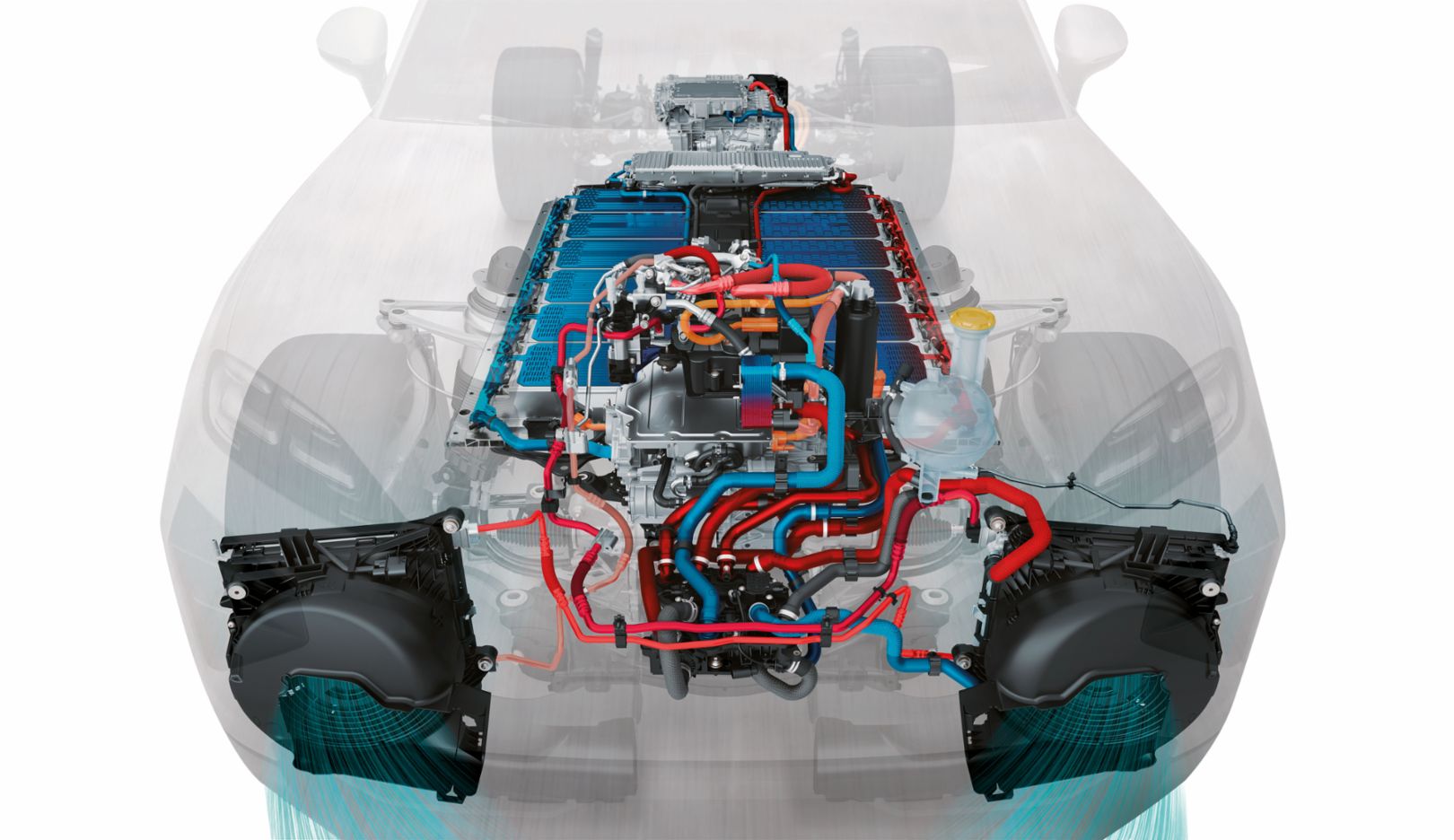
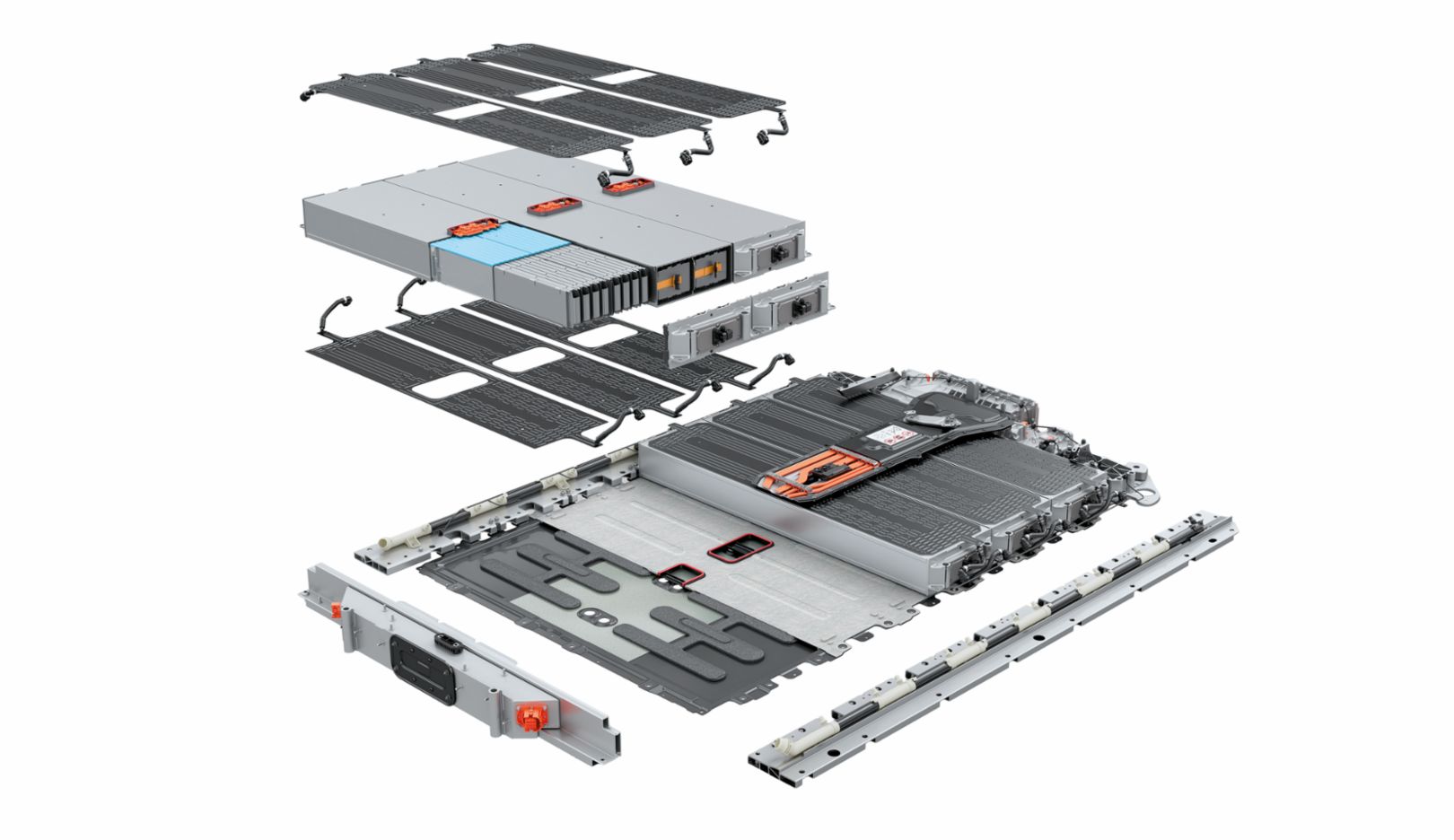
In addition to brake pedal recuperation, the driver can choose from three coasting recuperation modes, activated via the center display and set to “On,” “Off,” or “Auto.” The energy is fed back into the 113 kWh battery, which forms the lowest point of the Cayenne chassis, representing a brand-new design. The electric system features an 800-volt architecture and can be charged with up to 400 kW2. The electricity feeds into a nickel-manganese-cobalt-aluminum (NMCA) battery consisting of six modules, each of which contains four stacks of eight cells. Porsche has thus taken the power density of the cells to a whole new level and, with a modular design, has developed an easy-to-repair battery in which individual modules can be replaced as necessary.
The optimal battery temperature for high-speed power absorption and release is around 20 degrees Celsius. To maintain this temperature, Porsche put a lot of development work into thermal management. The central component is located at the front of the car. It’s worth taking a closer look at the battery cables, as the battery is cooled from above and below, which is 15 to 20 percent more efficient than cooling from just one side.
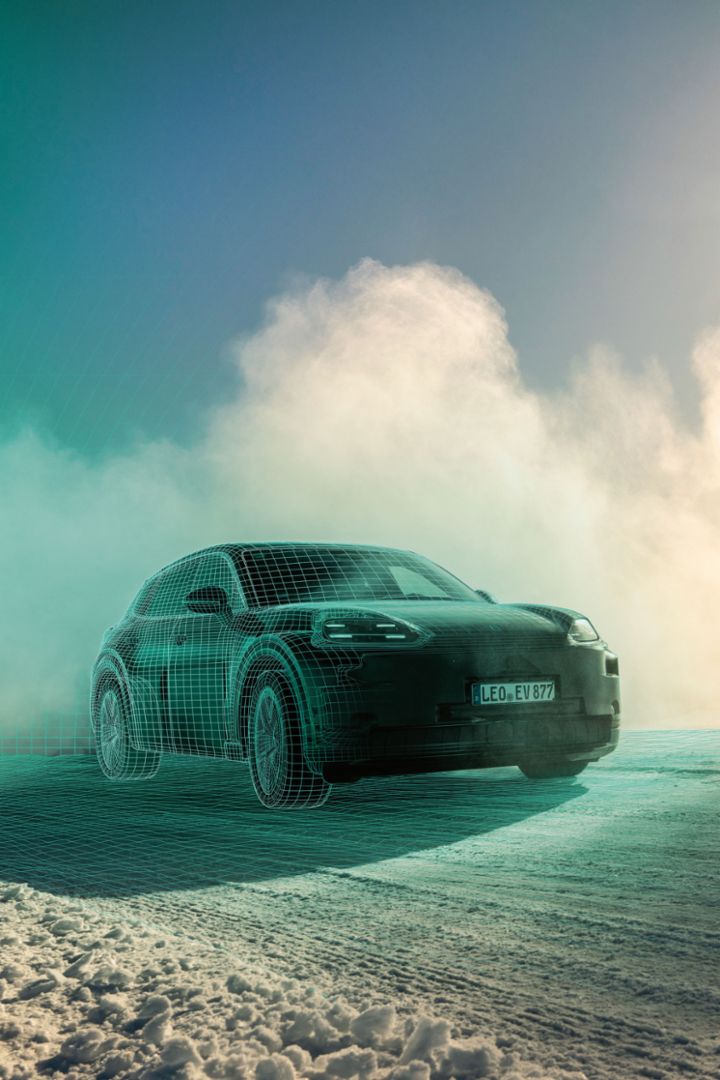
When temperatures drop – for example, in the winter – the battery is preconditioned for charging, meaning it’s heated to a temperature of between 15 and 20 degrees Celsius. This allows the electrons to move quickly and find their places in the cells, thus minimizing charging times. In numbers, it takes less than 16 minutes3 to charge from a 10 percent state of charge (SoC) to 80 percent. More than 300 kilometers of range can be added in just 10 minutes4. This is partly down to the fact that fast charging of more than 350 kW can be maintained over a very long period of time. “With the Cayenne Electric, we’re taking e-Performance to a whole new level. Our innovative high-voltage system combines maximum efficiency with the outstanding driving dynamics that are customary of Porsche,” says Dr. Michael Steiner. “The functionally integrated battery, dual-sided cooling concept, and predictive thermal management demonstrate our holistic approach to technology. Our goal is to shape electric mobility in a way that is true to Porsche – efficient, powerful, and emotionally engaging.
Real driving precision
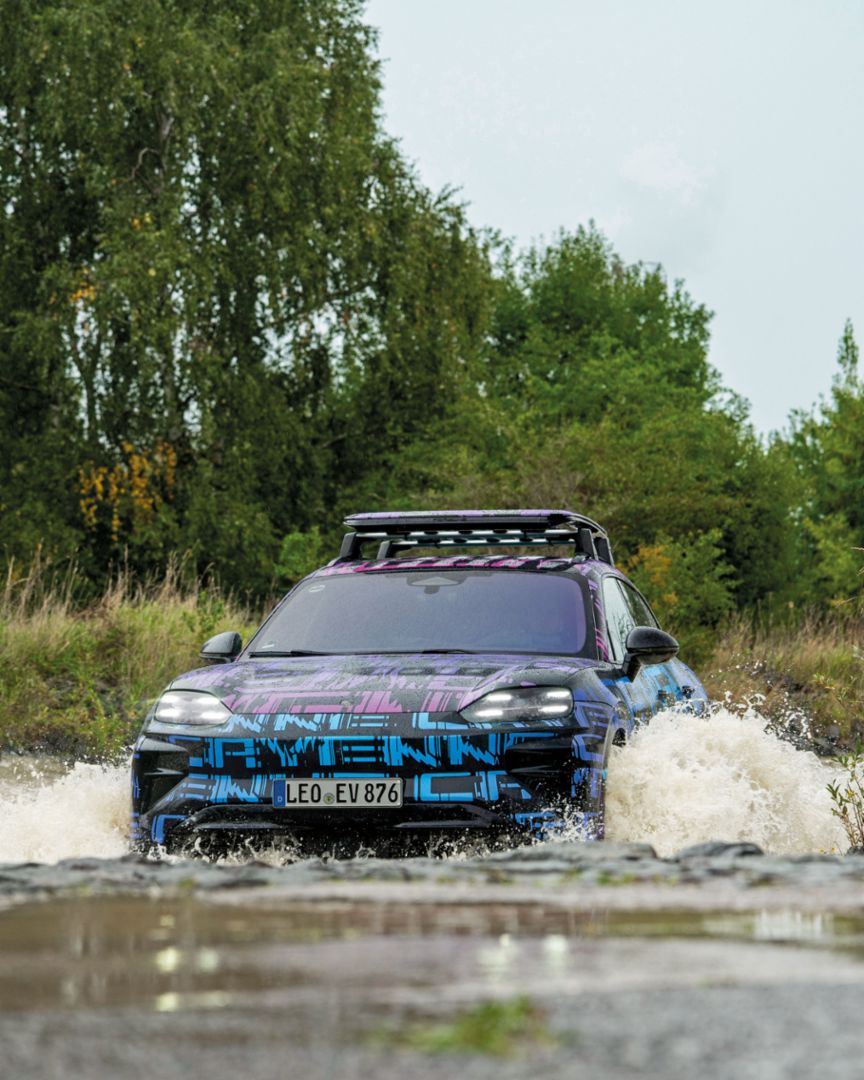
Ultimately, the Cayenne Electric is just like any other Porsche – it’s all about getting from A to B as quickly as possible. The combined WLTP range is up to 642 kilometers, depending on the model. After such a long drive, even the most tireless driver is going to need a short break. And a quick charging stop provides just enough time for a cup of coffee and a croissant. It’s always good to take an early stop in any case.
To make fast travel as pleasant as humanly possible, an optional feature for the Cayenne Turbo Electric is the Active Ride chassis with four active dampers that compensate for pitching and rolling, eliminating the need for conventional stabilizer bars. “Porsche Active Ride significantly expands the range between driving dynamics and driving comfort in the new Cayenne,” says Michael Schätzle.
The car stays level even when taking curves at high speeds and maintains a precise position on the road – for an elegant Porsche driving experience. “We packed all of our cutting-edge technology into this model and also developed a lot of new things,” says Schätzle. “This Cayenne is a technological milestone.”
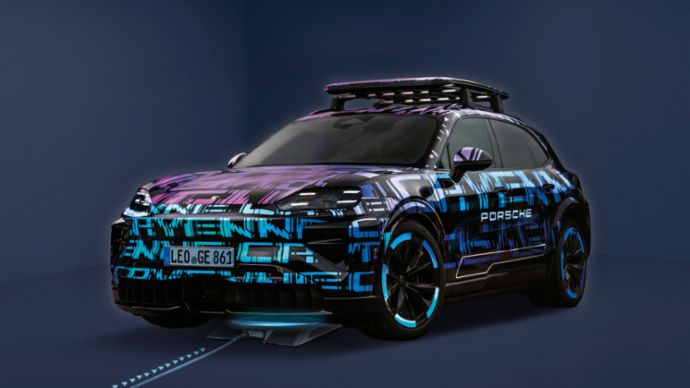
That also includes the optional feature of charging the new Cayenne inductively – without a cable – which we’ve long been doing with our cell phones. This requires two elements: the charging plate secured to the floor and the counterpart underneath the front of the SUV. Electricity flows between the two components and into the battery at 11 kW, with efficiency well over 90 percent.
Sports car and off-road vehicle in one
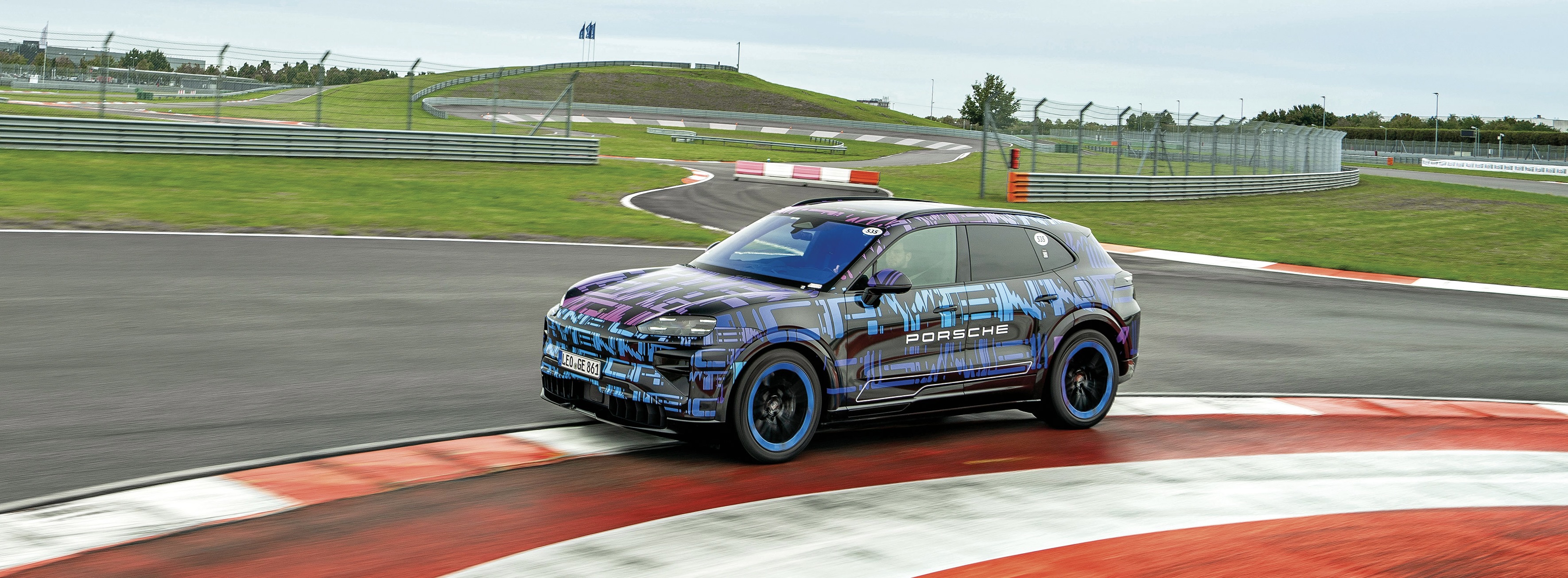
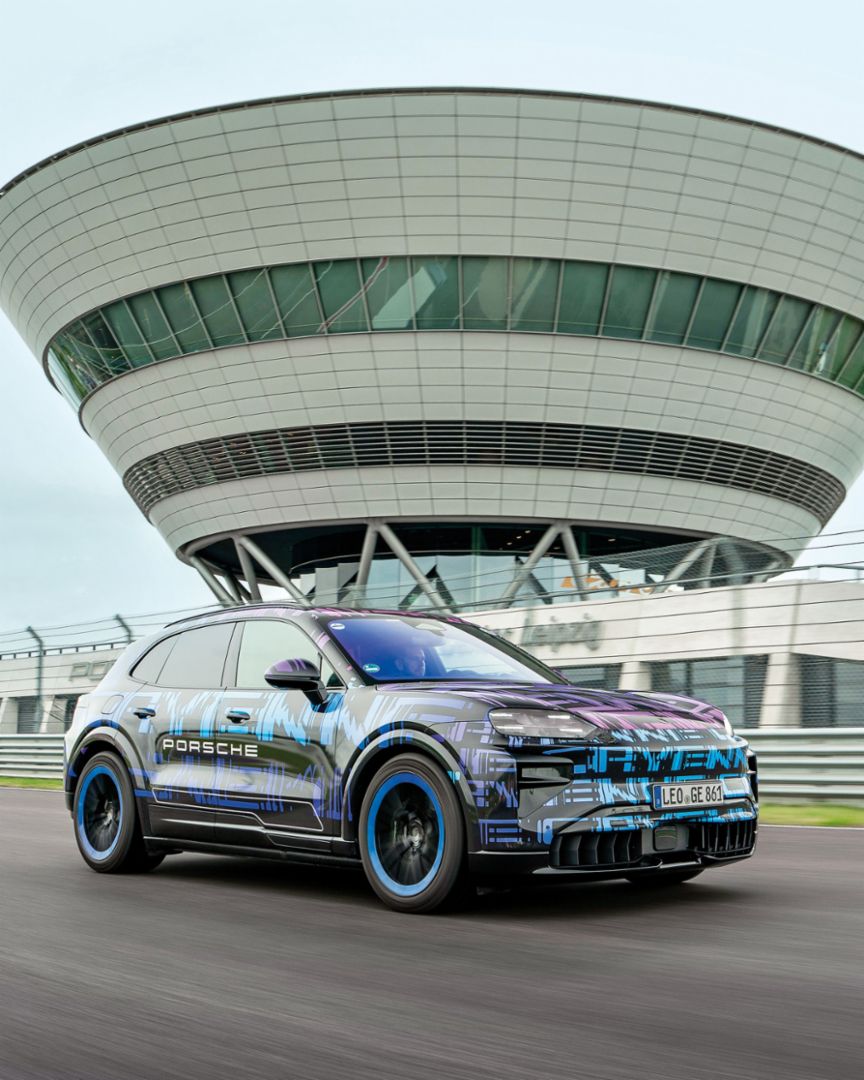
Back in Leipzig. The acceleration of the Cayenne is spectacular – especially when you consider the fact that it’s an SUV. Timo Kluck guides the car into the first curve with some panache, supported by the optional rear-axle steering and the controlled differential lock, which distributes the torque at the rear axle appropriately between the two wheels. If it weren’t for the high sitting position, the illusion of riding in a classic sports car would be perfect. Despite the audible squeal in the curves, the tires maintain their grip.
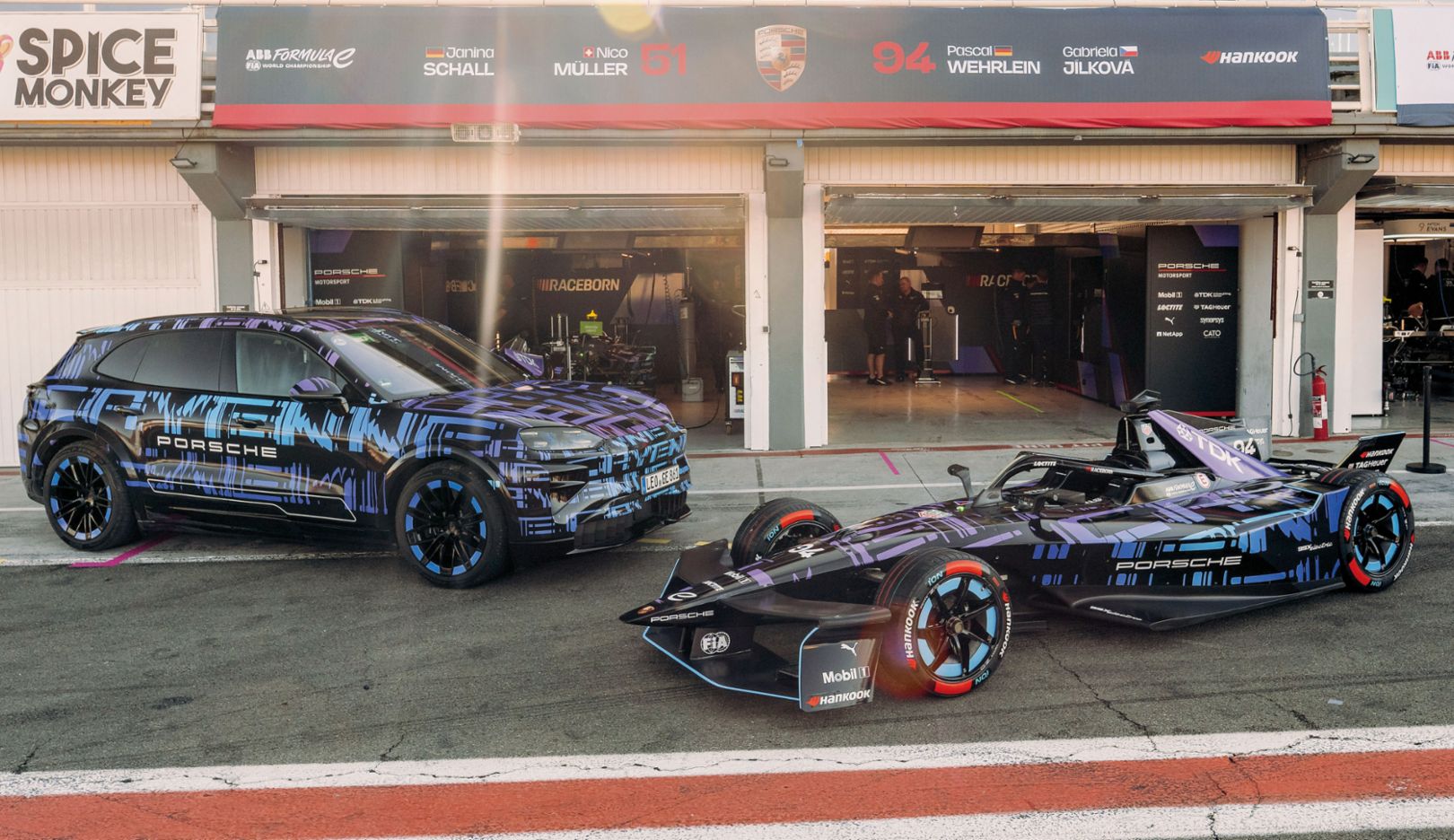
Motorsport DNA:
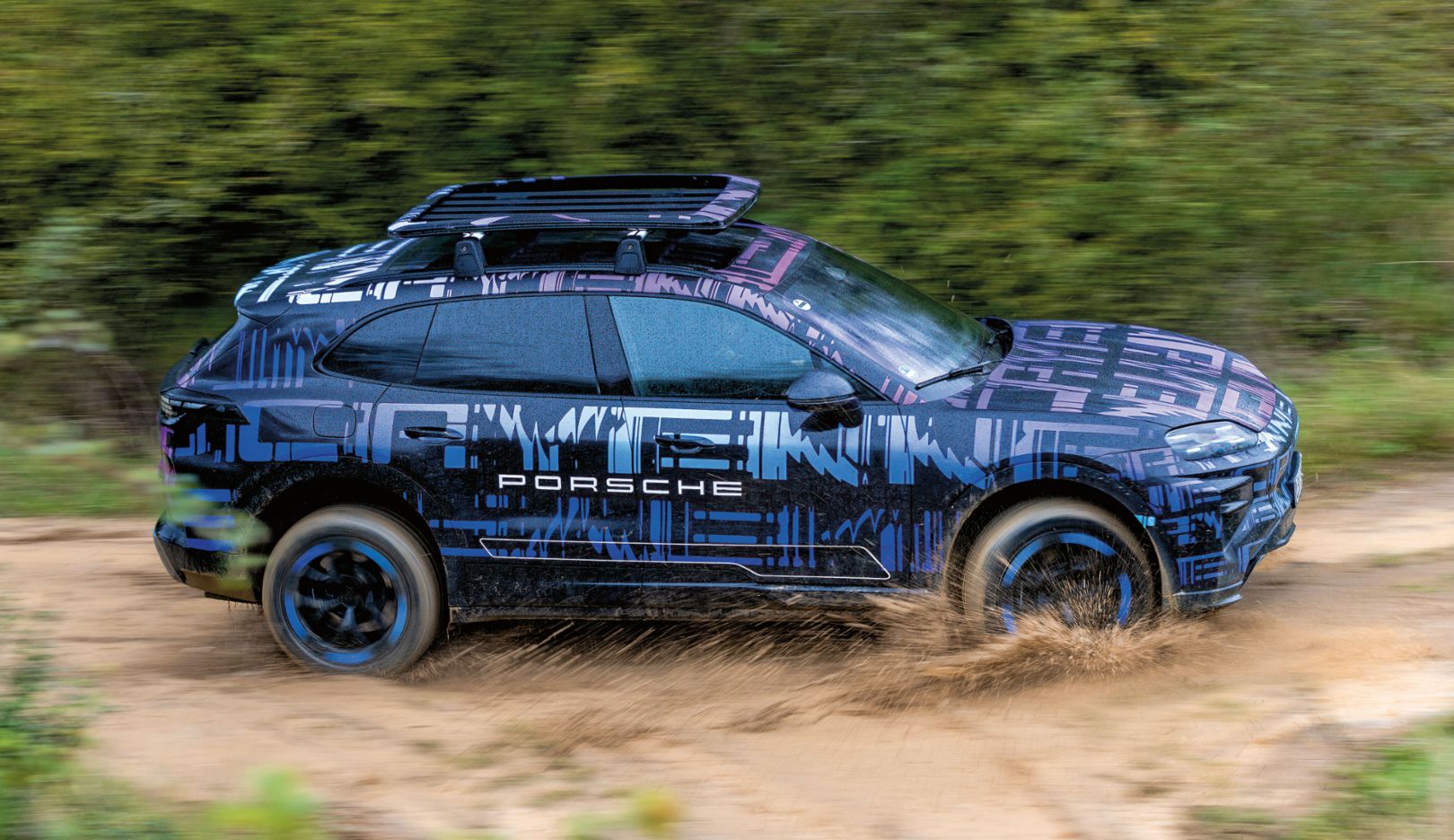
The 99X Electric Formula E race car on a test drive in the prototype camouflage of the Cayenne Electric. As an example of the technology transfer, both cars operate with a recuperation power of up to 600 kW.After a few quick laps on the course, it’s time to hit the Experience Center’s off-road track, where the sports car transforms into an off-road vehicle. The Cayenne Electric tackles challenges like steep inclines, axle articulation terrain, and relentless washboard tracks with ease. This is where the control systems come in. “Each wheel receives only as much torque as it can transfer to the slick surface,” Schätzle explains. The Porsche Traction Management (PTM) system distributes the torque fully variably within five milliseconds.
The Cayenne Electric delivers next-level performance across the board, whether it’s on or off the road or at the charging station. The first generation of the Cayenne was a courageous move in 2002. But 1.5 million cars produced clearly demonstrates just how successful it has been – and still is to this day. Nearly a quarter of a century later, the new model is now in the starting blocks, ready to take the baton – powered by an all-electric powertrain. The Cayenne Electric delivers the necessary performance – that much is clear.
Info
1 Battery charge level and battery temperature can affect push-to-pass performance.
2 Charging power in specific conditions with CCS fast-charging station with >400 kW, >850 V, >520 A, initial SoC 45–48%, battery temperature 40–42°C. Maximum charging power for DC when charging from 10% SoC to up to 80% SoC in optimal conditions: 390 kW (CCS fast-charging station with >390 kW, >850 V, >520 A, battery temperature 15°C, initial SoC 9%, and remaining range <60 km).
3 Charging time for DC charging at maximum charging capacity of 10% SoC to up to 80% SoC under optimal conditions (CCS fast-charging station with >390 kW, >850 V, >520 A, battery temperature 15°C, initial SoC 9%, and remaining range <60 km).
4 Range added in 10 minutes of DC charging at maximum charging capacity under optimal conditions (CCS fast-charging station with >390 kW, >850 V, >520 A, battery temperature 15°C, initial SoC 9%, and remaining range <60 km), based on WLTP consumption for a vehicle with standard features according to German market specifications.