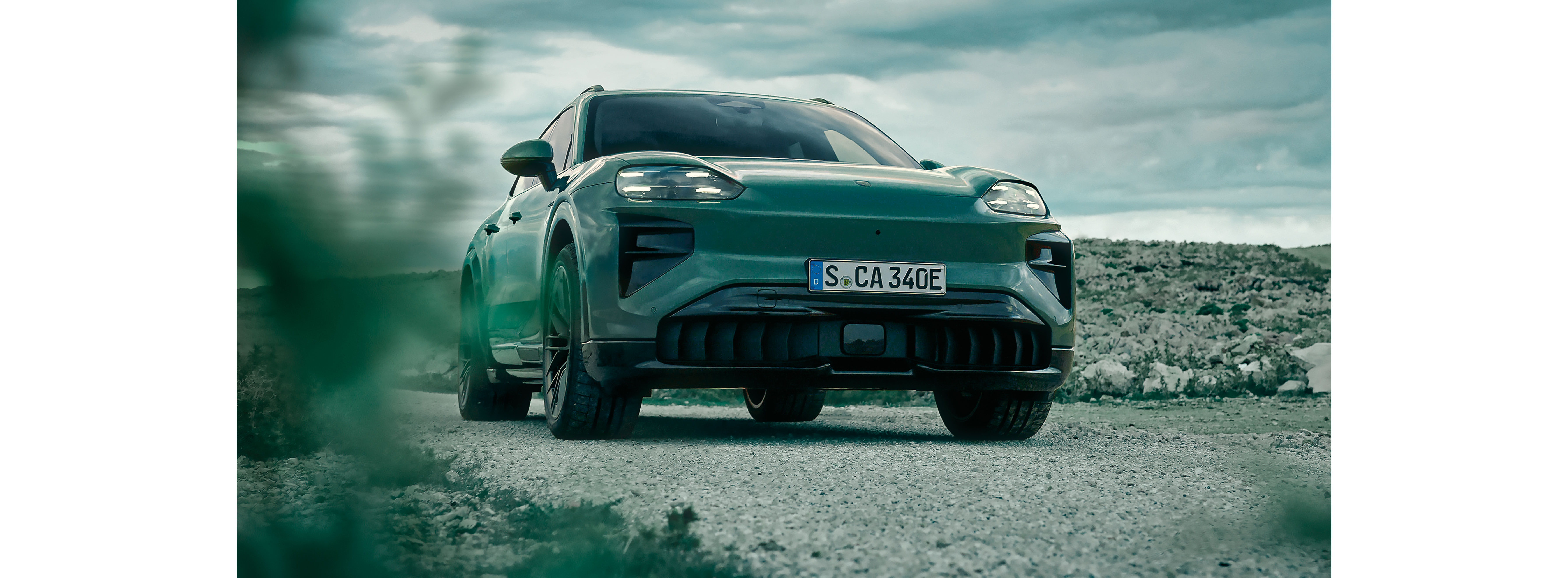
Showroom: Cayenne Electric
The Cayenne Electric marks the debut of the most powerful production Porsche ever. Christophorus presents it in all its glory in the “Showroom.”
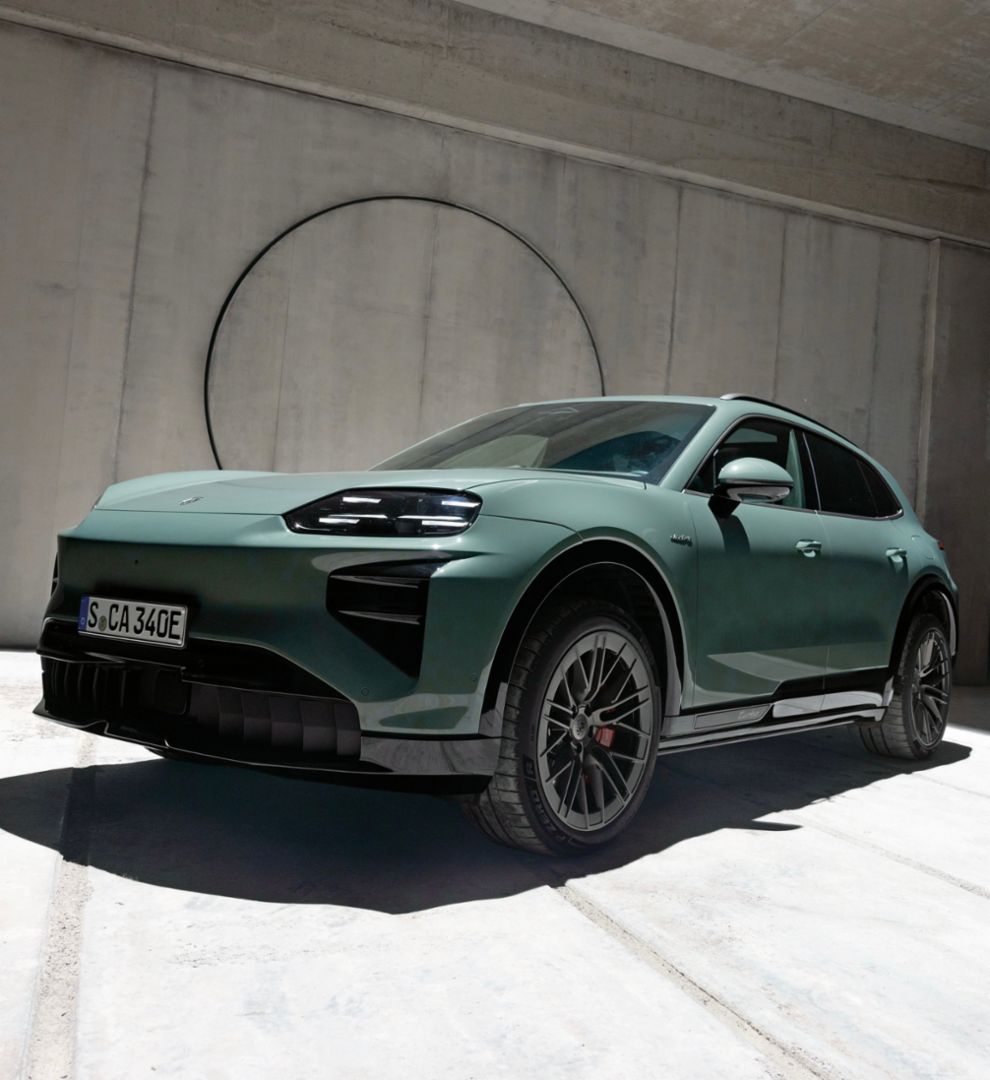
“If we build an off-road model according to our standards of quality, and it has a Porsche crest on the front, people will buy it,” said Ferry Porsche, founder of the sports car brand, in 1989, demonstrating his extraordinary foresight. But his vision wouldn’t come true for another 13 years, as development of an SUV only kicked off with the launch of the Colorado project, as it was known internally, in the late 1990s. And in 1999, the company made the decision to develop a new production facility in Leipzig, which was inaugurated in 2002. And in the same year, the first generation of the Cayenne celebrated its world premiere – under the critical eye of skeptics. Porsche and SUV – how could those two things possibly go together? But it soon became clear that the Cayenne was destined for success.
Rather than the 25,000 cars originally envisioned, more than 37,000 were sold annually during the first generation. In 2010, a hybrid variant was added to the Cayenne range, now in its second generation – a sign of things to come, as the brand’s electrification would continue to evolve in the 2010s.
“The Cayenne allowed us to successfully tap into a brand-new market segment for the first time,” said Dr. Oliver Blume, Chairman of the Porsche AG Executive Board, during the world premiere of the third generation. “Initially launched in 2002, our sports car in the SUV segment has proven to be a bestseller and growth engine. And what’s more, the Cayenne has opened doors for Porsche in many new markets.” And the success story only continued, with the one-millionth Cayenne sold in 2020. As demonstrated long ago, Porsche and SUV go hand in hand. Its technical bandwidth makes the Cayenne a family-friendly vehicle for travel – as both a robust off-roader and highly dynamic sports car with the customary Porsche performance.
And now the Cayenne has been electrified. The new Cayenne Electric celebrated its world premiere in November and will initially be available in two model variants. Get to know the electric SUV in all its glory in this Dossier and check out the optimized design language, the high-performance electric drive, and the new Driver Experience.
Showroom – first impressions
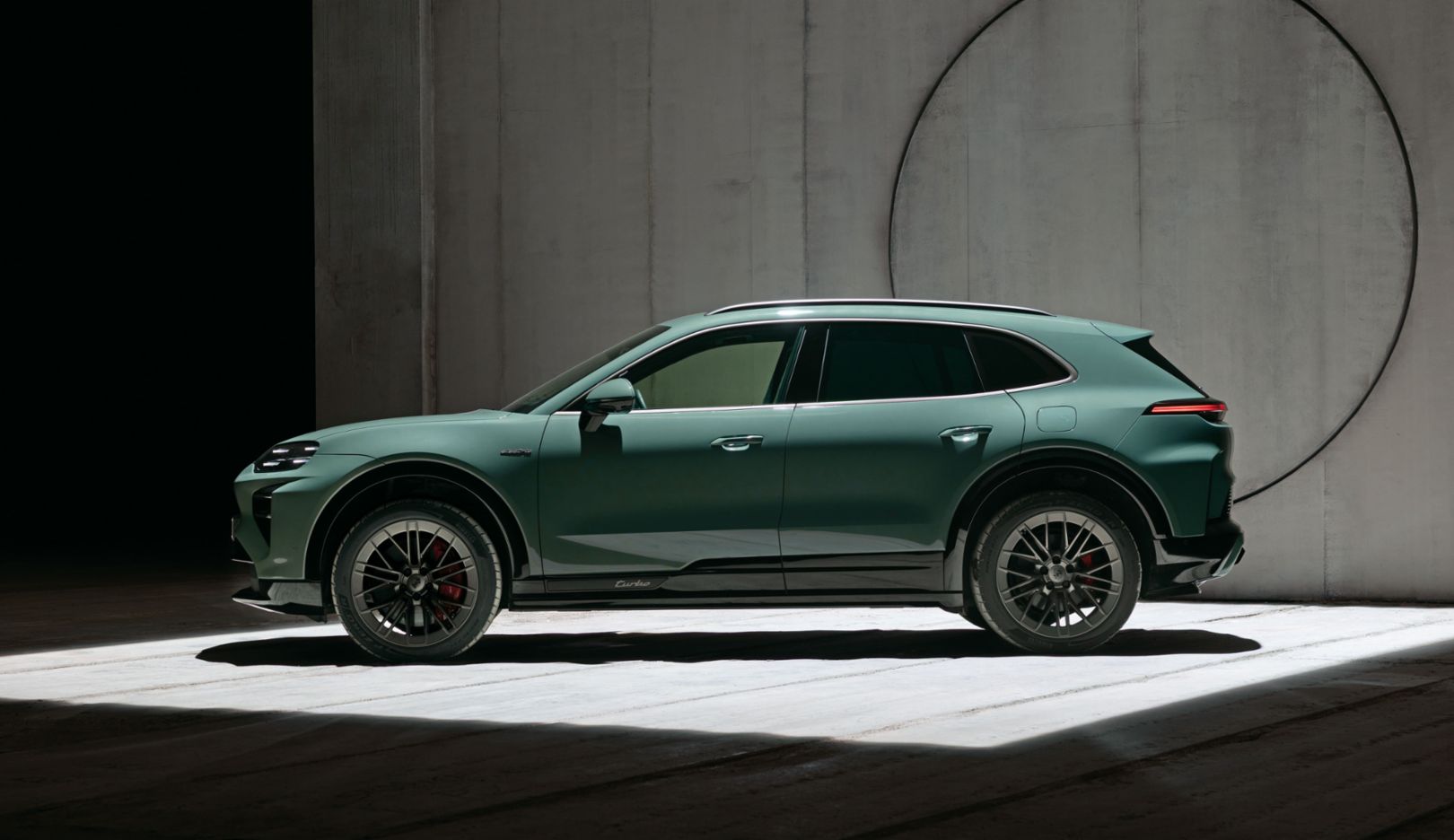
The all-electric Cayenne is initially available in two variants: the Cayenne Electric and Cayenne Turbo Electric. The Turbo variant is the most powerful production car that Porsche has ever built, with performance data on a par with that of super sports cars. Director of Exterior Design Peter Varga and his team were responsible for conveying this attribute through an optimized design language. “The Cayenne has long been a brand in its own right,” says Varga. “Its proportions communicate a sense of emotion, which we’ve reinforced for the Cayenne Electric – for example, with the extended fenders.” But any form of exaggeration was intentionally avoided. “We allow the basic sporty proportions to speak for themselves.” The electric SUV combines distinctive brand proportions with a clearly optimized design. You can see for yourself exactly what that looks like on the following pages of the Showroom. “I still can’t believe what the Cayenne Electric is capable of,” says Peter Varga.
Driver Experience – personalized comfort
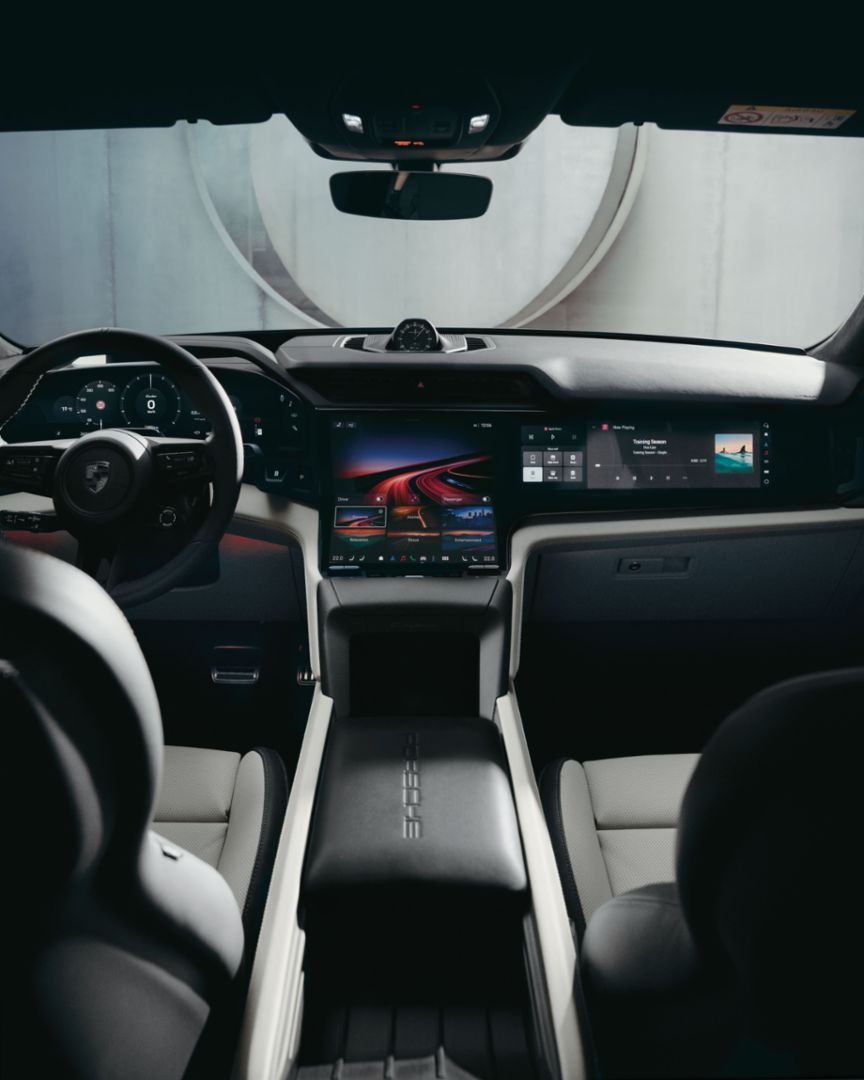
As an electric innovation, the Cayenne also requires a state-of-the-art interior, which is why a new cockpit was developed that takes the driving experience to a whole new level. The Cayenne Electric features the largest display area ever installed in a Porsche. It can be updated and offers maximum customization with new functions, demonstrating that no compromises were made when it came to digitalization.
The electric drive, with super sports car performance
From motorsport to series production – this concept also applies to the Cayenne Electric, which benefits from Formula E experience. With a power of up to 850 kW (1,156 PS; Cayenne Turbo Electric (WLTP)*: Electrical consumption combined: 22.5 – 20.4 kWh/100 km; CO₂ emissions combined: 0 g/km; CO₂ class: A), it ventures into territory no one would have thought possible in 2002. For comparison, the 2002 Cayenne Turbo delivered 331 kW (450 PS), which at that time was a lot for an SUV and rivaled sports car performance. Today, Porsche is looking to the future – so it makes sense that the Cayenne Electric is a technology platform in terms of performance data, as well as charging, thermal management, and recuperation, which it inherited from the 99X Electric Formula E race car.
Super Sports Car Performance
Record figures: The Cayenne Turbo Electric accelerates from 0 to 100 kmh in 2.5 seconds and 200 kmh in 7.4 seconds, with a top track speed of 260 kmh. This powerful electric performance is the result of a newly developed drive system that, with Launch Control activated, delivers an output of up to 850 kW (1,156 PS) and torque of up to 1,500 Nm.
Modern Design Language
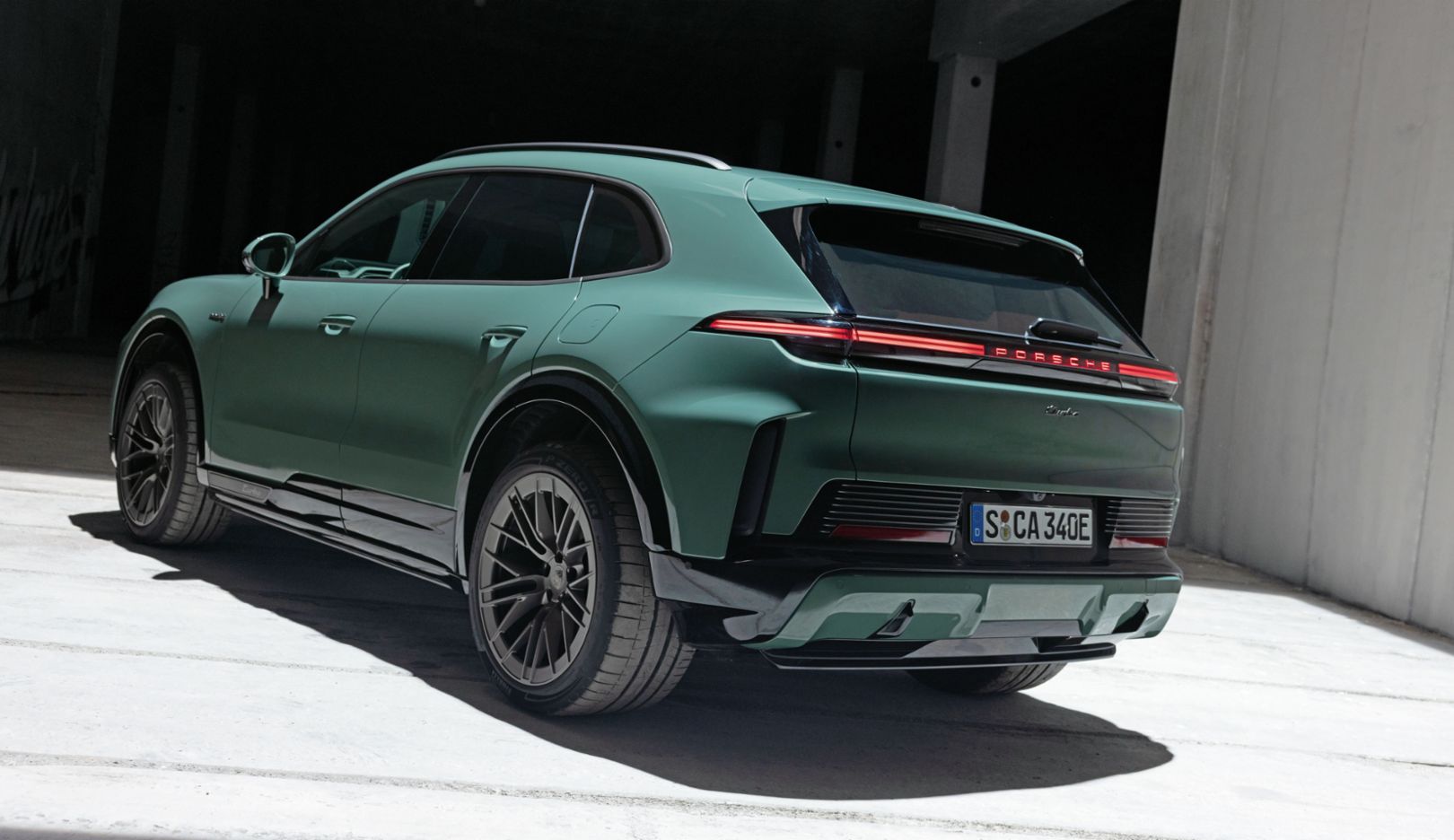
Evolution: The Cayenne Electric combines customary brand proportions with a clearly optimized design language. Highlights include the low hood with flat Matrix LED Design headlights featuring optional HD technology, which not only emphasize the vehicle width, but also combine all the light functions in a single module. The boldly sculpted fenders and flyline are distinctive Porsche features.
Driver Experience
Digital: The heart of the largest display area ever installed in a Porsche is the Flow Display, a curved OLED panel that blends seamlessly with the central console. There’s also an instrument cluster with 14.25-inch OLED technology and an optional 14.9-inch codriver display. Streaming and gaming functions and the AI-supported voice pilot take the digital experience to a whole new level.
Interactive Interior
State of the art: The new Porsche Digital Interaction philosophy complements the Porsche Driver Experience and is designed with customization and quick access to functions in mind. Available in the Cayenne for the first time, a head-up display with AR technology projects an 87-inch display area at a distance of 10 meters ahead of the vehicle.
Two Model Variants
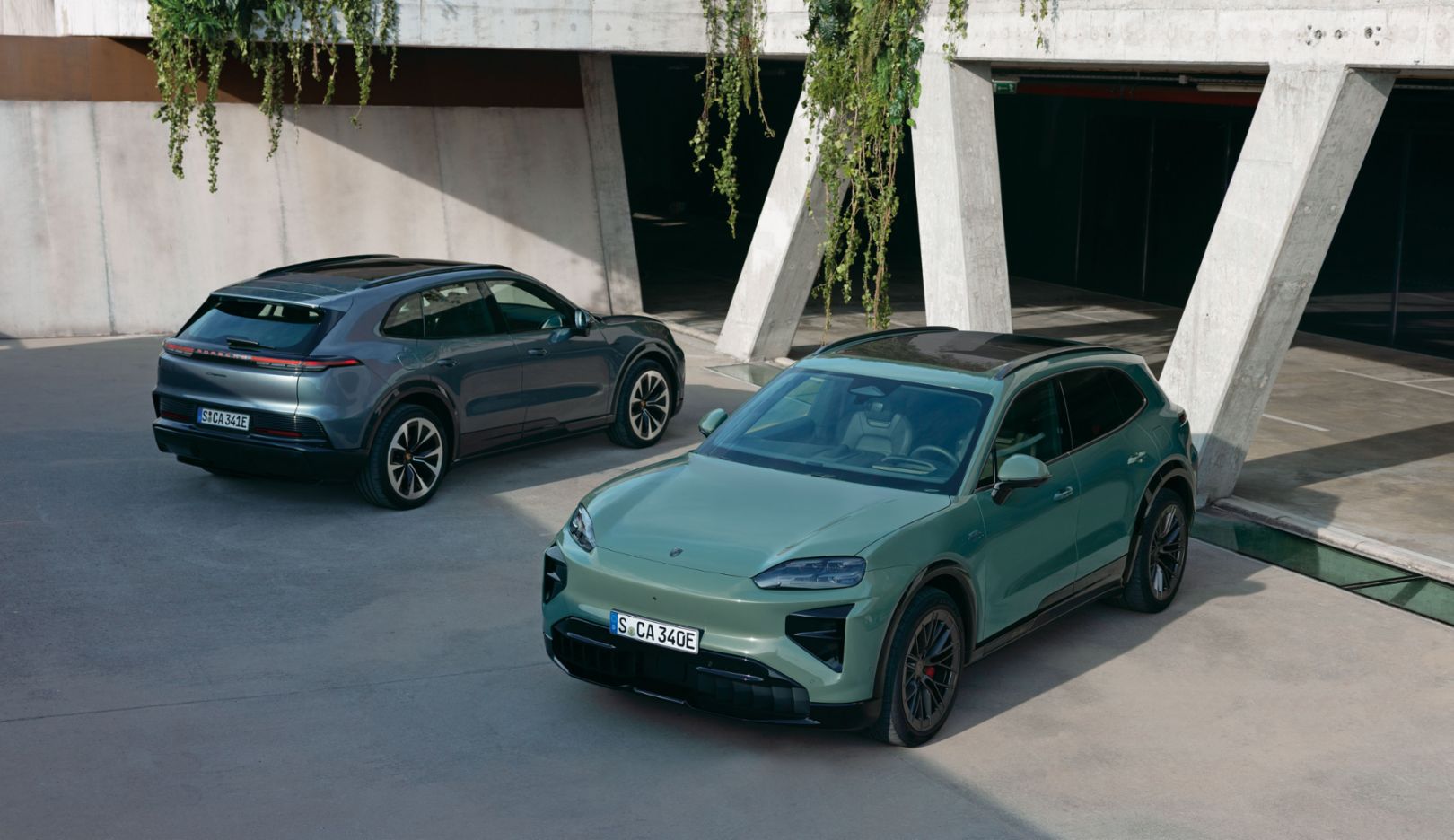
Powerful: The all-electric Cayenne range initially includes two models: the Cayenne Electric, shown here in Vanadium Grey Metallic, and the Cayenne Turbo Electric, here in Mystic Green – both with all-wheel drive and, depending on features, a towing capacity of up to 3.5 tons. An extraordinary amount in the BEV segment. The electric SUV will complement the existing range of combustion engine and hybrid models.
Personalized Lighting
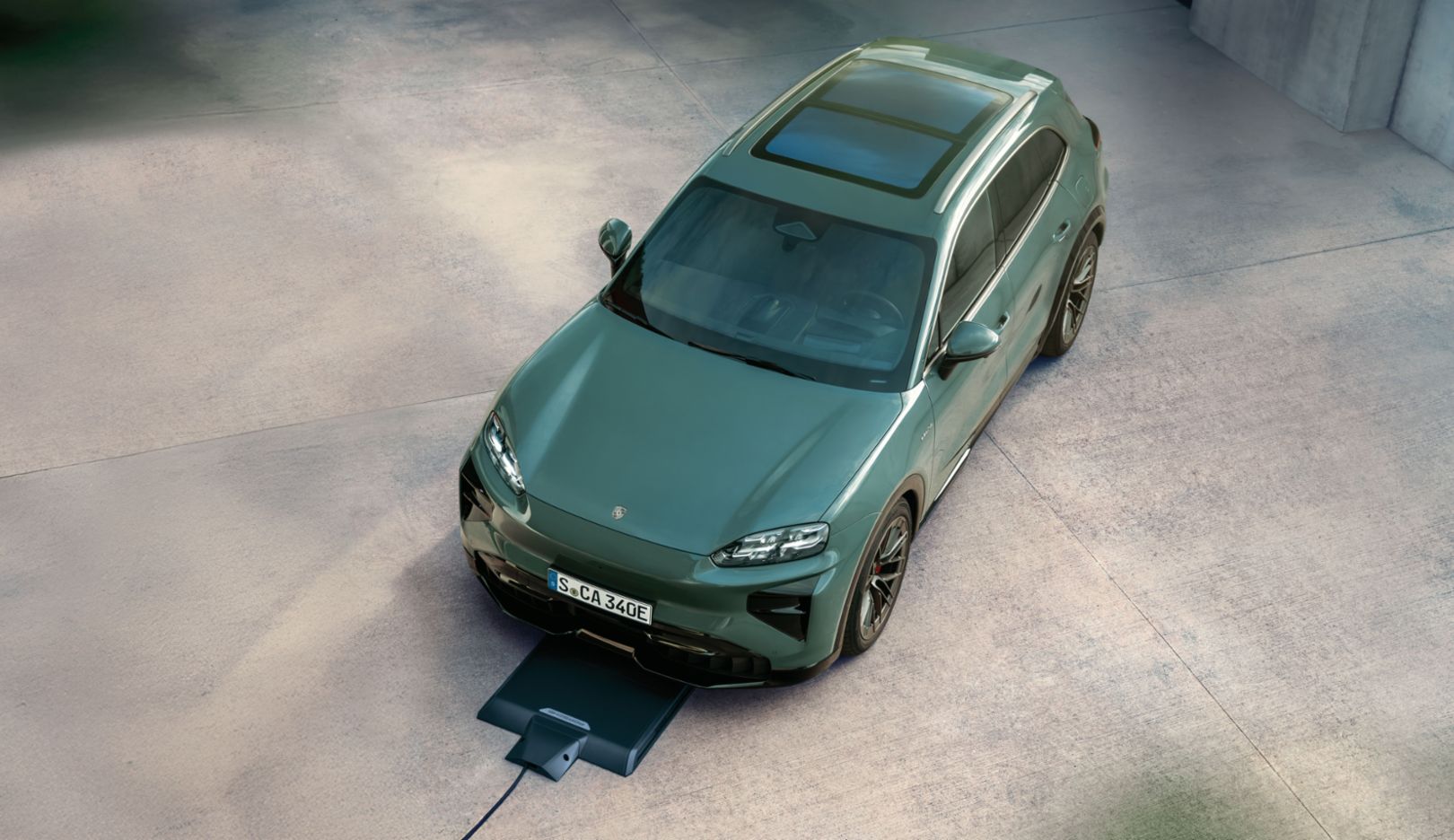
Customizable: A panoramic sliding roof with Variable Light Control creates an airy spaciousness and is the largest glass roof ever used in a Porsche. The new Mood Modes transform the interior into an experience zone that adapts to the mood and situation. The seating position, lighting, air-conditioning, sound profile, and display setting change depending on the program selected.
A Spacious Feel
New benchmark: The Cayenne Electric is around 55 millimeters longer than the combustion engine model. The new SUV measures 4,985 millimeters in length, 1,980 millimeters in width, and 1,674 millimeters in height. The biggest difference is the wheelbase, which at 3,023 millimeters represents an increase of around 13 centimeters. The passengers in the back enjoy more space and comfort than ever before.
Typically Porsche
Progressive: The modern design language is expressed in the illuminated Porsche lettering as well as through striking details at the rear such as the light strip with a distinctive 3D look and an animated graphic. The Cayenne Turbo features many contrasting elements in the exclusive color Turbonite, including the Porsche crest, the front surfaces of the alloy wheels, and the side window trim.
Active Aerodynamics
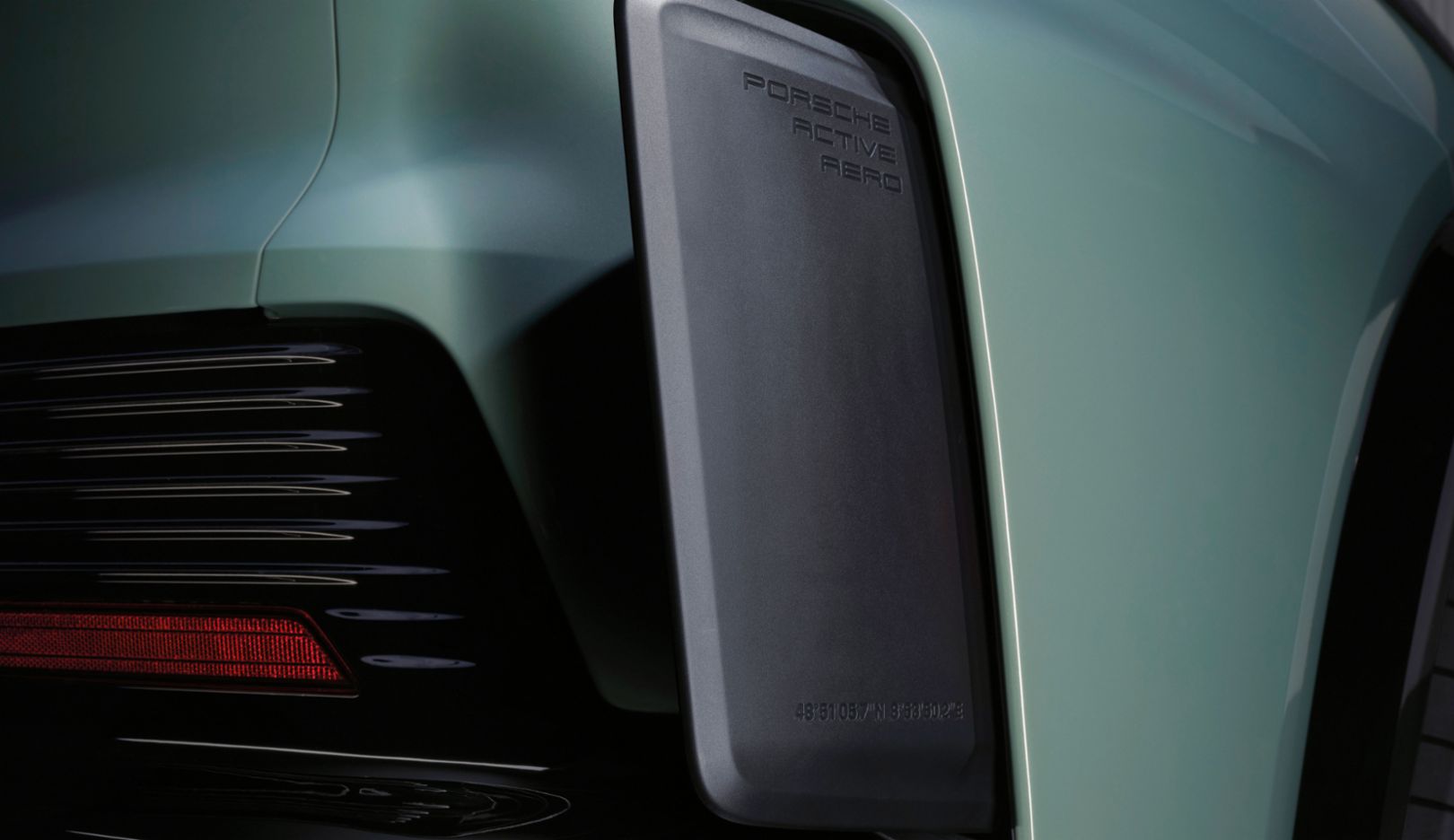
Streamlined: With a drag coefficient of 0.25, the Cayenne Electric is one of the most streamlined SUVs in its class. Aerodynamic elements include active cooling air flaps at the front, the adaptive roof spoiler, and the aeroblades at the rear of the Turbo, which lengthen the Gurney flaps on the sides and improve the aerodynamic properties.
Impressive Range
Longer trips: With cooling on both sides for optimal thermal management, the newly developed 113 kWh high-voltage battery is at the heart of the two all-electric Cayenne models. The Cayenne Electric therefore delivers a combined WLTP range of up to 642 kilometers, and the Turbo up to 623 kilometers, which makes the electric SUV suitable for longer routes.
Powerful Charging
Short stops: Thanks to 800-volt technology, the Cayenne Electric can charge at up to 400 kW DC1. At a suitable DC fast-charging station in optimal conditions, the state of charge (SoC) can be increased from 10 to 80 percent in less than 16 minutes2. And a range of 325 (Cayenne) and 315 kilometers (Cayenne Turbo) can be charged in just 10 minutes3. The Cayenne Electric is also the first Porsche to support optional inductive charging with up to 11 kW.
Detailed Sculpting
Sporty: Eye-catching elements visible from the side include the frameless doors and the seam along the door surface. The three-dimensional side skirts are painted in Volcano Grey Metallic on the Cayenne Electric and in high-gloss black on the Turbo model – for a two-tone concept that underlines the sporty proportions. The wheel arch trims featuring model-specific designs further emphasize the off-road character.
Tailored Design
Limitless: Customers can choose from 13 standard colors, nine wheel designs, 12 interior combinations, and up to five interior and accent packages. The Porsche Exclusive Manufaktur and the Paint to Sample and Sonderwunsch programs also allow customers to further personalize their Cayenne, from individual options to one-off Sonderwunsch vehicles.
1 Charging power in specific conditions with CCS fast-charging station with >400 kW, >850 V, >520 A, initial SoC 45–48%, battery temperature 40–42°C. Maximum charging power for DC when charging from 10% SoC to up to 80% SoC in optimal conditions: 390 kW (CCS fast-charging station with >390 kW, >850 V, >520 A, battery temperature 15°C, initial SoC 9%, and remaining range <60 km).
2 Charging time for DC at maximum charging power from 10% SoC to up to 80% SoC in optimal conditions (CCS fast-charging station with >390 kW, >850 V, >520 A, battery temperature 15°C, initial SoC 9%, and remaining range <60 km).
3 Range added after 10 minutes of DC charging at maximum charging power in optimal conditions (CCS fast-charging station with >390 kW, >850 V, >520 A, battery temperature 15°C, initial SoC 9%, and remaining range <60 km), based on WLTP consumption for a vehicle with standard features according to German market specifications.