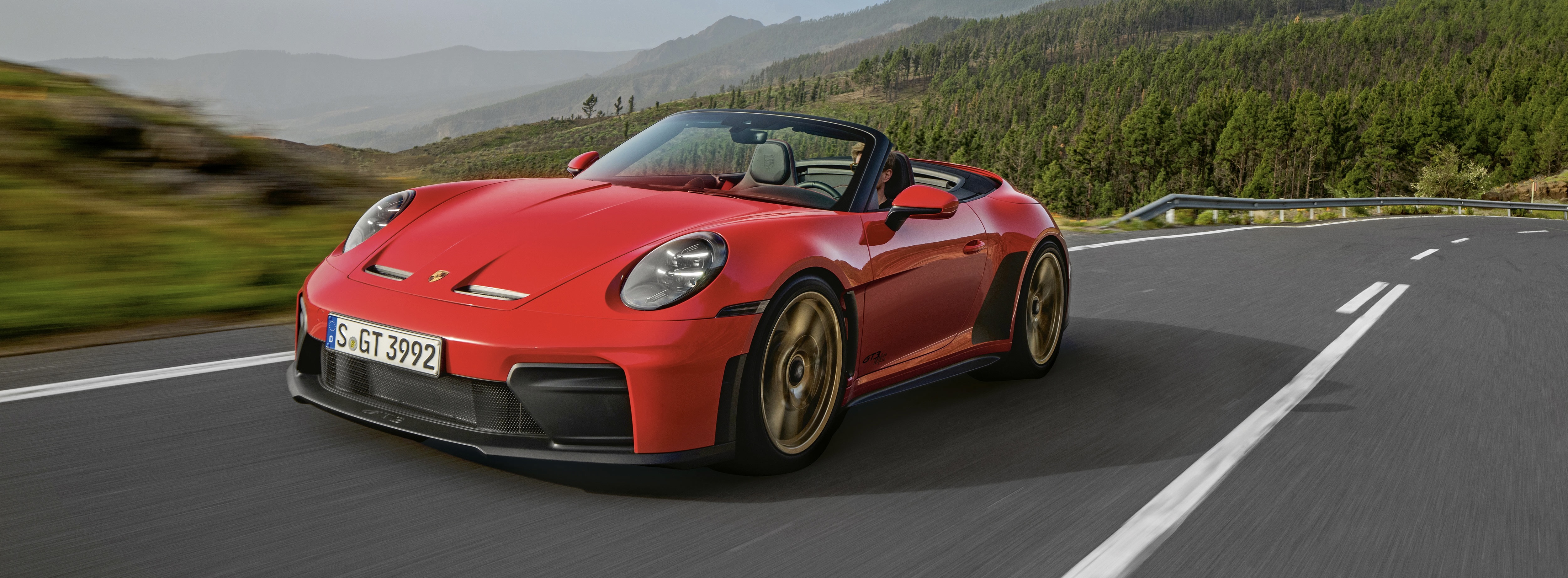
Showroom: 911 GT3 S/C
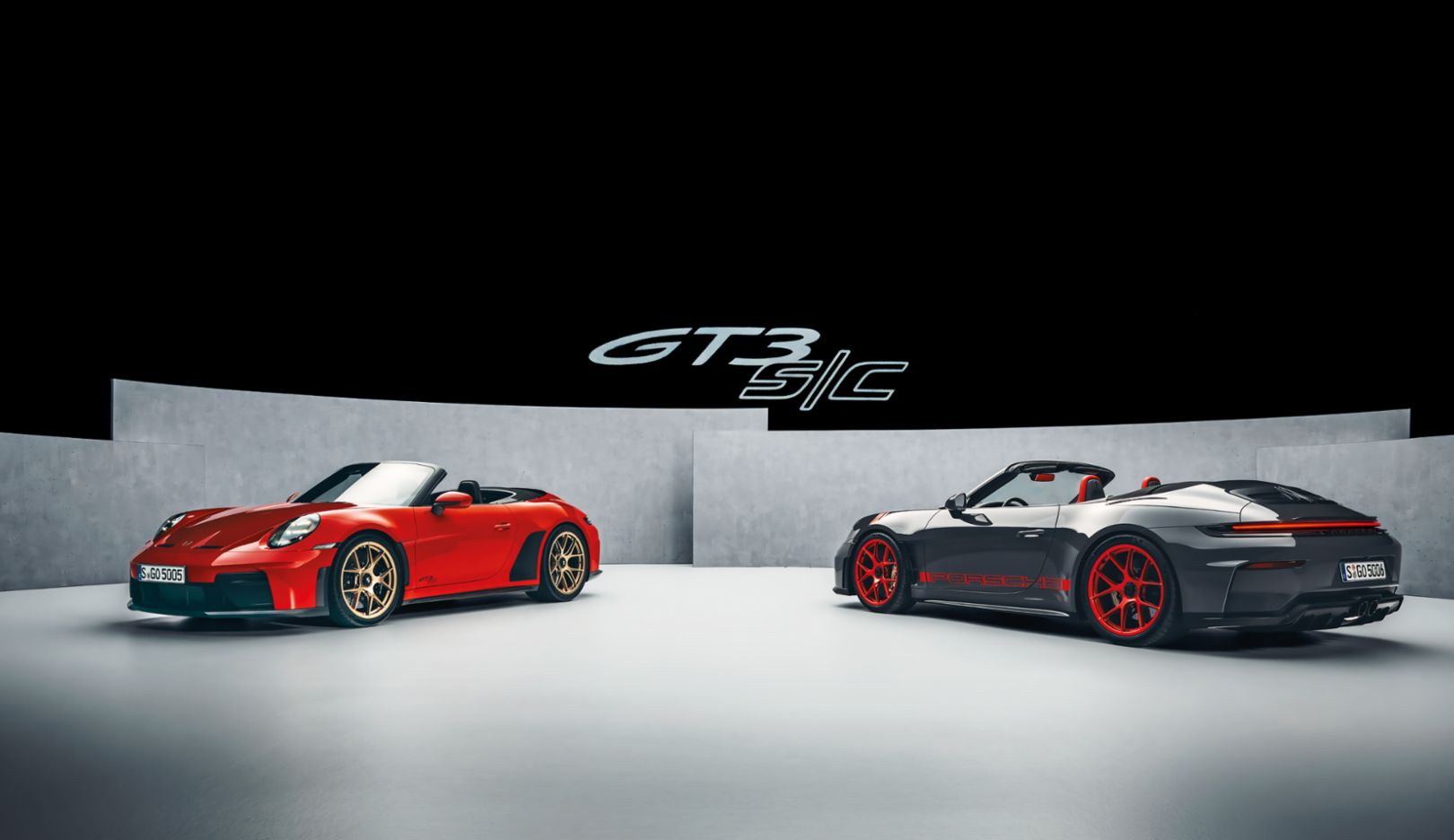
Porsche is unveiling a 911 GT3 with a fully automatic convertible top for the first time. In its Showroom article, Christophorus showcases details of this lightweight sports car designed for driving pleasure.


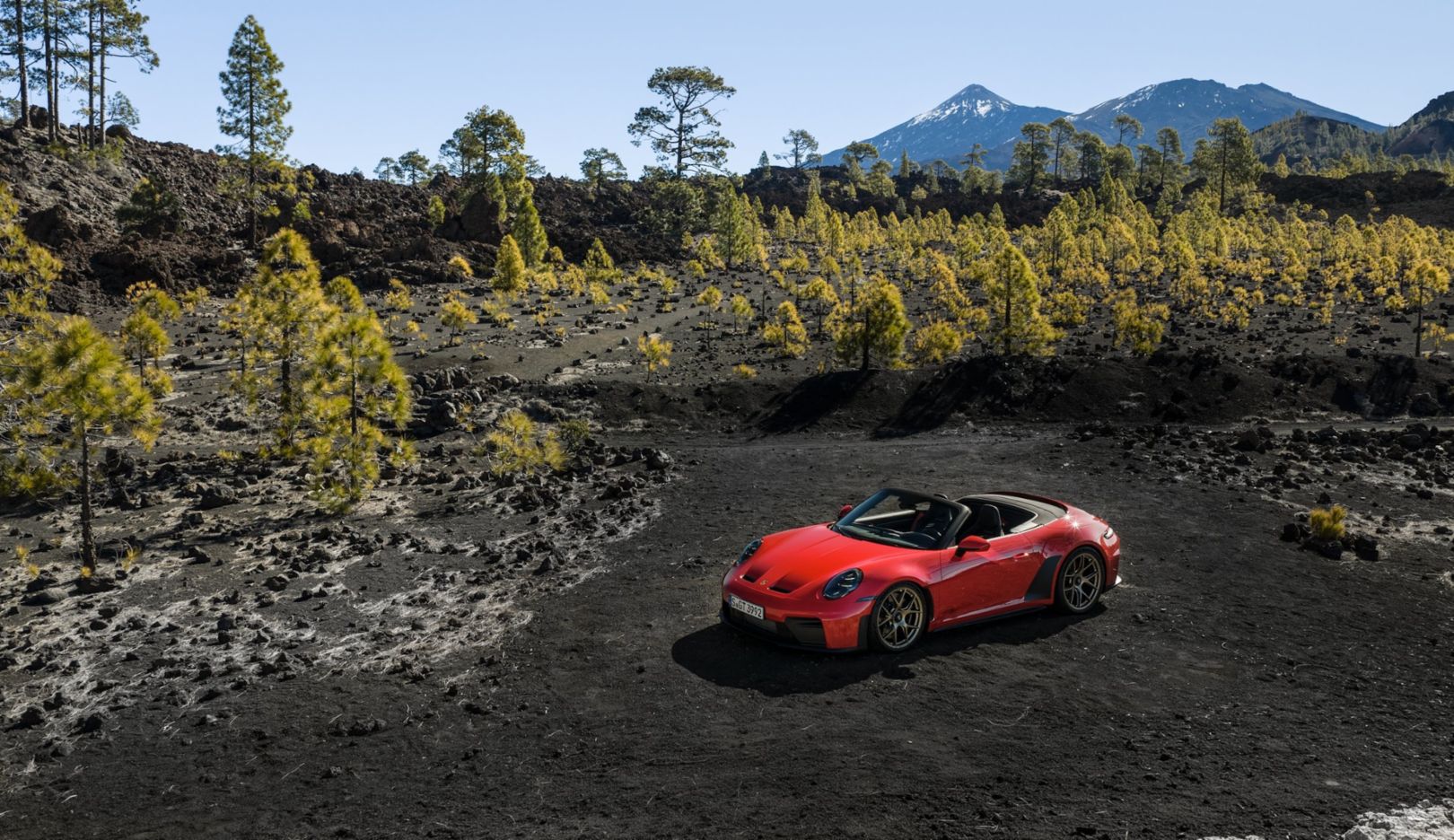


First Open-Top 911 GT3
(911 GT3 S/C (WLTP)*: Fuel consumption combined: 13.7 l/100 km; CO₂ emissions combined: 310 g/km; CO₂ class: G)
(911 GT3 (WLTP)*: Fuel consumption combined: 13.8 – 13.7 l/100 km; CO₂ emissions combined: 312 – 310 g/km; CO₂ class: G)
Unfiltered: Porsche is launching a convertible 911 GT3 with a fully automatic top for the first time. The 911 GT3 S/C combines the lightweight design of the 911 S/T with the naturally aspirated 4.0-liter boxer engine of the 911 GT3, with a power of 375 kW (510 PS) and 450 Nm of torque, and promises an exceptional driving experience. The sports car can accelerate from 0 to 100 kmh in 3.9 seconds and has a top track speed of 313 kmh.

Fully Automatic Top
Tribute: As the only open-top car in the current 911 range designed as a pure two-seater, the new 911 GT3 S/C pays tribute to the 911 Speedster from 2019. The vehicle uses the fully automatic lightweight top from the 911 Cabriolet models. Thanks to the extremely light hydraulic roof system, the top can be opened and closed in around 12 seconds at speeds of up to 50 kmh.
Customary GT Agility
911 S/T inspiration: The use of ultralight, premium materials ensures the high agility that GT cars are known for. The hood, fenders, and doors are made from carbon fiber–reinforced plastic (CFRP) in the style of 911 S/T. The brakes and wheels also follow the S/T lightweight formula: PCCB brakes, more than 20 kilograms lighter than conventional cast-iron brakes, are fitted as standard.
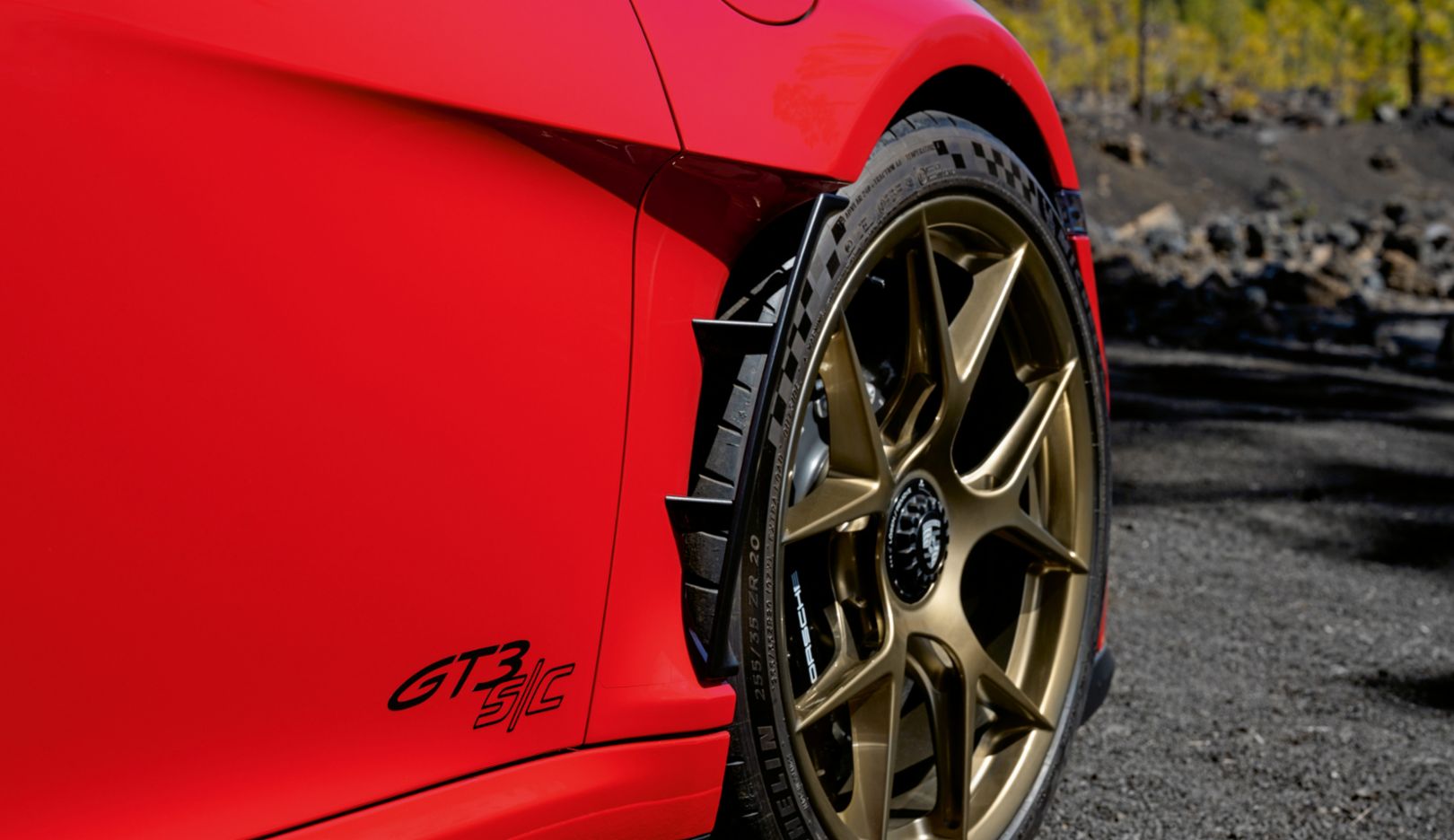
Lightweight Design Throughout
Materials: The center-lock 20-inch front wheels and 21-inch rear wheels, already installed in the 911 S/T, are made from lightweight magnesium. This saves around nine kilograms of weight in rotational mass. Magnesium is also used in the top, while a 40-Ah lithium-ion lightweight battery contributes to the car’s athletic power-to-weight ratio.
Maximum Driving Pleasure
Manual transmission: As a driver’s car, the 911 GT3 S/C is exclusively available with a close-ratio, lightweight, six-speed sport manual transmission. The interior features lightweight carpets and door panels with pull handles made from carbon fiber–reinforced plastic (CFRP) – also adopted from the 911 S/T. The 911 GT3 S/C has an overall curb weight of 1,497 kilograms.
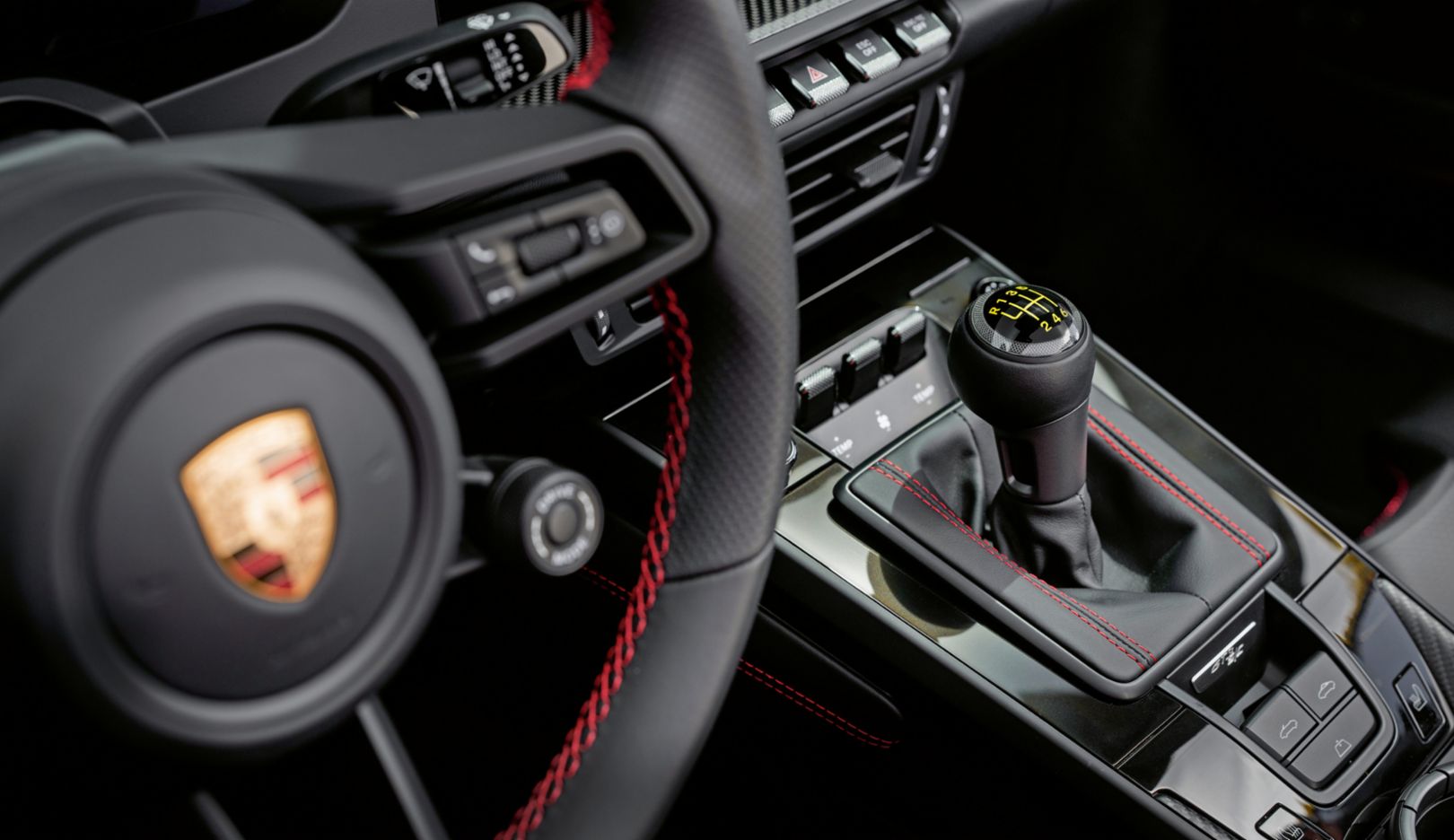
Premium Interior
Stylish: The interior is upholstered in black leather as standard, including the sun visors and A-pillar trim. The GT3 S/C logo is embroidered into the rear panel trim. The seat center panels and steering wheel are finished in perforated leather. Similar to the fixed-roof 911 GT3, the open-top version is also started with an ignition switch to the left of the steering wheel.
Emotional Acoustics
Sporty: The 911 GT3 S/C delivers an emotional soundscape that is even more intense when the roof is open. The cylinder heads have been revised compared to the previous-generation 911 GT3, while the more radical camshafts from the 911 GT3 RS provide an even more dynamic power delivery in the upper rev range, reaching up to 9,000 rpm.
Street Style Package
Extravagant: Porsche Exclusive Manufaktur offers an optional Street Style package for the 911 GT3 S/C. The center console panels are upholstered in four-tone braided leather in Slate Grey, Guards Red, Magnesium Grey, and Kalahari. The interior is dominated by two-tone leather in Slate Grey and Guards Red. A tactile highlight: the gearshift lever with an open-pore laminated wood knob and a shift pattern in Pyro Red.


