The Transaxle Era in Fast-Forward
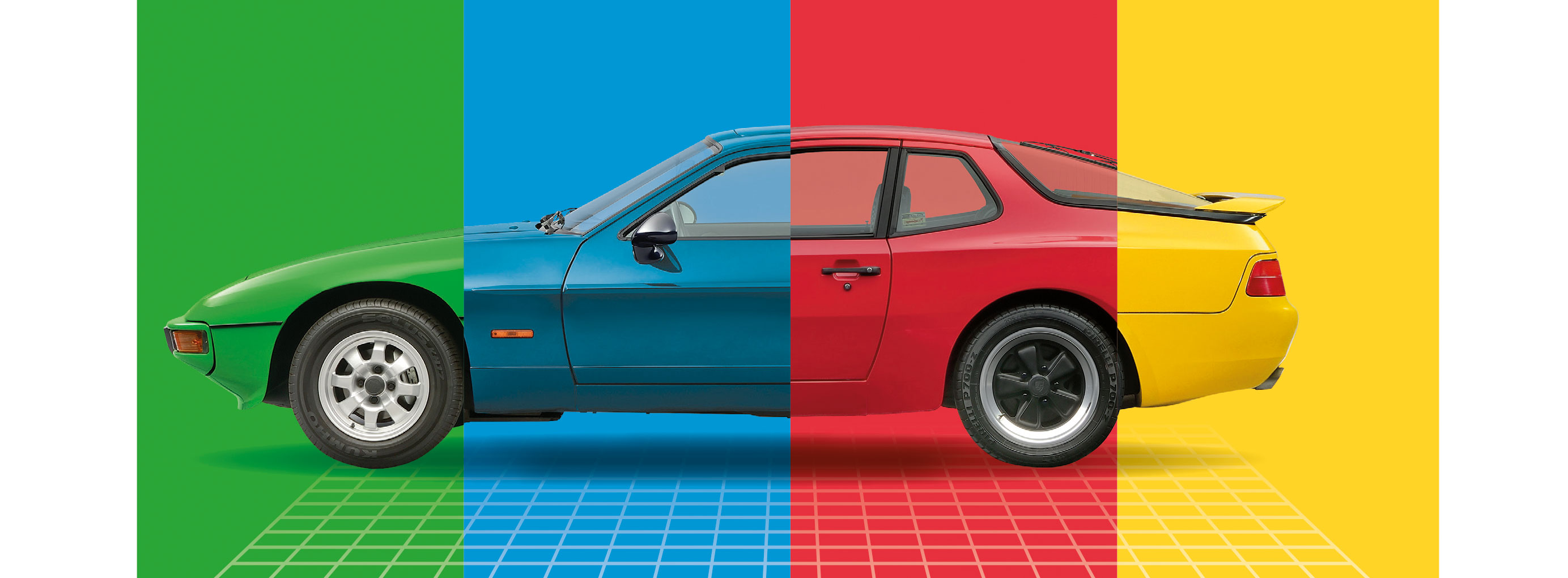
A 15-year-old wins a 924. Tom Cruise makes his getaway in a 928. The 944 is given its own racing series. Facts, anecdotes, and milestones from the transaxle era.
Porsche 924
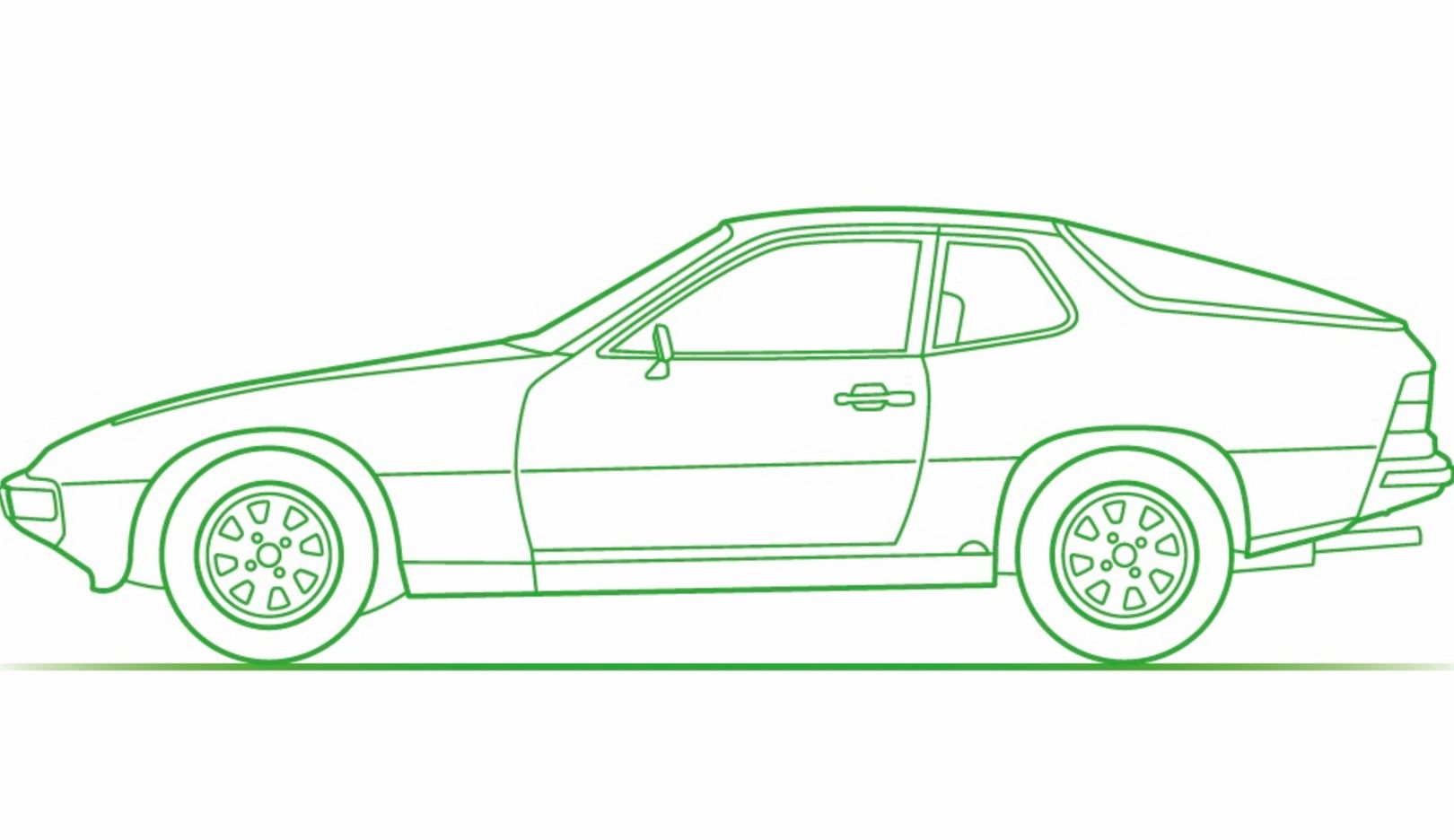
1975 The Porsche 924 is unveiled as a pre-series model in La Grande-Motte, France, in November. 1976 Series production kicks off. The 924 is marketed as a new Porsche entry model featuring water-cooled front engine and transaxle concept. 1977 Just a year after the start of production, every second Porsche produced is a 924. A special-edition 924 is launched to mark the World Sportscar Championship, which the company had won the year prior with the 935 and 936. Limited to 3,000 units, the vehicle is painted in Grand Prix White and boasts decorative stripes on the sides in the colors of Porsche sponsor MARTINI. 1978 Porsche presents a Turbo version of the 924 to close the performance gap to the 911 and 928. At the age of 15, US American child prodigy Tracy Austin wins the first edition of the Porsche Tennis Grand Prix in October. Her prize: 35,000 US dollars and a 924. 1979 Tracy Austin is victorious once again in the Porsche Tennis Grand Prix, this time receiving a 924 Turbo. She wins the same car again with her third victory one year later. At the International Motor Show (IAA) in Frankfurt, the Turbo-based 924 Carrera GT is introduced. A total of 406 units are produced. Beatles guitarist George Harrison adds one of the rare derivatives to his collection. 1981 The 924 Carrera GTP competes in Le Mans with Walter Röhrl and Jürgen Barth behind the wheel – officially. In reality, it’s a 944. But because the 944 has not yet been homologated, it’s registered as a 924 in the GTP prototype category. It takes third place in its class and seventh in the overall ranking. Walter Röhrl also celebrates successes in the Deutsche Rallye-Meisterschaft, securing the overall win in four of seven races with copilot Christian Geistdörfer in the black and gold 924 Carrera GTS, also referred to as the Monnet Porsche. 1982 Several 924 derivatives go hunting for criminals as German police cars, featuring special equipment like the Martinshorn, blue lights, a two-way radio, and a warning sign in the rear windshield. The 100,000th 924 is produced in the same year. 1985 The 924 S with 2.5-liter engine, overhauled chassis, and 110 kW (150 PS) replaces the basic model. 1987 The last technical update, increasing the performance of the 924 S to 115 kW (160 PS). 1988 The last 924 rolls off the line as an S version in August. More than 150,000 units are produced in total.
Porsche 928
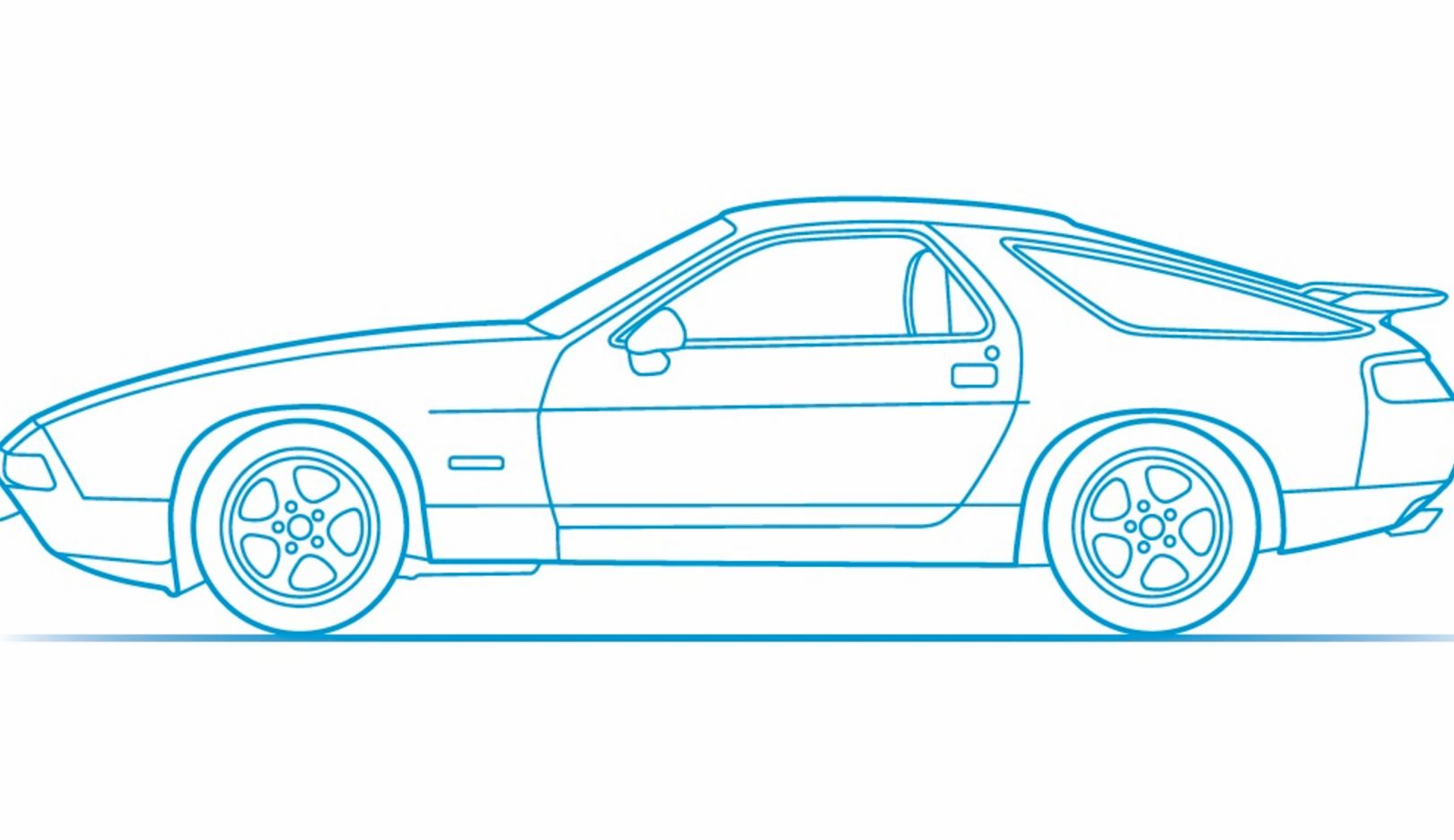
1977 World premiere of the 928 with up to 176 kW (240 PS) V8 front engine, depending on the market, at the Geneva International Motor Show. Developed to be a modern successor to the 911, the gran turismo makes its debut with the so-called Weissach axle, a passive form of rear-axle steering that improves driving behavior in curves. The basic principle is now used in every sports car. 1978 International automotive journalists name the 928 “Car of the Year” – the only sports car ever to bear the title. In the same year, the Austrian endurance tester Gerhard Plattner sets out on a record endurance run in the 928. His journey takes him from New York City to Alaska and from the Finnish Arctic Circle to Moscow and then on to Paris. Total length: 30,000 kilometers. 1979 The 928 S is unveiled at the IAA and launches one year later. In addition, 1979 is the only year in which men also compete in the Porsche Tennis Grand Prix. Wojtek Fibak of Poland beats Guillermo Vilas of Argentina in the final, winning 75,000 US dollars and the opportunity to drive the 928 for one year, after which the car is auctioned off to the highest bidder by the Association of Tennis Professionals (ATP). 1981 Porsche introduces a special series of the 928 S comprising 140 units in the color Meteor Metallic, with an interior dominated by wine red leather. 1982 The Weissach Edition 928 appears as a limited edition and is only available in the color Light Bronze Metallic. In addition to the front and rear spoiler of the 928 S and fog lights, the vehicle also features headlight washer fluid, rear windshield wipers, an automatic antenna, and a dual exhaust system. 24-hour record: A 928 S covers exactly 6,033 kilometers during an endurance race on the test track in Nardò, Italy, with an average speed of 251.4 kmh. 1983 The 928 stars alongside Tom Cruise in the movie Risky Business. After a high-speed chase in the gran turismo, Cruise says, “Porsche – there is no substitute,” a statement first uttered by a journalist in 1975. Simply by using it, the movie immortalizes the slogan. The car used in the movie is auctioned off for 1.9 million US dollars in 2020. 1984 Designer Anatole Lapine is commissioned to develop the 928-4, a four-seat concept car with shooting brake body. It remains a one-off – and is given to Ferry Porsche for his 75th birthday on September 19, 1984. 1986 The 928 S4 with 235 kW (320 PS) is unveiled. The S4 is available with an optional cell phone, which is stored in the luggage compartment and can only be used with the rear hatch open. 1988 The 928 S4 is joined by a Clubsport version that’s 120 kilograms lighter. 1989 In response to customer demand, Porsche launches the 928 GT with 243 kW (330 PS) for sporty, ambitious drivers. 1991 The 928 GTS is presented at the IAA. It replaces the S4 and GT. The wider rear is fitted with a light strip, and the power increases to 257 kW (350 PS). 1995 Production of the 928 is halted, with around 61,000 units ultimately rolling off the line.
Porsche 944
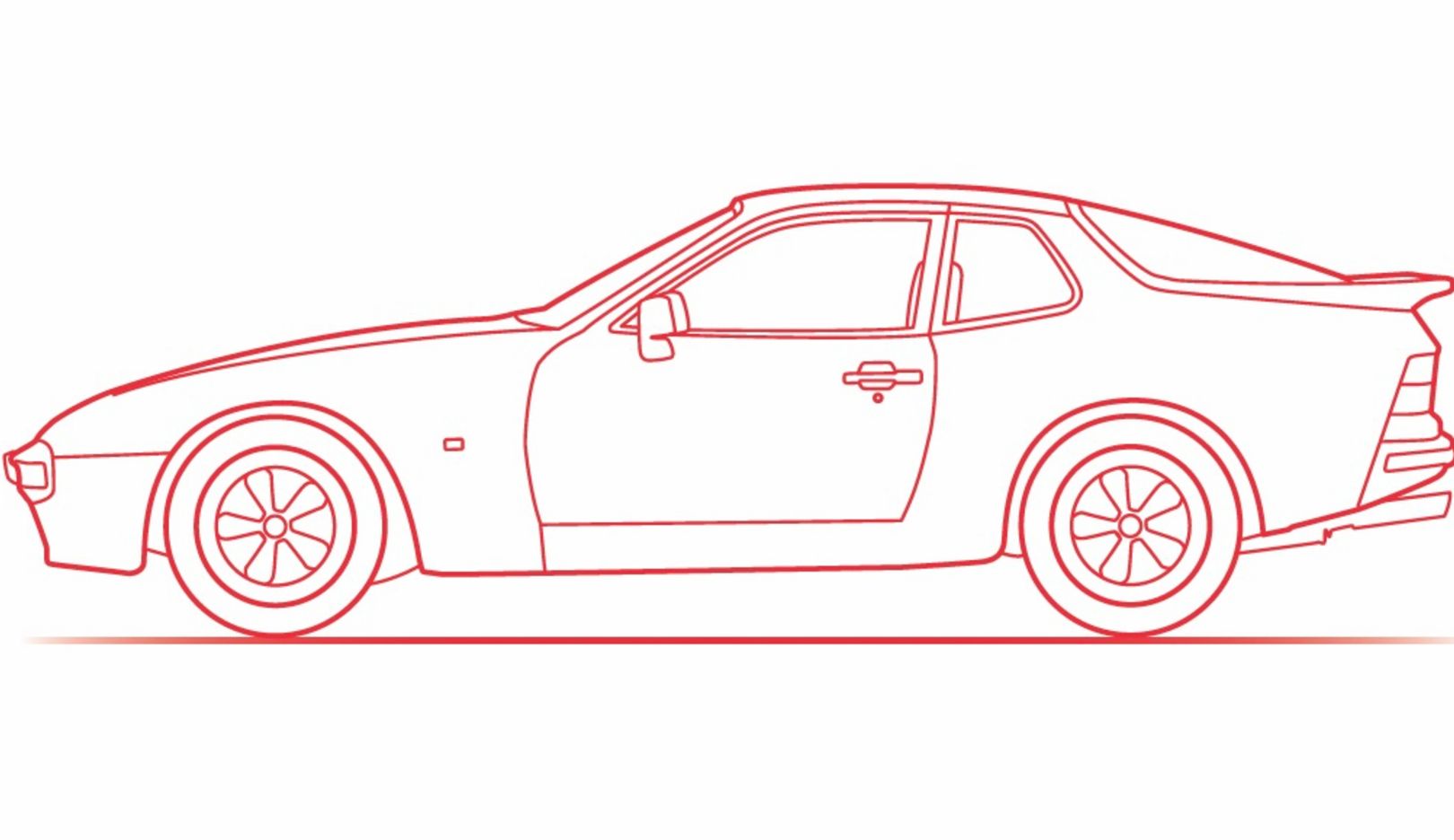
1981 The 944 celebrates its world premiere at the IAA. Developed on the basis of the 924 Carrera, the vehicle boasts a four-cylinder engine and 120 kW (163 PS). Dealerships receive 30,000 orders in the first year of production. A derivative is presented to Tracy Austin when she wins the Porsche Tennis Grand Prix for the fourth year in a row. 1983 After the first year of sales, the 944 accounts for around 51 percent of Porsche’s total production. 1984 A 944 Turbo competes in the 24-hour race for series vehicles in Nelson Ledges in the US state of Ohio and wins with a lead of 42 laps. 1985 After racing successes, Porsche officially introduces the 944 Turbo. 1986 The 944 S with 140 kW (190 PS) expands the portfolio. In addition, the 944 Turbo Cup is launched. The vehicles developed for the series come with a weight reduction of 272 kilograms and power of 162 kW (220 PS). A total of 192 units are produced. The Porsche Carrera Cup replaces the brand cup in 1990. 1987 A speedometer with a speed display up to 300 kmh is installed in the 944 Turbo for the first time. Gerhard Plattner of Austria also sets out on another record endurance run after his world tour in the 928. Through the Luna project, he demonstrates the endurance of the 944 S and covers a route equivalent to the average distance between the earth and the moon in record time, with an interim balance of 384,400 kilometers, five continents, and 258 days. But because the car is running so well, he decides to simply continue driving, ultimately putting 500,000 kilometers on the odometer. 1988 The 944 S2 with 155 kW (211 PS) replaces the 944 S. Porsche also introduces the limited-edition 944 Turbo S series, with a production run of 1,000 units. Its top track speed is 261 kmh, making the Turbo S the world’s fastest four-cylinder series production car of its time. 1989 The 184 kW (250 PS) engine of the Turbo S is now also used in the regular 944 Turbo. The first Cabriolet is introduced on the basis of the 944 S2. One vehicle goes to Gabriela Sabatini from Argentina, who wins the Porsche Tennis Grand Prix. A total of 6,980 units are produced up through 1991. 1991 The Turbo Cabriolet arrives on the scene. Built for one year, 528 units ultimately roll off the line. It’s the world’s fastest four-cylinder convertible at that time. In the same year the last 944 is produced. A total of 163,302 vehicles ultimately roll off the line. The 944 is the highest-selling sports car in company history thus far.
Porsche 968
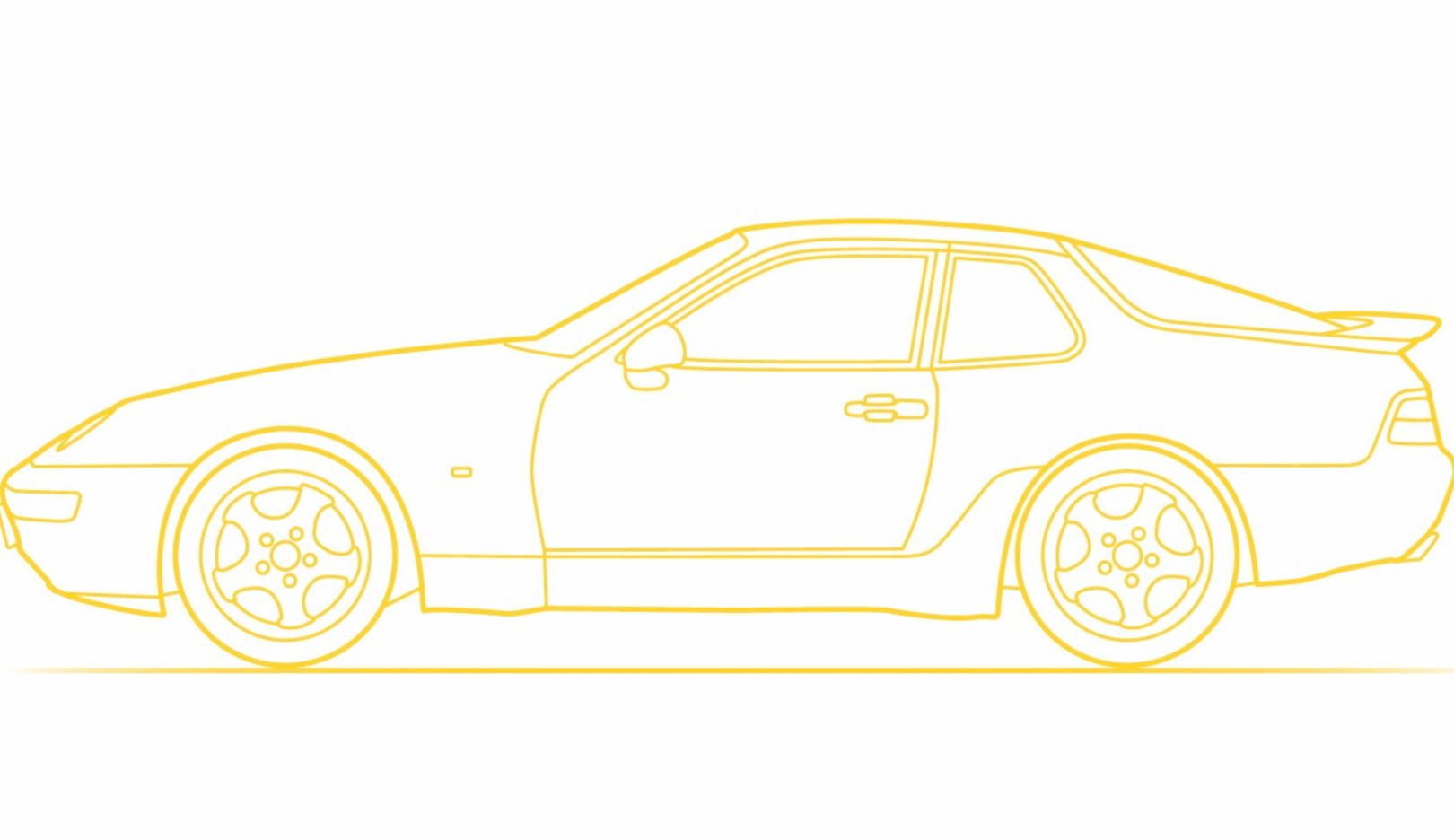
1991 As the successor of the 944, the 968 celebrates its world premiere at the IAA in September. Both the Coupé and Cabriolet feature a 3.0-liter in-line four-cylinder engine, 176 kW (240 PS), and a six-speed transmission. A Roadster was also developed in collaboration with the American Sunroof Company. But because the Boxster is likely to go into series production, it remains a one-off. Anke Huber wins the Porsche Tennis Grand Prix in October and is the first German to do so, beating out US American Martina Navratilova in the final. Her prize: 350,000 US dollars and the newly unveiled 968 Cabriolet. 1992 The first 968 cars are delivered to customers. With torque of 305 Nm at 4,100 rpm, the car is fitted with the most powerful four-cylinder engine of its time. It’s also the first Porsche to feature a Tiptronic automatic transmission. 1993 Launch of the 968 CS (Clubsport) with reduced comfort and a focus on performance. A total of 1,538 units are built. In the same year, the 968 is named “Performance Car of the Year” by the British magazine Performance Car. Porsche also produces the 968 Turbo RS, a race car for GT sport. There’s an endurance version with 257 kW (350 PS) and a version for the ADAC GT Cup with 248 kW (337 PS). Only four units are ever built. The 968 Turbo S, the street-legal variant of the Turbo RS, is developed as a derivative. With production halted after 14 units, the car is extremely rare today. 1994 The 968 breaks into pop culture and appears in Hollywood blockbusters like Beverly Hills Cop III with Eddie Murphy and The Specialist with Sharon Stone and Sylvester Stallone. 1995 Production of the 968 comes to an end, with a total of 11,248 units ultimately produced. That makes the 968 one of the rarest Porsche vehicles ever produced as a series and marks the end of the company’s transaxle era.