Heart and Courage
The transaxle concept positions the engine up front and the transmission at the back, with a rigid shaft connecting them. With the 924, Porsche made the bold decision 50 years ago to strike out in a new direction – technically, economically, and culturally. The design introduced a new sports car world alongside that of the 911, supporting the company through a period of transition.

New era:
The 924 kicks off a new chapter at Porsche in mid-1976. With a front engine, transaxle concept, clear lines, and plenty of space for passengers and luggage, the latest Porsche looks like a vision of the future on Parisian roads.In the 1970s, the Porsche facility in Weissach began working on a vehicle that, at least at first glance, didn’t quite reflect the brand image established the world over. Featuring an unfamiliar silhouette and the lack of a rear engine paired with crisp angular lines, an elongated front, and a large glass rear hatch, this sports car was a genuine 2+2 seater that redefined suitability for everyday use. An advertising slogan would eventually dub it a “family sports wagon” – a revolution.
Then in his mid-20s, Harm Lagaaij worked as a young designer in Weissach and would eventually go on to manage the entire department. Looking back, his description of the radical new creation smacks of understatement: “The design of the 924 developed entirely intuitively and, of course, was something of a surprise,” he recalls today.
The new development was surprising because it required a new definition. What makes a Porsche a Porsche? Is it the position of the engine? Or is it the way a vehicle feels? The clarity of its concept? The coherence of its details? Or simply its performance?
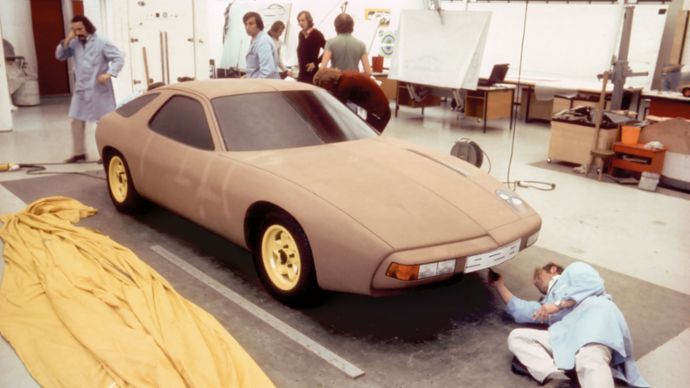
These questions are all the more relevant considering the 924 was originally a development contract (EA 425) for Volkswagen. A dream job for the designers. “When submitting the design proposal, the most interesting question was where to start,” explains Lagaaij. “Because there wasn’t anything to draw from.” There was no precedent in Volkswagen’s history for this concept of a sports car that could be built on. “We literally had a white sheet of paper in front of us,” says Lagaaij. But that’s not to say they had unlimited freedom, as the package – the technical layout with engine, cooler, transmission, axles, and most importantly seat positions – had already been defined, production parts needed to fit, and the manufacturing had already been planned.

Mixed doubles:
With the 924 and 924 Turbo (to the right, from 1978, here in the dynamic two-tone look), Porsche had set its sights on a young target group. Advertising emphasized the models’ coolness, thus symbolizing the spirit of the time.The template for collaboration between Volkswagen and Porsche was the 914 from the 1960s. The basic concept fulfilled a traditional Porsche strategy, which was to use tried-and-tested series production technology to exploit synergies and increase reliability without compromising the art of Porsche engineering. However, while the 914 was designed as a collaboration from the outset, the 924 was originally intended to be launched as a VW.
Despite solid sales numbers, the market struggled to accept the 914 with its longitudinally mounted mid-engine as a “real Porsche.” Around 115,600 cars with VW four-cylinder engine and approximately 3,300 914/6 models with Porsche six-cylinder engine were built. However, the sales numbers were not high enough economically for Volkswagen as a high-volume manufacturer. Volkswagen made some strategic decisions at that time, moving away from the old rear-engine concept and toward water-cooled platforms with the engine up front.
“We literally had a white sheet of paper in front of us.”
Harm Lagaaij

Project EA 425:
Designer Harm Lagaaij (middle, with dark sweater) and his team with an early clay model of the future 924. It had an “Italian flair,” says Lagaaij today.The Porsche moment
In 1975, Toni Schmücker took over as Chairman of the Executive Board at Volkswagen; Rudolf Leiding’s successor scrapped the EA 425 project. The first energy crisis of the 1970s and the associated reluctance of customers to buy, as well as political reasons regarding the model, all played a role in this decision. With the Scirocco, VW had already developed a sports coupe based on the Golf. Porsche took on the development costs, effectively buying the project back, and created a real Porsche. “For us, the design and proportions were so cohesive that we were able to continue working without making any changes to the concept,” explains Lagaaij. “That would’ve been impossible at such a late stage of development anyways.” Porsche’s design DNA, he adds, was not as “clearly codified” in the 1970s as it is today. Because the 911 with its traditional design language was essentially the only visible reference, the design was not viewed as “a deviation.”



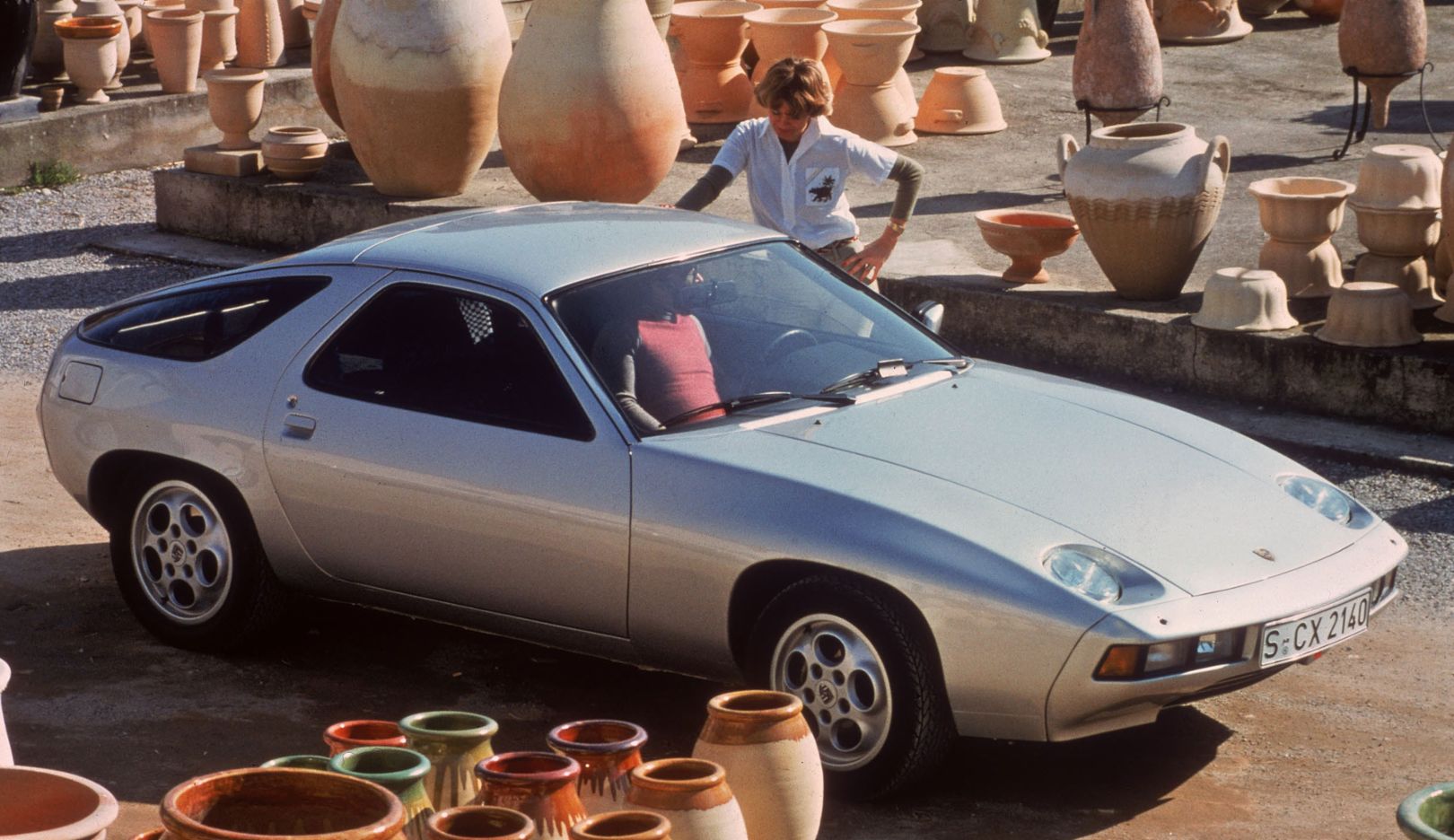

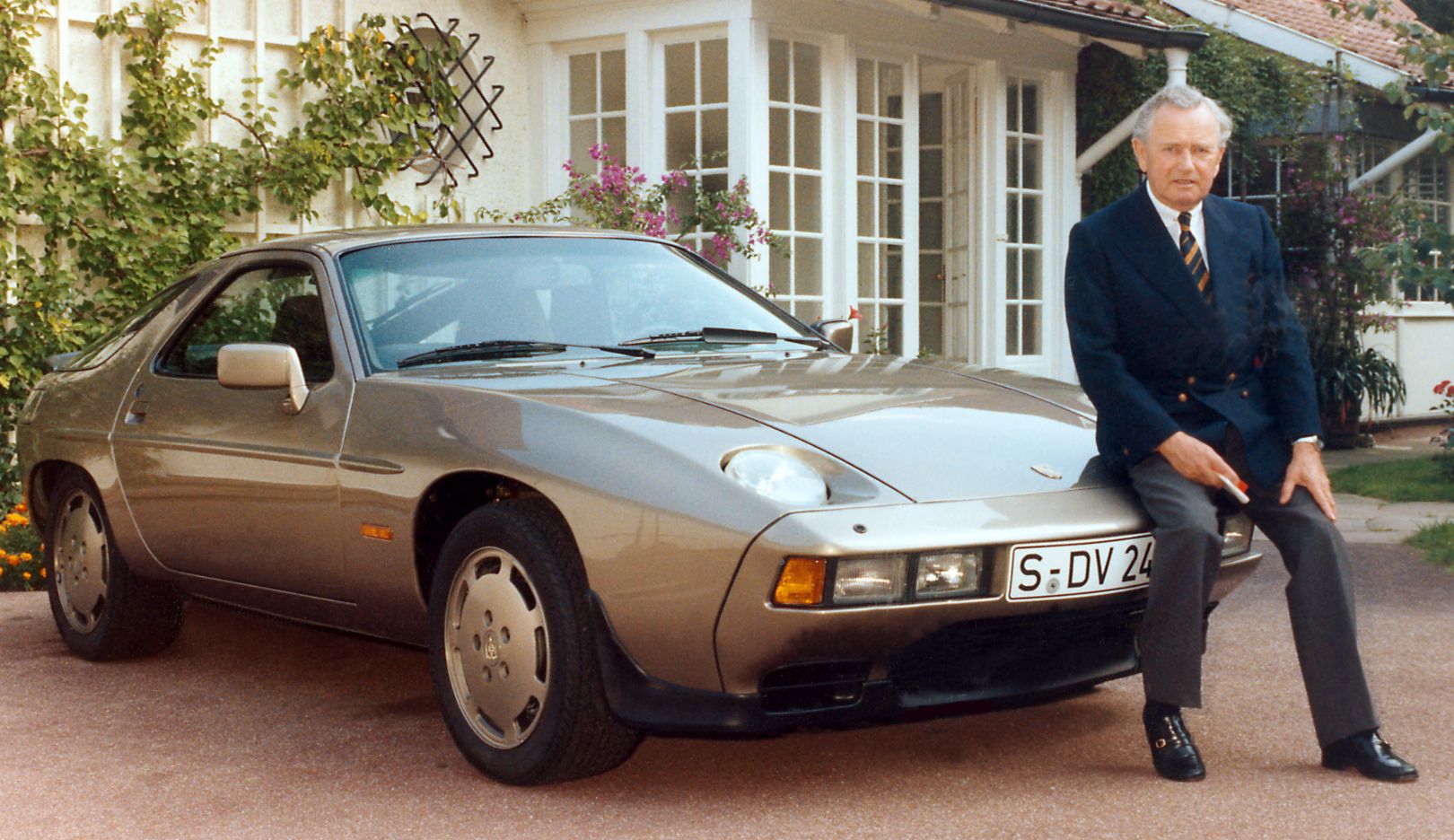
.jpg/jcr:content/924-Coup%C3%A9-(Mj.1976).jpg)
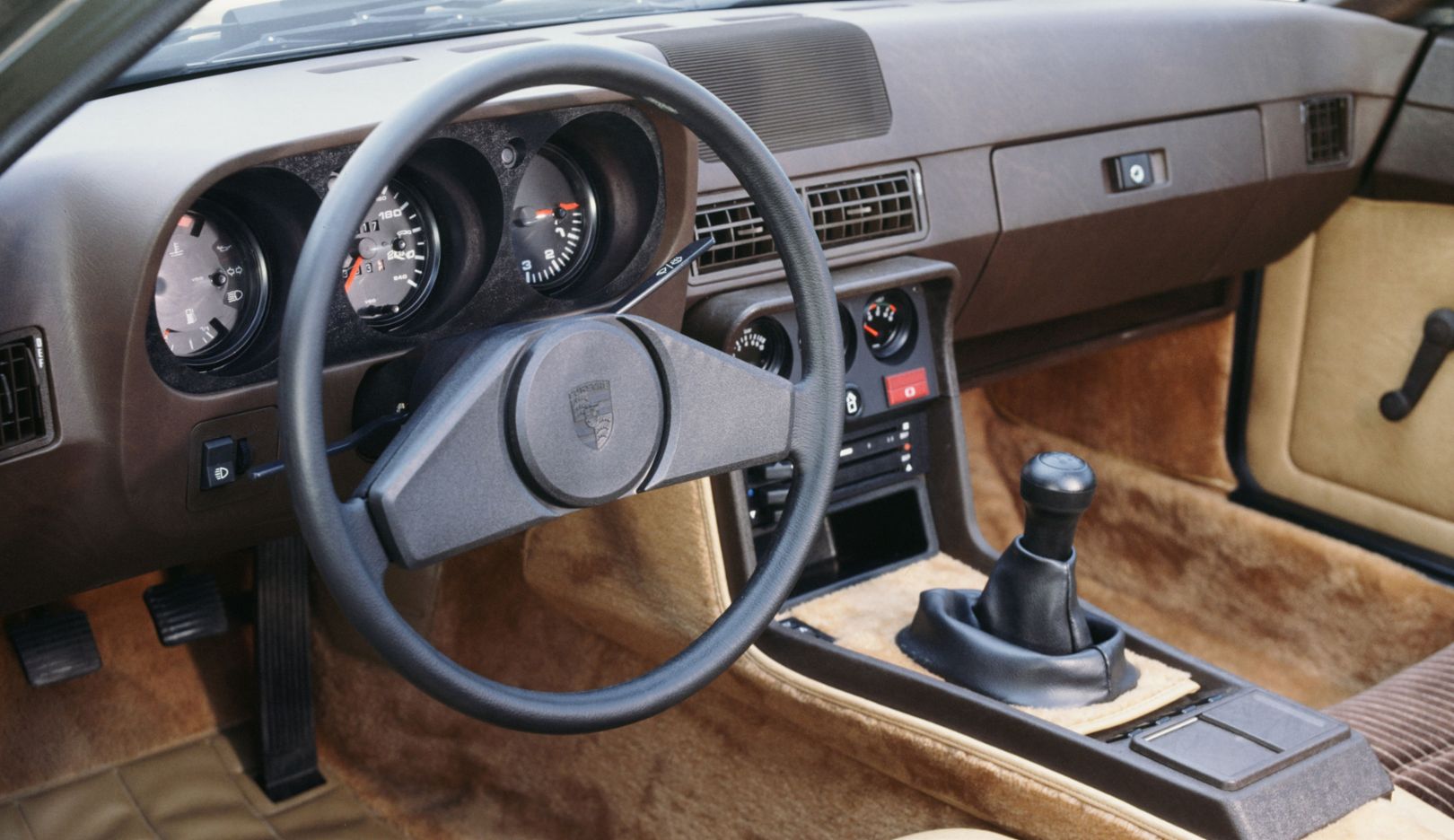
The 924, as it would later be called, was not a stopgap solution for the designers under Chief Designer Anatole Lapine and the engineers. On the contrary: “We thought it was the future,” says Lagaaij. As a result, the 924 was more than just a new model. Although not initially intended as a Porsche, it embodied the moment when Porsche opened up to new concepts out of conviction and strayed away from design tradition. The sporty DNA remained uncompromised in the 924. If the 911 represented the heart of the brand, the 924 embodied the courage to break new ground.
It was another defining moment in Porsche history. The automotive world was evolving in those years, with new markets, new customer demands, and, not least of all, new legal requirements in terms of noise and exhaust emissions and crash safety. Porsche, too, had to change – technically, economically, and strategically.
Top-down thinking:
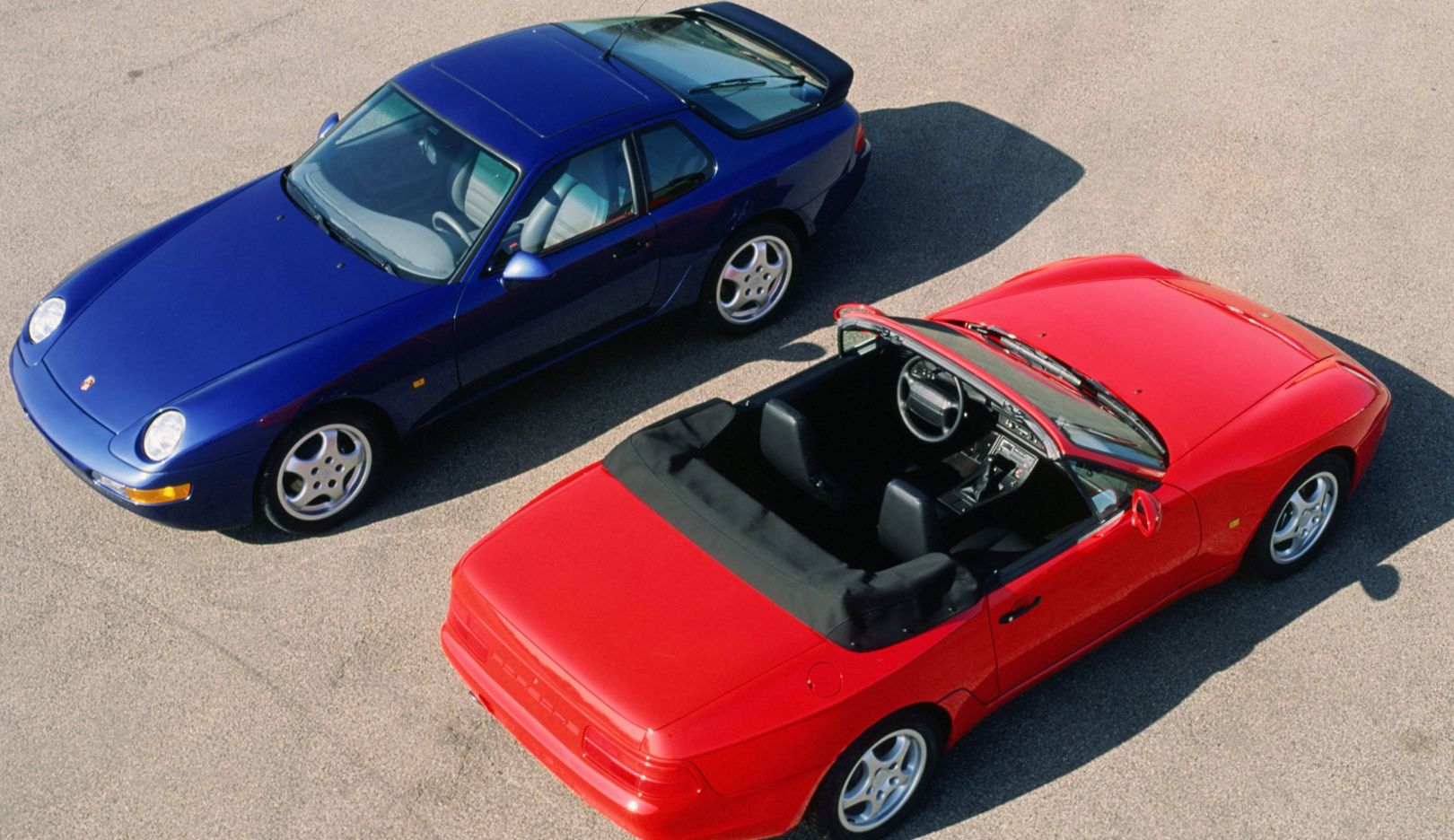
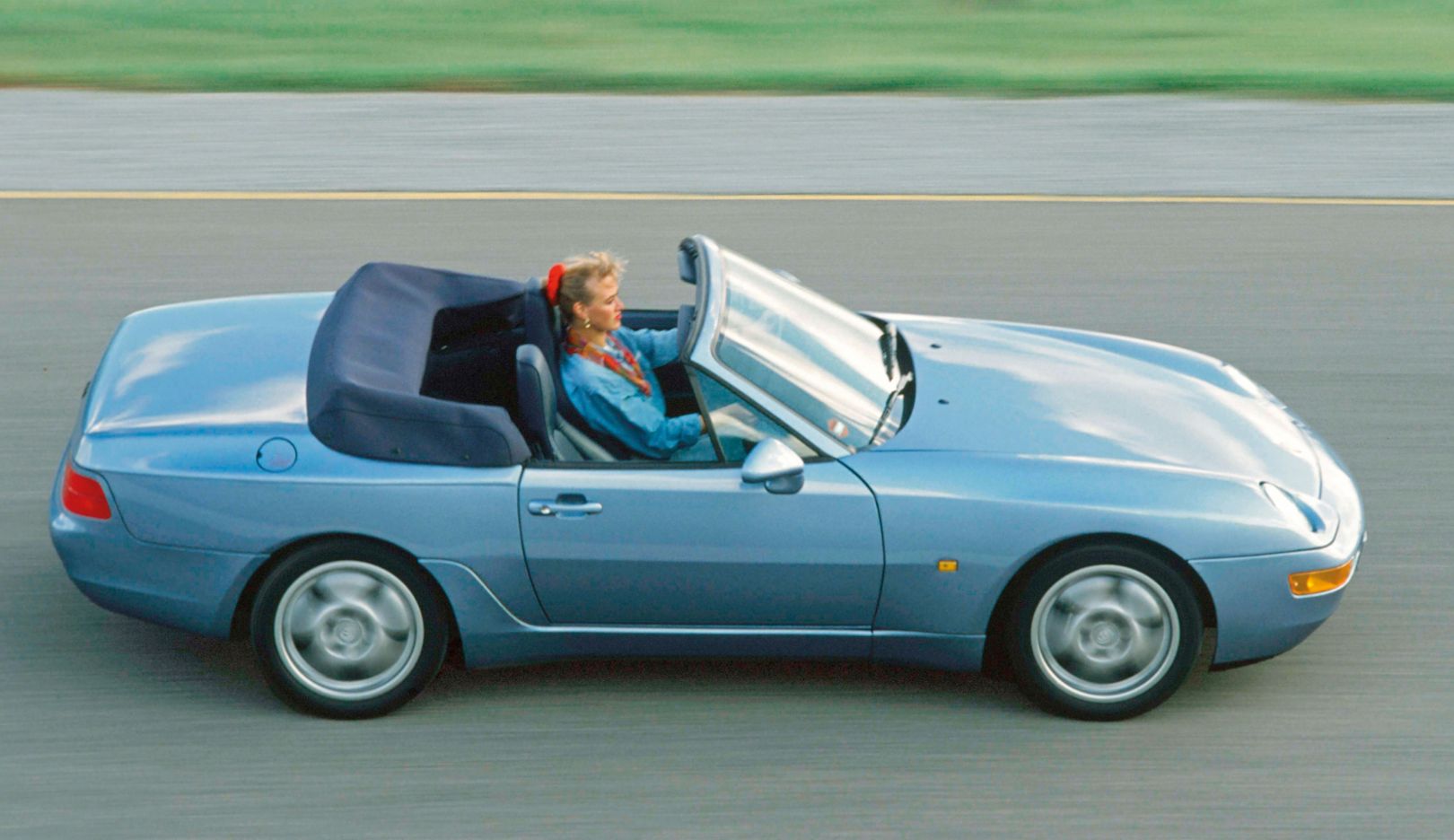
Like all of Porsche’s other transaxle models, the 968 Cabriolet combines sportiness with comfort. The concept allowed designers the freedom to develop a whole host of derivatives.The larger and more prestigious 928, a 2+2-seater gran turismo with high-performance V8 engine, was developed almost at the same time as the 924. The main designers were Anatole Lapine, Wolfgang Möbius, and Hans-Georg Kasten. Later, Harm Lagaaij also contributed to the design of the 928 GTS. The two new models were “similar in terms of the package, the basic architecture,” Harm Lagaaij is quick to point out, but “completely different” in their design language. According to the designer, that was additional proof that “the Porsche design language permitted a great deal of freedom at that time.”
The models were developed to be new foundations alongside the 911 with its tried-and-tested rear engine, which at that time was air-cooled, as well as win over new customers, without diluting Porsche’s character. “The timeless design is still innovative and modern today and both vehicles rightly have a growing fan community,” explains Frank Jung, head of the company archive at Porsche. In addition to design, engineering solutions that would stand the test of time were also being sought.

Soft tones:
Detailed work in the acoustics lab to reduce vehicle sounds in the Porsche 944 S2, around 1988. The aim was to fulfill new legal requirements without compromising the standards of maximum performance.The Porsche way
The transaxle design is one such solution – in a sense, the Porsche way of introducing the front-engine architecture. For the first time in the history of the brand, the engine would no longer be positioned behind the passengers. Rather than a conventional solution with engine and transmission as a single, heavy unit at the front axle, Porsche engineers turned to the transaxle concept, with the engine up front and the transmission at the rear axle, which at that time was exotic.
The evolutionary stages of the 928:
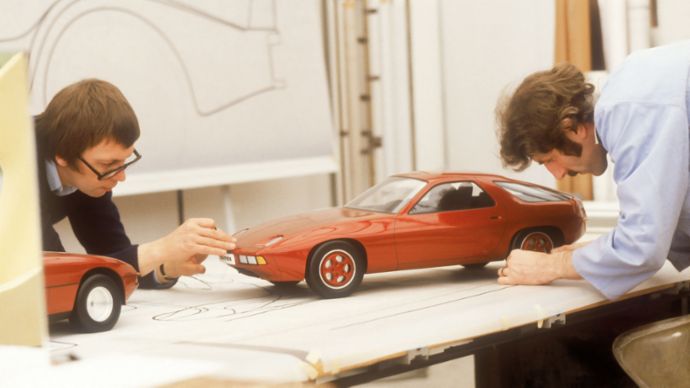
As a 1:5 model, as a 1:1 clay model, and as a prototype in aerodynamics testing in the wind tunnel, around 1977 (below).“The decision for the transaxle concept was reached at the beginning of development.” Roland Kussmaul

Porsche believed that the transaxle design was the future – in other words, a new conceptual focus. “The decision wasn’t reached at some arbitrary point, but at the beginning of development,” says Roland Kussmaul, former road testing engineer at Porsche, who also spent a lot of time on racecourses and rally tracks for the factory in the 1970s and 1980s. Kussmaul was someone who determined key parameters, driving behavior, and limits, based on his criteria of lap times, steering angles, slalom runs, and sustained drift angles. Accordingly, he viewed the balanced distribution of weight between the front and rear axle to be the primary benefit of the transaxle design. He has fond memories of the 924 as an “easy-to-handle, forgiving, fast car,” Kussmaul says warmly. “It’s easy to maintain control even at high speeds, in crosswinds, and when changing lanes.”
Porsche engineers also opted for the transaxle architecture for the 928, which was developed almost at the same time. “A rear-engine layout was never even considered for the relatively heavy, large V8 engine,” explains Kussmaul.

Family sports wagon:
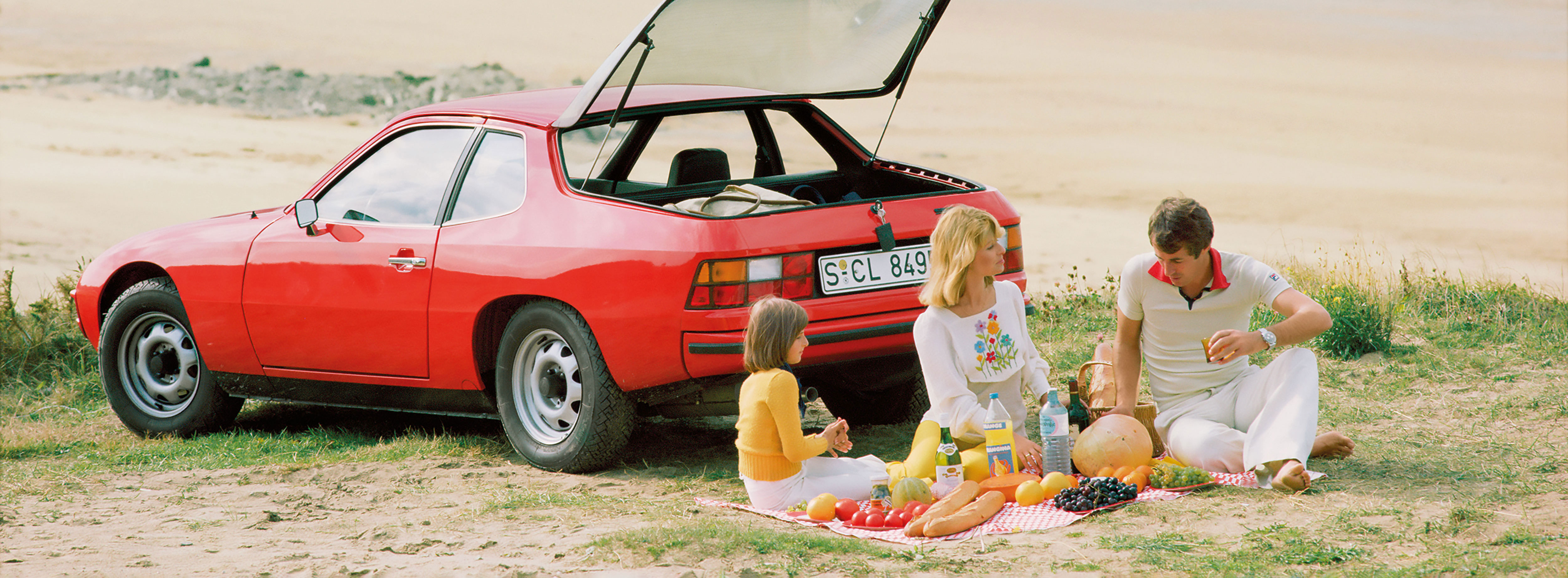
The advertising slogan is vividly brought to life here. The 924 – a Porsche for young families. We’ll never really know if there was enough space for the kids and all that luggage.“Structural body advantages” in the form of the rigid binding shaft between the engine and transmission and “the balanced weight distribution” proved to be key benefits for the gran turismo, too.
While the 924 represented a family-friendly “entry Porsche” intended to win over new customer groups for the brand, the 928 served as a fast touring car on the upper end of the scale. The design of the interior is regarded as particularly advanced. The luxurious 2+2 seater therefore competed in a different market segment from the 911.
The Porsche management at that time, headed by Ernst Fuhrmann, Chairman of the Executive Board, was confident that the 928 would fulfill customers’ growing demand for comfort and safety worldwide. Fuhrmann, an experienced engineer and the first Porsche executive from outside the family, believed the 911 was on its way out.
Customers saw that differently. The classic car with rear engine, back then already in its second decade of production as the G-Series, continued to enjoy uninterrupted popularity among Porsche fans around the world, which is why Fuhrmann’s successor, Peter W. Schutz (Chairman of the Executive Board from 1981 to 1987), rescinded the decision to discontinue the 911 in his third week as Head of Porsche. The resulting success has proven him right to this day. For more than six decades, the 911 has been viewed as a quintessential automotive icon and sports car.
Series winner:
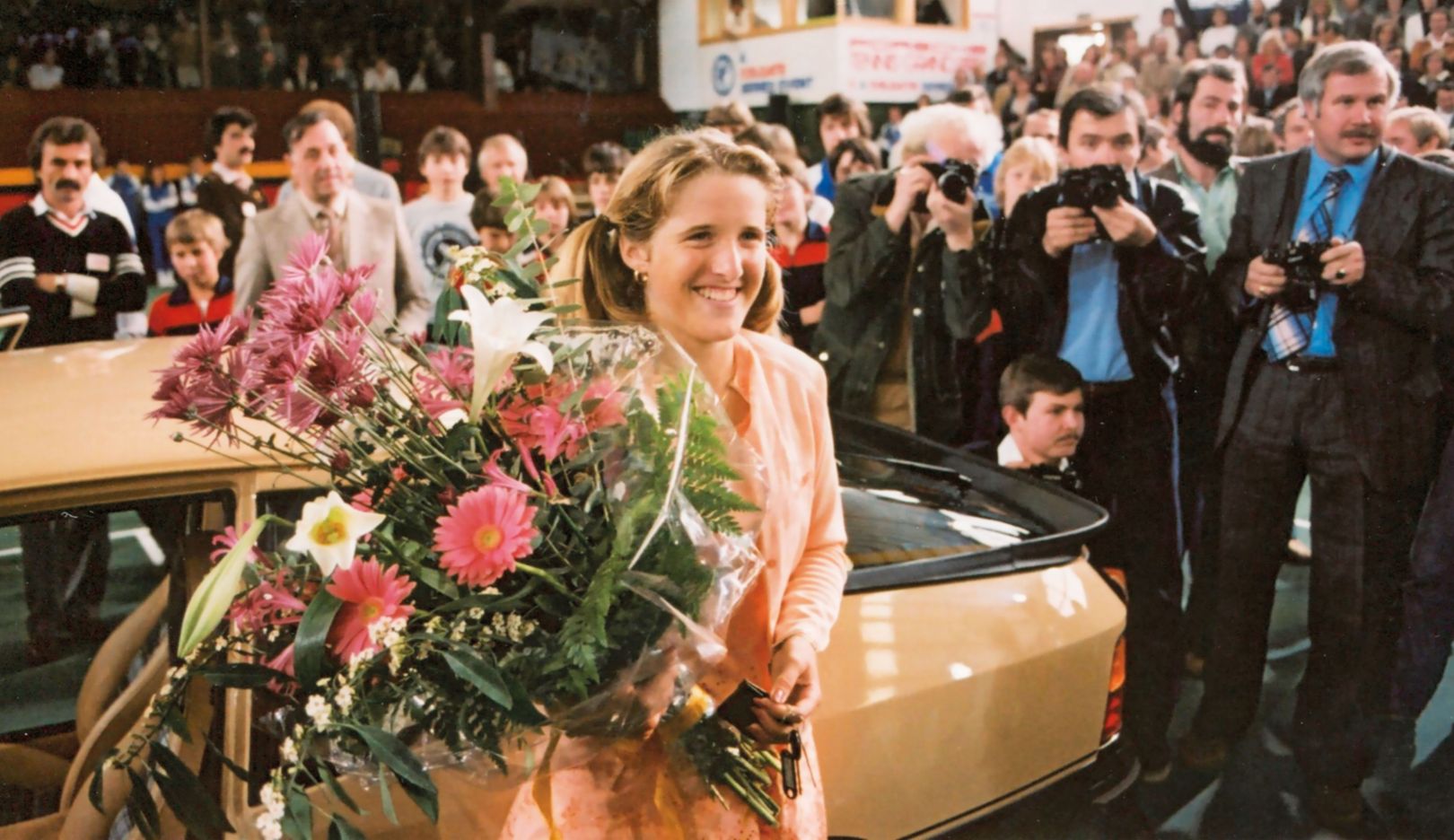
US American Tracy Austin won a 924 Turbo in the Porsche Tennis Grand Prix in Filderstadt in 1979. She won the first four tournaments up through 1981. The Tennis Grand Prix is still held annually to this day – this year at Porsche-Arena in Stuttgart from April 11 to 19.The future of Porsche
As a result, brand development was based on two very different sports car worlds in the 1980s. Production numbers revealed that the 924 was a key component of the economic success. Between 1976 and 1988, more than 150,000 vehicles in its different derivatives were produced – almost as many as the 911 in the same period of time.
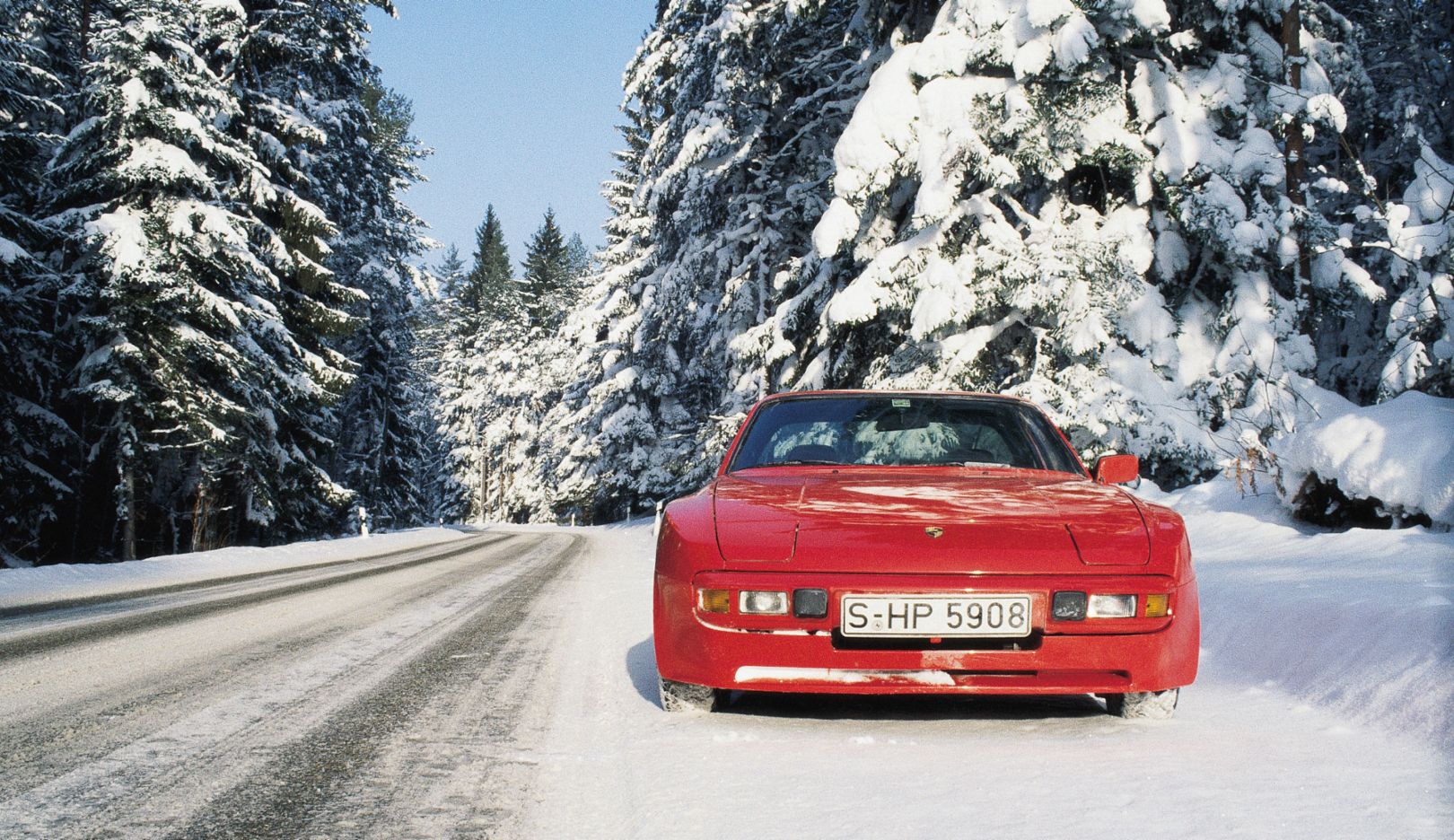
Thus the groundwork was laid for the subsequent transaxle range, which also included over the years, in addition to the 928, the 944 and 968 four-cylinder model series. Despite their engineering quality and a clear design line, the company was unable to sufficiently exploit synergies between the different model series. Every vehicle was developed almost like an independent project, with its own engine, body components, and production processes, which drove up the costs. The transaxle models thus found themselves in those difficult years for the brand when vision and reality temporarily drifted apart.


Evolution:
Detailed sketches of the 924 by Harm Lagaaij – spelled “Lagaay” at that time for simplicity. The pop-up headlights (middle) and the rear section with the large glass dome (below) shaped the design character early on.
These experiences resulted in one of the most valuable lessons for today: When expanding the range of models, Porsche works with a modular platform strategy and thus pursues an entirely different approach than it did at the time of the transaxle. In other words, several models share central vehicle architectures, including chassis components, electronic systems, and parts of the powertrain. These shared platforms enable economies of scale, reduce development costs, and accelerate model cycles, without the individual series losing their independence.
And yet, “from today’s point of view,” says Harm Lagaaij not without pride, the transaxle models have “aged very gracefully.” The designer names a few concrete strengths: the package with a large sense of space and 2+2 concept, the spacious luggage compartment, the large rear windshield as a unique feature and engineering challenge, a level of dynamism that speaks for itself to this day, and efficiency and comfort. Engineer and race car driver Roland Kussmaul still praises its performance on circuits and rally tracks. Especially when he thinks about the high-performance derivatives like the 924 Turbo, “which were easy to handle even when pushed to the limit.” After the sensational 10th place in the overall ranking of the 1982 Rallye Monte-Carlo in a 924 Carrera GTS at the latest, with him as codriver and Jürgen Barth at the wheel, he came to realize that this was undoubtedly “a real Porsche.”

Pushed to the limit:
Roland Kussmaul during tests with the 924 Turbo. For the engineer and race car driver, “a real Porsche – easy to handle even when pushed to the limit.”Company historian Frank Jung has more to add: “The 911 is the core of the Porsche brand. But when a brand is too dependent on a single icon, every change is viewed with suspicion.” That’s precisely why the company had to reinvent itself in this critical phase. While the 911 still remained, Porsche also looked to engineering concepts intended to stand the test of time and ultimately, from the 2000s, pave the way for the brand’s four-door, front-engine sports cars of today. “Now, you could describe that as strategic courage. Back then, it was a huge risk.”
Fifty years after their launch, the transaxle models are experiencing a renaissance. They look and feel modern and feature everyday qualities that may have been underrated in the past. And they demonstrate a Porsche quality that is not bound to any one engine position – the pursuit of the best possible solution.