
When Dreams Learn to Dance
Ballet is a form of art that unites music, choreography, and performance. Despite discipline and talent, very few dancers ever make it to the first row. The Turbo for Dreams project supports 10 up-and-coming South Korean dancers on their paths to becoming soloists – with a visit to the Stuttgart Ballet.
The first sounds of the glossy, black grand piano pierce the silence inside the Stuttgart opera house. Ten young dancers engage their bodies in eager anticipation, with one hand on the bar, their feet turned out, and their legs stretched. And then the class begins, with a flow of control, elegance, and discipline. Demi-plié – they bend their knees while keeping their heels firmly on the floor. Grand-plié – they drop even lower, their thighs now nearly parallel with the floor. What appears simple and graceful on the stage is, in reality, a difficult feat of physical strength. Every muscle is engaged, with elegance extending from head to toe. The watchful eyes of the teachers assess each and every movement in accordance with stringent criteria. This supreme test of ability is the first activity of the day for 10 talented ballet dancers from South Korea, whom the Turbo for Dreams Porsche project has brought to Germany for two weeks. But more than technique, these young dancers have also brought their dreams.
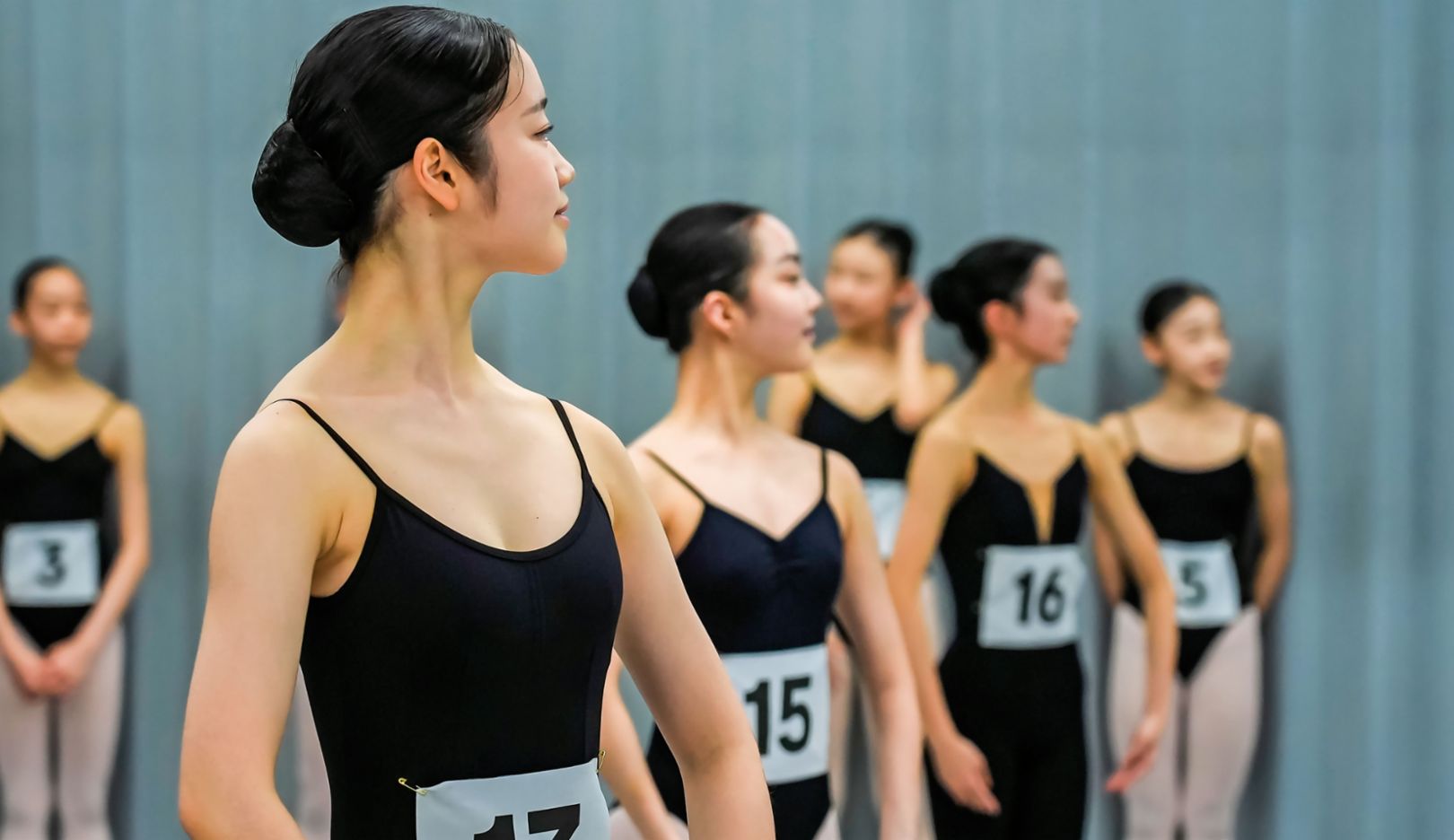
Put to the test:
The Turbo for Dreams participants were selected following a live audition, during which four international jurors assessed the Korean dancers.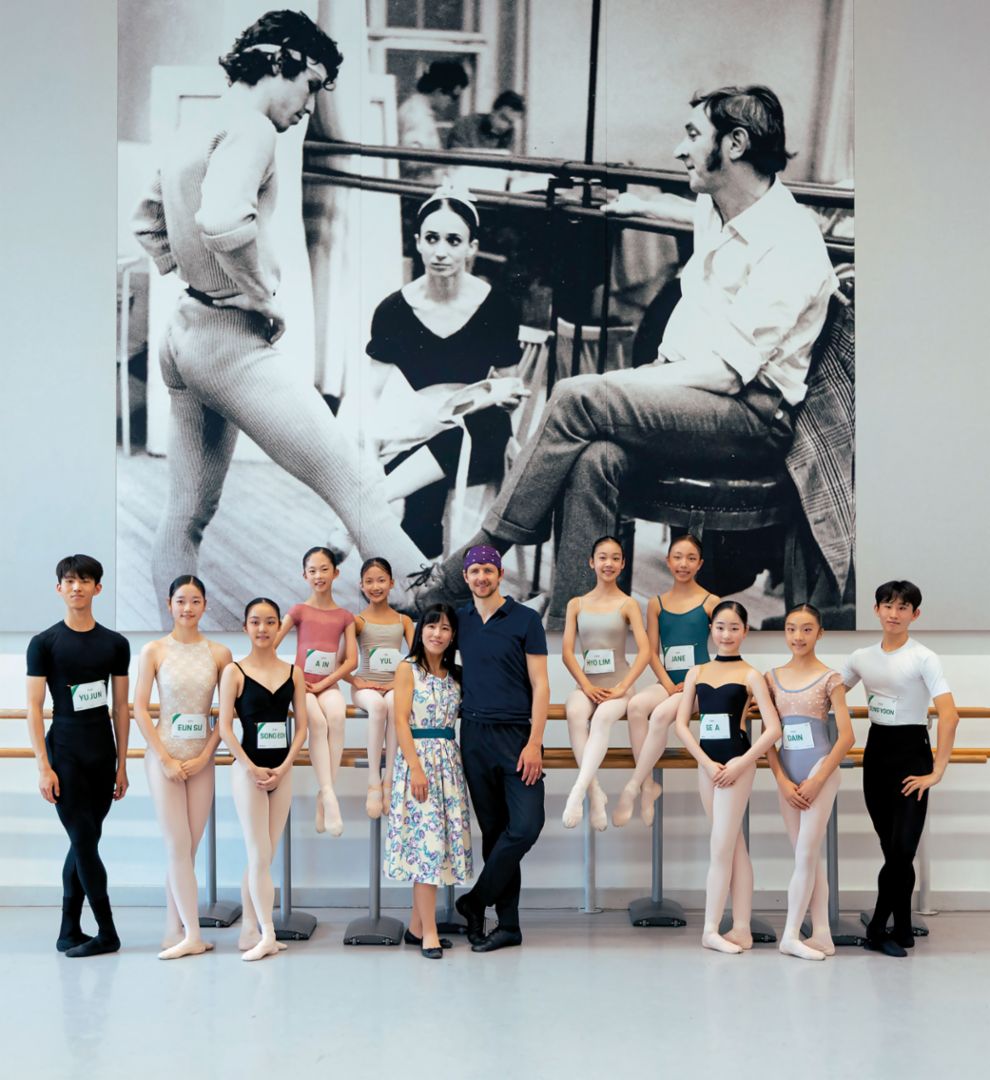
Energy and enthusiasm:
Professional dancer David Moore (middle) is delighted with the potential and professionalism demonstrated by the talented, young dancers from South Korea. John Cranko (right) can be seen in the photo in the background.Ballet is a sport of the highest caliber. While the elegant movements may appear effortless, years of training go into every stage performance – and today’s master class at the Stuttgart opera house is no exception. And no one can confirm that better than the exchange dancers from South Korea. Around a hundred ballet students underwent the selection process for a chance to take the next big step in their career, a one-week training program at the renowned John Cranko School in Stuttgart. Appointed director of the Stuttgart Ballet in the early 1960s, John Cranko transformed the company into an internationally leading ensemble. A 2024 film titled Cranko chronicles the life of the ballet director, who died in 1973. Today, the John Cranko School trains the world’s most promising dancers – now in a new building that was completed in 2020 with the support of Porsche.
A fusion of dance and art
As the next milestone in this union at the Porsche location in Stuttgart, the Turbo for Dreams project transforms dreams into tangible opportunities. “This exchange has provided Korean students with the opportunity to benefit from a high-quality training program,” says Mathias Busse, CEO of Porsche Korea. “Our hope is that the initiative will not only support the next generation of talented people, but also serve as a platform for cultural exchange that inspires more students to take their dreams to the international stage.” The South Korean participants were selected in May. “During the audition, the gifted dancers demonstrated extraordinary potential, artistic talent, and genuine dedication to their craft,” says Hyemin Kim, the ballet teacher at the John Cranko School who was personally in charge of the training units associated with the selection process in Seoul. Ten dancers were ultimately selected.
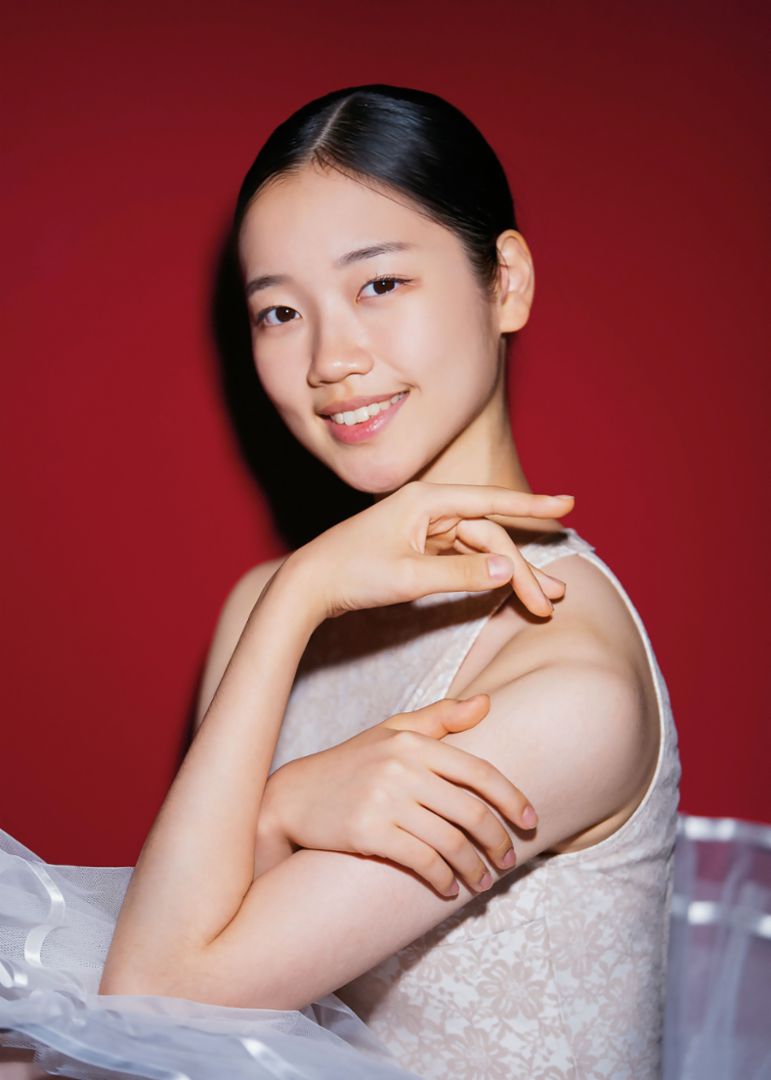
Eunsu Jeong:
At the age of just 16, Eunsu Jeong has achieved a lot in her life. Initially turned down by her preferred academy, she ultimately achieved her breakthrough when she was accepted to the Anyang Arts High School south of Seoul and has received multiple awards since then. After the master class in Stuttgart, David Moore considers her to be one of the most promising dancers among the Korean exchange students.Eunsu Jeong is among those taking part in the training today with Principal Dancer David Moore. “For me, clear rules and structures are the basis for ballet dancing,” she explains. “But in my opinion, they form the perfect framework for developing your actual self, your own style, throughout your career.” The 16-year-old spends more than four hours every day commuting to and from a special ballet school on the other side of her home city, Seoul. And with around five hours of training, she dedicates nine hours to her passion every day. For Eunsu Jeong, everything else takes a back seat to her dream.
For David Moore, ballet is more a form of art than dance. “Training is about achieving perfection,” says the 37-year-old Briton. “But at the same time, it’s essential to maintain the artistic expression of stage dance.” As Principal Dancer with the Stuttgart Ballet, Moore has shined in classics like Romeo and Juliet, Onegin, and Sleeping Beauty. For him, genuine ability is reflected in the freedom to experiment with the positions you’ve learned. He already views the talented South Korean dancers – all of them between the ages of 12 and 16 – as budding professionals in terms of technique. But they still need to find themselves as artists. “For example, with the épaulement,” explains Moore.
In this classic ballet position, the upper body is turned upward at the waist, with one shoulder rotated slightly to the front and the other to the back. “The questions are: How much are you willing to give? How much do you strain your shoulders? How do you connect technique with your own art?” The key is self-confidence. Superior performance requires both maximum discipline and courage.
Cultural differences expand horizons
International dialogue can help you learn the art behind the technique, and every culture contributes its own strengths. “Korean dancers have always demonstrated technical precision,” says Moore. From an early age, students there undergo intensive, systematic training with a focus on standardized movements and precise positions.
Sungyoon Cho, one of the two male participants in the Porsche project, discovered a new dimension of ballet during the exchange program, namely personality. “In South Korea, we follow a set of rules,” he explains. “In Germany, it’s more about finding yourself.” He says that the new experience has helped him elevate dance to the level of art. This comprehensive approach to training, which even includes modern dance and flamenco, is part of the John Cranko School’s identity.
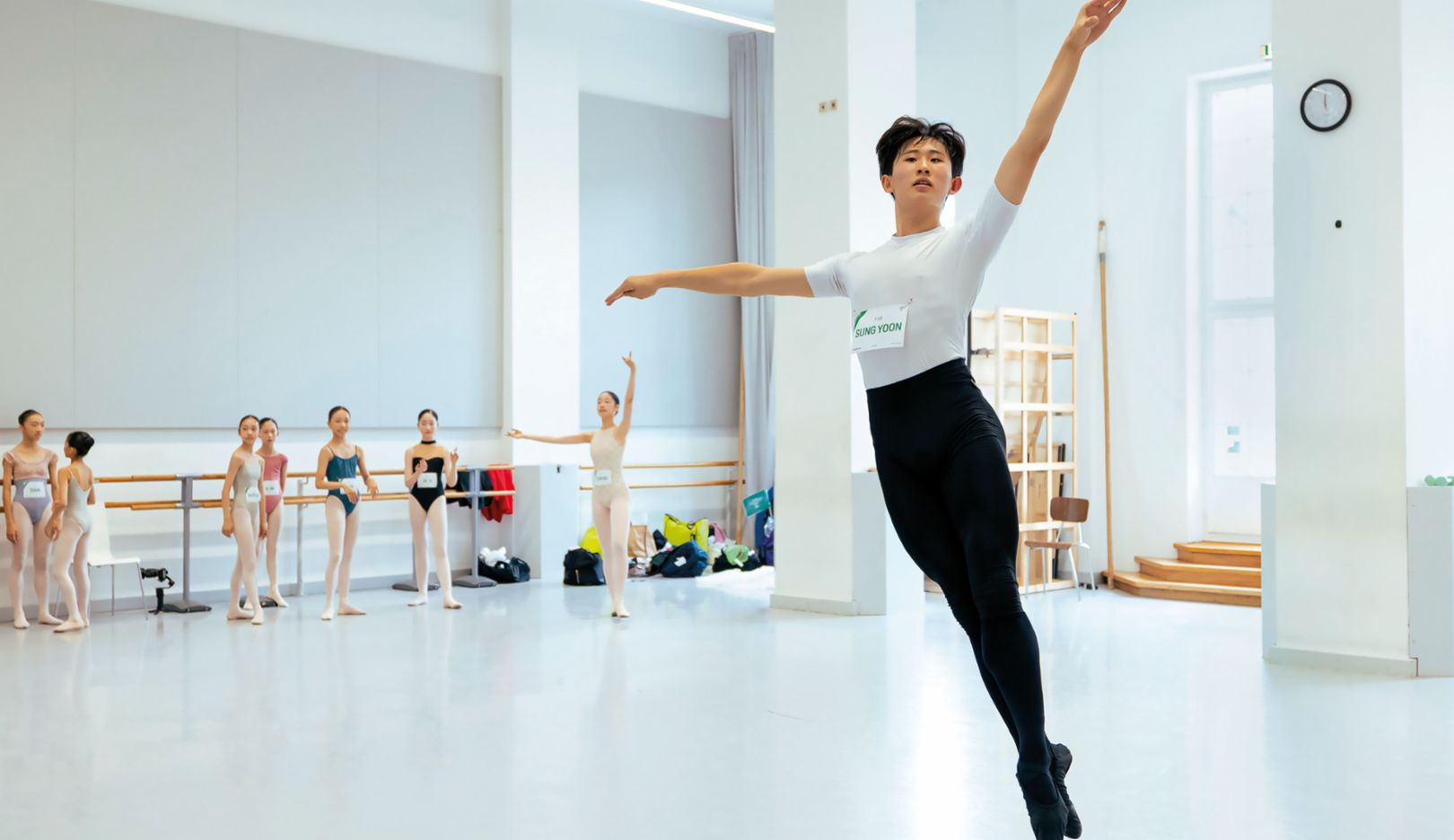
Sungyoon Cho:
Sungyoon Cho’s path was an extraordinary one. Because he often struggled with his weight as a child, his mother signed him up for ballet classes. What originally began as a means to an end eventually became his greatest passion. He now trains daily to achieve his dream.“The time in Stuttgart has made my dream feel more attainable.”
Sungyoon Cho
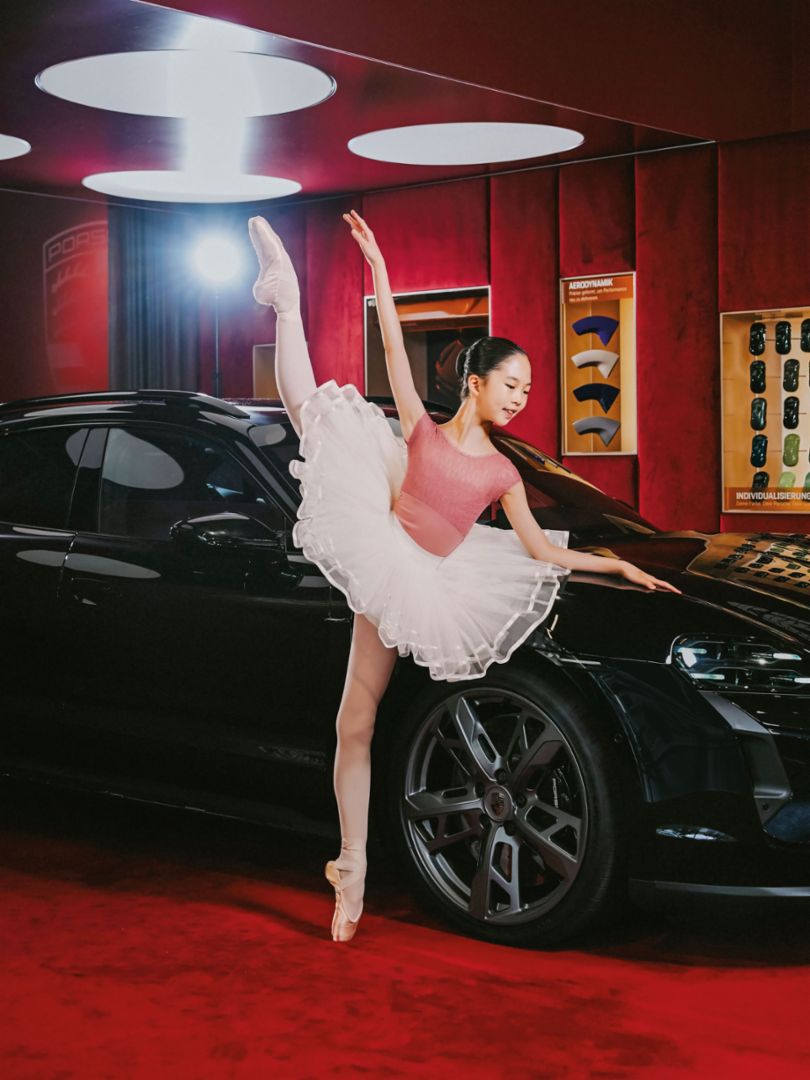
Ain Na:
With a mother who studied modern dance, it should come as no surprise that Ain Na, the youngest Turbo for Dreams participant, has dance in her blood. While still attending CheongJu SolGang Middle School at the age of 12, she’s attempting to pave the way for her future ballet career.Twelve-year-old Ain Na, the youngest project participant, found her way to ballet through TikTok. Dance videos on social media platforms reach millions of people, including a young, new audience in South Korea, and make the sport look highly attractive. “Ballet is not a widespread genre in South Korea,” explains Hyemin Kim. “Many people are more likely to get to know it through social media and casting shows, rather than live performances.” For Ain Na, who made the decision to be a professional ballet dancer three and a half years ago, visiting the John Cranko School had been an unattainable dream – that is, until now. In addition to performances, shoots, and training, the program also included a week of summer school at the renowned institute. A total of 160 children from 25 nations were in attendance, all of them with the same dream – to dance a solo at the front of the stage.
Absolute commitment
But the path from group dancer to soloist requires more than just talent. It takes years of artistic growth and the ability to assume responsibility.
Moments of brilliance don’t happen overnight – and always require collaboration. True art happens when the ensemble moves in harmony as one. Dancer Sungyoon Cho has dedicated the past three years of his life to attaining this level of artistry. “The time in Stuttgart has made my dream feel more attainable,” he says, now that he’s back home. “My aim now is to develop from a dancer to an artist.” With that in mind, he has moved from his hometown of Ulsan to his grandmother’s in Seoul, where he will do homeschooling. His dream of performing on the stage is everything to him – and that’s what motivates him.
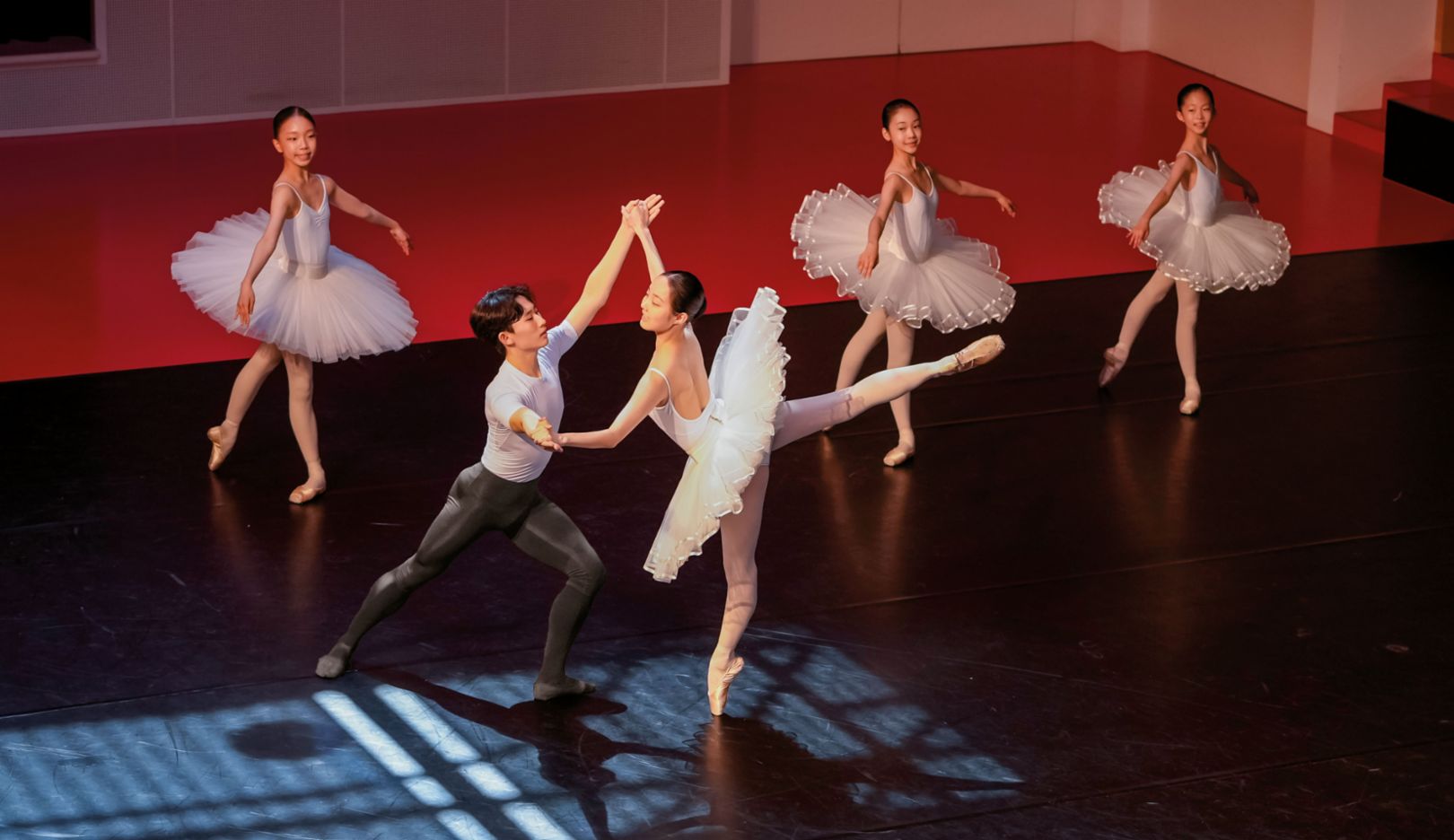
Successful learning journey:
During the master class in Germany and the summer course program at the John Cranko School, the students made remarkable progress in just a few weeks. The crowning moment: their very own performance before an audience in Stuttgart at the end of the program.His visit to Germany has been a highlight of his career to date. The objective of Turbo for Dreams is to provide young people with new perspectives through cultural exchange – and give them the opportunity to work with the stars of the ballet world. All of the participants agree: Thanks to the program, their dreams are now one step closer.
Turbo for Dreams
Porsche has been committed to social issues for many years. To mark Porsche Korea’s 10th anniversary in 2024, the Porsche Do Dream campaign there was expanded to include 10 programs in a variety of areas like education, sports, art and culture, environment, and social issues. Ballet is just one of the areas supported by the Turbo for Dreams project, with support provided to talented young people in difficult social or financial situations.