Culture in Motion
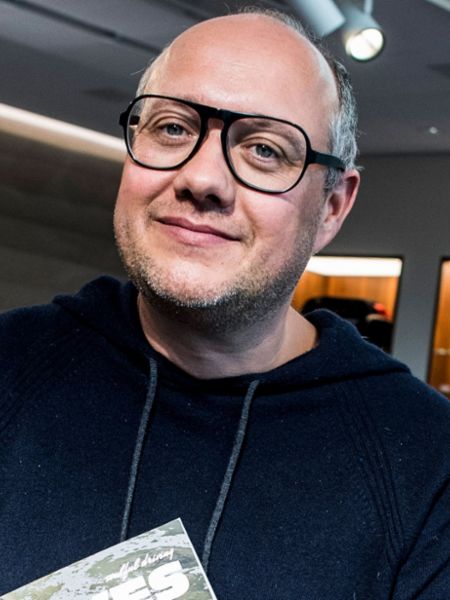
For Thomas Schlereth, his vehicles are living cultural treasures. At the Banzai Legacy Lab, he brings together sports cars, skateboards, art, and people, connecting the past with the present.
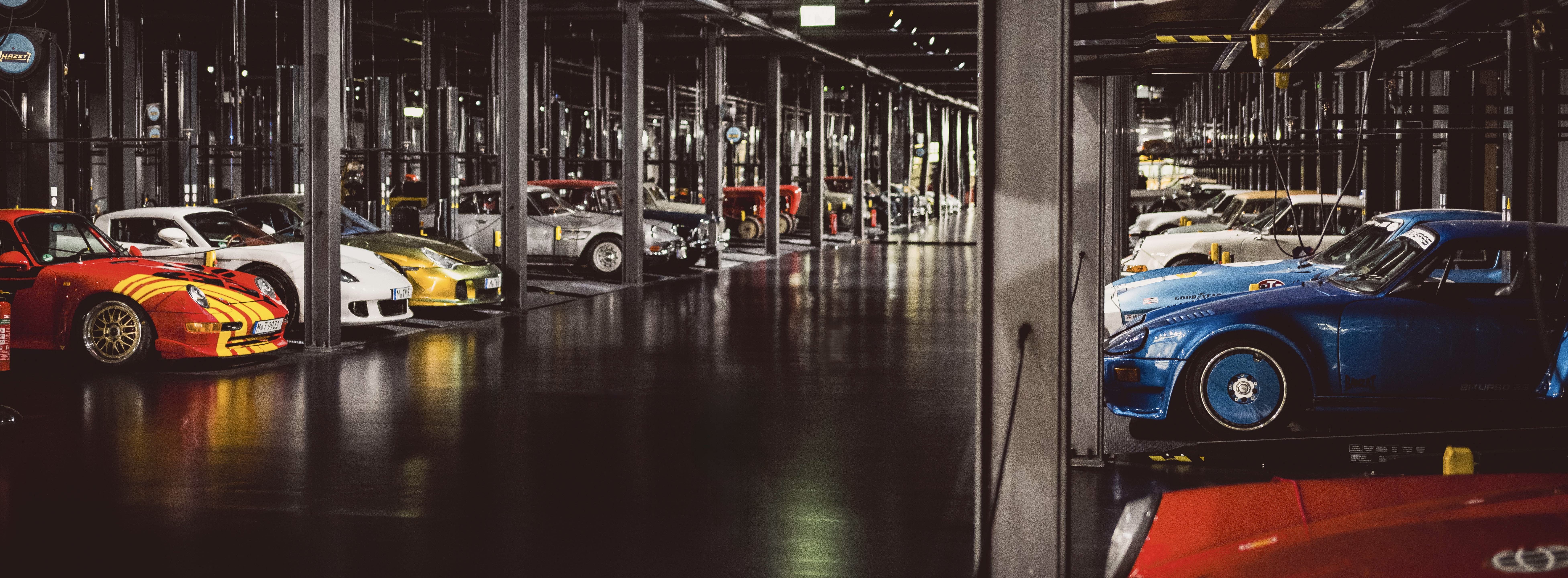
He didn’t just want to build a garage or hall. As an architect, he pictured a theater: no windows, deliberate use of lighting, with the cars as the stars of the show. A mirrored wall at the end of the building extends the view and removes the visible end point from the room. Once you close the door behind you in the Banzai Legacy Lab at Lake Starnberg in Bavaria, you immediately feel a different kind of speed.
Thomas Schlereth moves through the collection of sports cars and race cars on a Banzai skateboard. The Banzai brand was originally set up in California, where aluminum skateboards were first created in 1976, with surfers then taking their moves from the water to the asphalt.

Racing legend:
Thomas Schlereth’s 962 C was used by the Schuppan Takefuji team in the 24 Hours of Le Mans race in 1989.Banzai ceased operations in the late 1970s. In 2020, Schlereth revived the iconic brand – he had been dreaming of its top-quality boards since he was a teenager. Skateboards, surfboards, and cars also follow the same pattern: Take off and find your own rhythm.
The 64-year-old entrepreneur keeps his prized possessions safely stored away in the Banzai Legacy Lab. “Other collectors who share a passion for automotive cultural treasures can also keep their cars here,” says Schlereth. The lab is based in the picturesque Fünfseenland area (Land of Five Lakes), with alpine passes and country roads right on its doorstep. Events can also be held there. The “Ten seats, one light” dining concept is run by invitation only, with 10 people dining around a single table. In a fast-paced world, the aim is to create time for conversations that are not interrupted by endless distractions. The cars provide the occasion. As an architect, Schlereth thinks in terms of spaces, and as a lover of sports cars, he thinks in terms of stories. “Completeness is not something that really interests me,” he says. “What I am drawn to, however, are cars with a sense of history and signs of use and stories that have not often been told before.” When he no longer drives a car, he prefers to sell it rather than turn it into a collection piece.
His Speedyellow 911 GT2 (993) shows the unpredictable nature of this kind of relationship. According to the collection records, it is one of the first of its kind to be built, featuring a 3.6-liter twin-turbo engine and weighing in at around 1,100 kilograms. The first owner was the racing driver Jochen Rohr. Schlereth only saw the car in photos from an online auction before purchasing it in 2023. He was in Ibiza at the time, his family having already gone ahead to dinner. One more bid, and the 911 was his. He subsequently reached out to Rohr. A friendship then blossomed out of the research. Now the two of them attend the Porsche Rennsport Reunion in the USA with the GT2.
He bought the 962 C with chassis number 962-143 in England back in 2015. Its three-liter, six-cylinder flat engine with twin turbochargers produces a power of around 779 PS, while it weighs around 900 kilograms. In 1989, it took part in Le Mans for the customer team Schuppan Takefuji. Jean Alesi, Will Hoy, and Dominic Dobson shared driving duties for the race car with starting number 33. After 69 laps, it had to retire from the race.


Thomas Schlereth:
For the 64-year-old entrepreneur, his vehicles are prized possessions with high cultural value. In the Banzai Legacy Lab, he brings together sports cars, skateboards, art, and people, combining the past with the present.“I often drive it at track days and hope to meet people who were part of its original story in racing.” One such person is Dominic Dobson, with whom he returned to Le Mans in 2023 and made a video about the 1989 race. This is how racing history turns into a personal memory for Schlereth.
The man from Upper Bavaria has had an international racing license since 2022. “In hindsight, I should have started earlier and raced more often,” he acknowledges. “Driving at high speed, perception narrows until all that remains is the corner, the braking point, and the steering wheel. This is my Zen: freedom through concentration.”
The car Schlereth spent the longest time looking out for was the 911 Carrera RSR 3.0 from 1974. More than 10 years. “Iconic, brawny, but also really agile,” he says. “I don’t think any pure race car since then has embodied all these qualities in the same way.” When six seized cars came up for auction near Le Mans after their previous owner, a businessman, was unable to keep paying his payroll taxes, Schlereth took the opportunity. “An appraiser found a huge amount of original items there,” he explains. “The RSR was sent to Julio Gargallo, who raced it in several rallies in 1974.” He later traveled to Madrid to meet Gargallo’s widow. For Schlereth, this episode is also part of the RSR’s story.

Historic:
The 911 Carrera RSR 3.0 from 1974 (above) shows its past through visible signs of use. The 928 (below) was transformed into a moving map of the USA by Paula Scher.
The 928 offers a different perspective on the story, transformed into an art car by American artist Paula Scher. “What fascinates me about the model are its expansive forms and progressive design,” says Schlereth. The originally black car was sanded down. Scher added blocks of color and, over the course of around 18 months, drew a map of the United States across the body. Her father was a cartographer, and maps are a recurring theme in her work. The presentation, initially intended for one year at the Pinakothek der Moderne art museum in Munich, was extended several times. A vehicle does not simply preserve its history here. It takes on a new story.

Signs of history:
At the Banzai Legacy Lab, lounge areas, books, and skateboards (above) set the stage for an extensive selection of sports cars and race cars.
The father of three finds peace through yoga, periods of fasting, and singletrack mountain biking. He feels a strong connection to Buddhism, as well as to the Taoist principle of Wu Wei, referring to action through nonaction. “This principle was also an inspiration to me when designing the Legacy Lab,” he explains. “It can be a stage, a garage, a dinner venue, and a retreat all at once.” People come for a sports car, a skateboard, or a dinner, but they may stay for a conversation.
“At the end of the day, I want to look back on my life and be able to say that I created something that lasts,” Schlereth says. The Banzai Collection is not simply a record of everything he owns. It is his way of moving through the world. The vehicles may come from the past, but they are not meant to stay there. They take to the road, bring people back, and keep stories alive.