Secondary Aid
Porsche has been supporting the Art Helps organization’s work with kids and teens in Ukraine since 2022. The initiative’s art therapy programs provide spaces where traumatized people can learn to talk about their experiences, build trust, and gradually resume daily life.
Recovery through art:
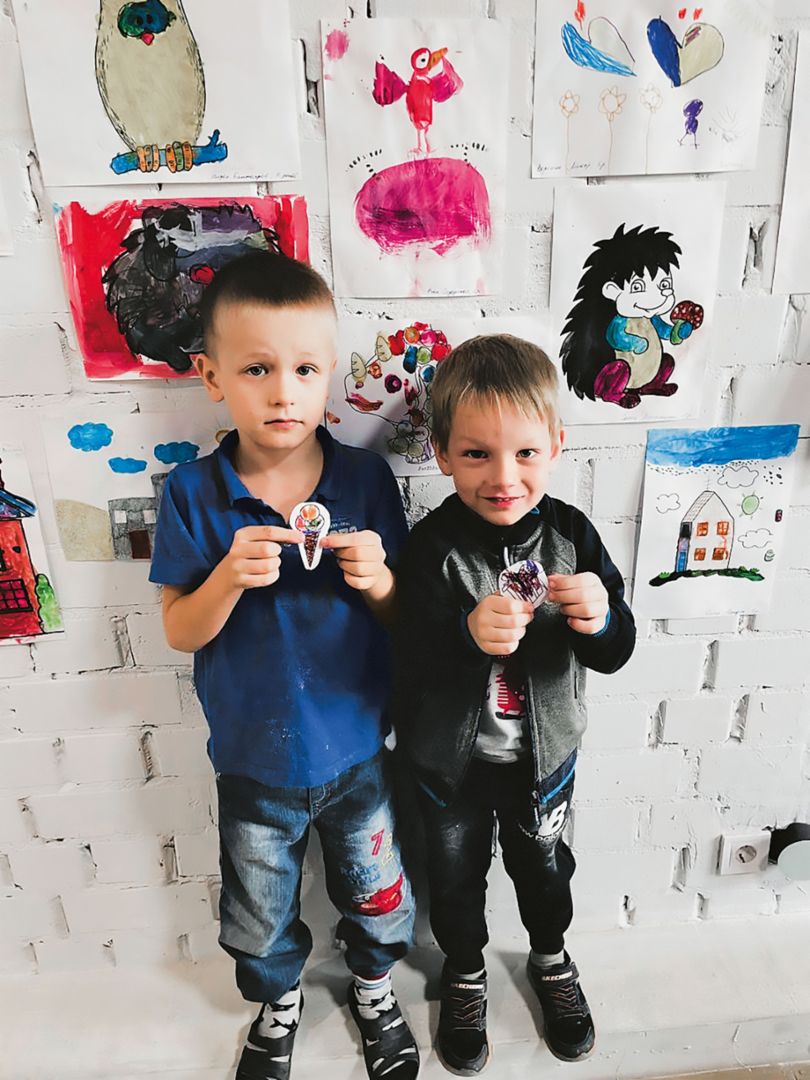
Under the guidance of therapists, the children process their traumas. The key: creativity.Art Helps promotes the simple but profound concept that art can provide stability when the world is plunged into turmoil. Tom and Yasemin Lupo, who founded the nonprofit organization, have experienced for themselves the effect that creative expression can have and how it can change lives. The purpose of their initiative is to provide kids and teens in areas of conflict with hope and future prospects. Because Art Helps had been active in Ukraine since 2017, the organization already had the structures in place for providing immediate assistance when the conflict with Russia escalated five years later. But the dimensions of the operations changed abruptly, with creative development work giving way to acute crisis intervention.
Children who had been experimenting and playing through the assistance program were suddenly drawing houses on fire and figures without faces, and some stopped speaking almost entirely. The conflict soon took an emotional toll, leaving many of them traumatized. Art Helps uses art and creativity to offer children a way out of psychological distress and provide them with the opportunity to learn to process their experiences, express their feelings, and ultimately overcome their trauma.
Long-term partnership
Porsche has been an important partner in this work since 2022. In 2025, the initiative received a Partnership for Sustainability Award from the UN Global Compact Network Ukraine. It encompasses the financing of individual measures as well as the structural expansion of projects. The company is thus enabling workshops to be furnished and equipped, and materials to be acquired. “We view our involvement as an aspect of long-term corporate responsibility,” explains Verónica Sapena-Mas, Director of Funding Projects at Porsche AG. “Especially in the phase when public attention fades, but demand is still on the rise. Perseverance, patience, and partners who remain committed are vital.” To date, with the help of Porsche, more than 1,100 therapeutic group sessions have been held, and around 1,200 individual therapy sessions have been provided for over 1,000 children, teens, and women.
Creativity as a key moment
For Tom Lupo, the story of Art Helps began with his grandfather, Grandpa Franz, who lived to be 100. He lost a leg in the Second World War, but that never stopped him from climbing mountains on crutches and pushing himself to his limits. He grew up in an orphanage, worked at an art studio as a young man, and later specialized in hospitality. “He had always had a heart for art. After the war, he began painting again, set up a small studio, and yearned for beauty, which had eluded him during his years at war,” explains Tom Lupo. “In this way, he opened the doors to a new world for me – and was responsible for the key moment in which I discovered my ability for creativity.”
A safe haven for children:
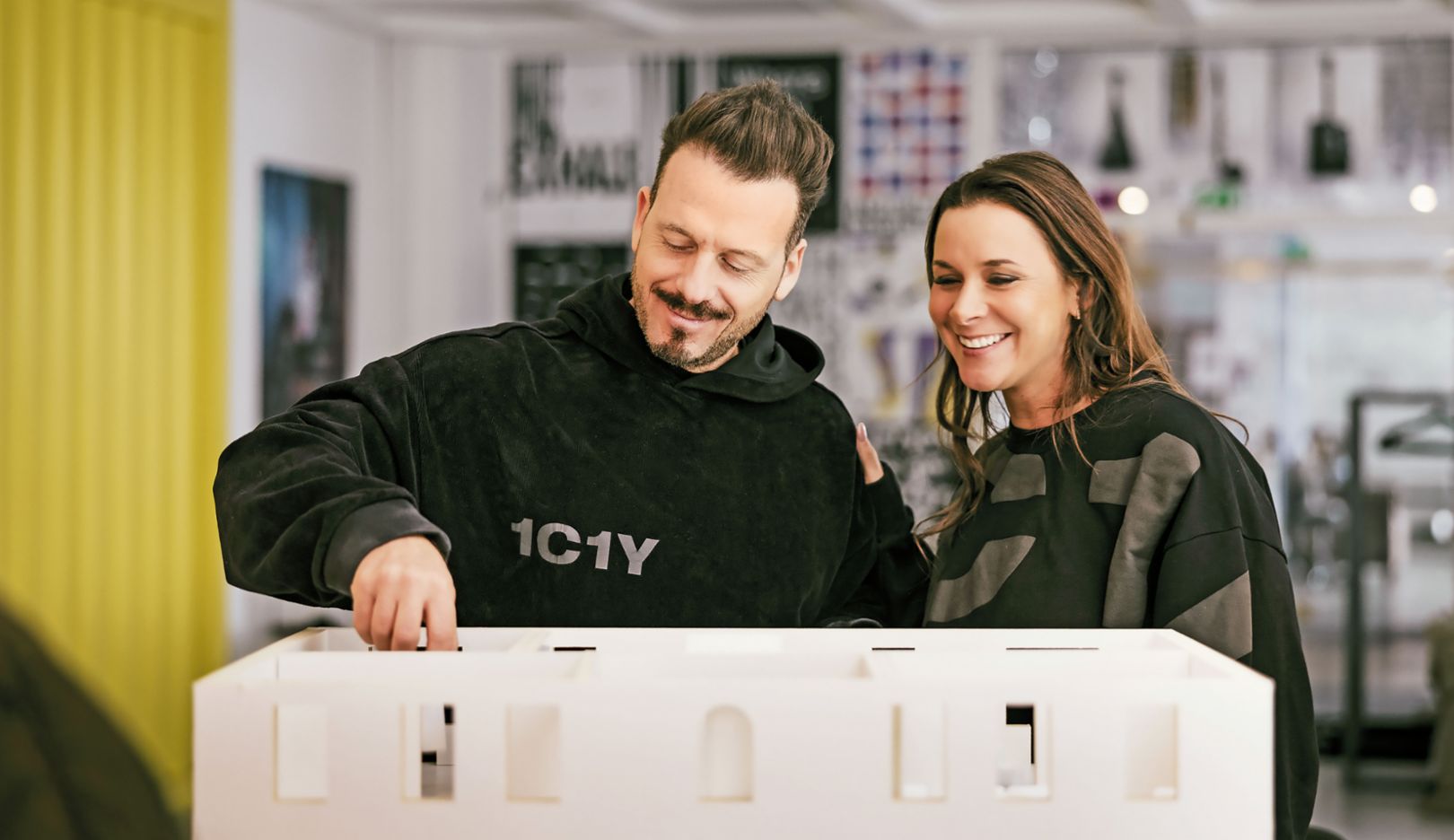
With the help of an architectural model, Yasemin and Tom Lupo show the 1,200-square-meter Creative Hub in Kiev.He was also inspired early on by Yasemin, who is his wife today. They went to school together, started dating, got married, and had a girl and a boy. During that time, she began training to be a nurse and acquired her Abitur qualification (high school diploma). She then went on to study to become a teacher, develop workshop concepts and coaching modules, and assist companies with team and structure development. Tom studied graphic design, advanced in the world of advertising, and was appointed design director at one of the most prestigious agencies in the country. International awards, recognition, and success soon followed. “But I came to realize that none of it really mattered to me,” he explains. Another key moment was the Lupos’ 2008 honeymoon to Brazil, where it became vividly clear that, while separated geographically by a mere few miles, Copacabana and the favelas were worlds apart.
Back in Germany, they began to wonder if it would be possible to create something that goes beyond the moment and possibly even changes lives. Tom Lupo, in particular, was consumed by the idea of helping others with creativity and expanding his horizons. It was ultimately Yasemin who gave him the push he needed. When he began talking about a brief experiment – spending a few weeks in a favela in Rio de Janeiro – she didn’t think that would be long enough.
“If you want to be able to move around freely and safely as a stranger in this social environment, you need time to settle in. You can’t gain an understanding in passing,” says the now 44-year-old Tom Lupo. At that time, they didn’t have any kids and had long been motivated to support people in difficult circumstances.
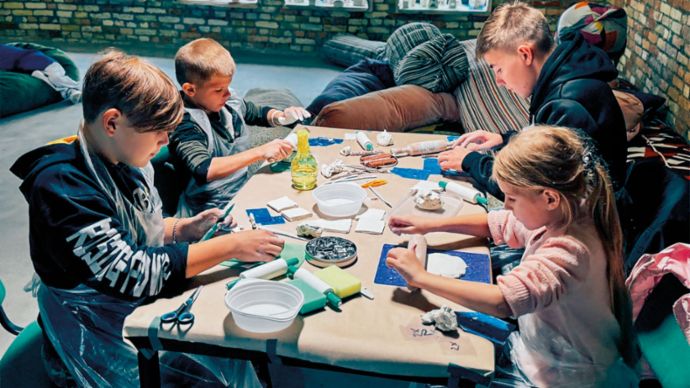
Space for childhood:
In the creative centers of Art Helps, kids and teens can paint, do arts and crafts, feel their emotions, and unlock their potential (above). Paper flowers made by the children shine in front of a badly damaged block of flats in Ukraine (below).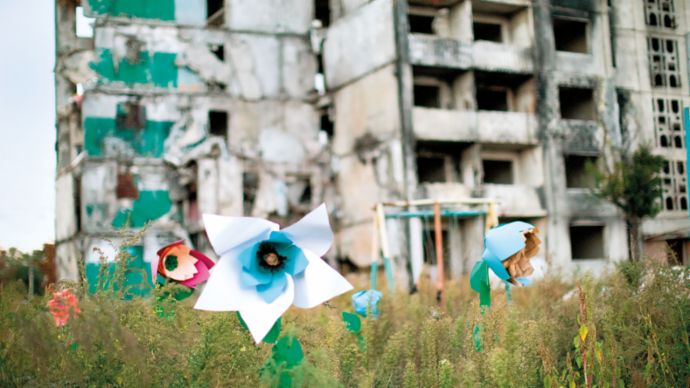
From favela to Anleitung zum Ausbrechen
Under the pretense of looking for a job as a building superintendent, Lupo moved to the Morro do Papagaio favela. Beforehand, he took a crash course in Portuguese. He helped repair things and learned a lot – and more than anything else, he just listened. He and the local children began conducting experiments – for example, turning simple materials into pinhole cameras, which allowed them to photograph their world. “They thought it was magic,” he recalls. For the first time, they got to hold pictures of their everyday lives in their hands. The experience of living and working there formed the basis of his book Eine Anleitung zum Ausbrechen (Instructions for breaking out), which has won multiple awards. But what really counts is not the success. “I was hoping to raise awareness of a place that people would rather just ignore.”
Due to the book’s success, the Lupos felt validated in their mission to help and, in 2012, founded the Art Helps organization, initially part-time with individual projects, supported by personal networks, and with university collaborations and volunteers. People like artists, therapists, designers, tradespeople, and musicians who were willing to contribute their time, knowledge, and skills and share their contacts. The organization grew slowly without any big campaigns. There are now 15 permanent employees working there and hundreds of volunteers. “Everyone contributes what they can,” says Yasemin Lupo. She and her husband often travel to Ukraine – but for safety reasons, never at the same time.
Even before 2022, there were violent conflicts in the border region between Russia and Ukraine. Art Helps was already contacted by a local aid organization in 2017. “Families in the border region were already very poor then, with many adults addicted to alcohol and children lacking prospects of any kind,” explains Yasemin Lupo. Art Helps has been operating in outlying urban areas, at schools, and at improvised workshops ever since. The intensification of the conflict in 2022 made the work already underway there all the more important. And the number of kids and teens who rely on the assistance is only growing. “A lot of people donate to first aid,” says Yasemin Lupo. “Secondary aid often falls by the wayside. But the suffering doesn’t end with the arrival of food, clothing, and medication.” That’s where Art Helps comes in. In addition to processing, expression, and the gradual return to a sense of personal safety, it’s also about the perception of feelings, which is why girls and boys work with fabrics and paints. With the help of art and trauma therapists, they build lantern houses, sew cushions, and create soft objects that symbolize protection and safety. It’s their very own ideas that allow them to gain access to themselves again. One boy who had painted nothing but tanks for two years began painting other things after nine months of therapy. “These children are traumatized and, with us, start out painting what they have seen,” explains Yasemin Lupo. “Over time, art therapy allows them to replace these horrible images with something beautiful.”
A moment that changes lives
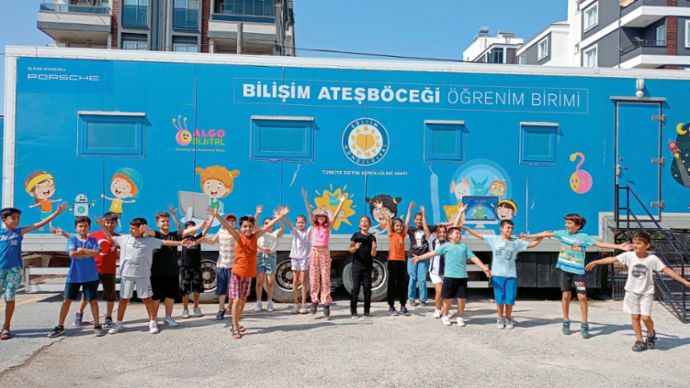
Measuring around 1,200-square-meters in size, the Creative Hub has provided a permanent space for this secondary aid in Kiev, including art therapy workshops, group programs, community events, and professional training. With very few safe havens for children at emergency shelters and in destroyed cities, the initiative’s core concept is to create a space for children to be children. The stationary support center is accompanied by the Pop Hub, a mobile creativity center that brings art and therapy programs to the surrounding regions in which there are no safe support centers. This combination of permanent center and mobile unit allows the teams to support remote areas.
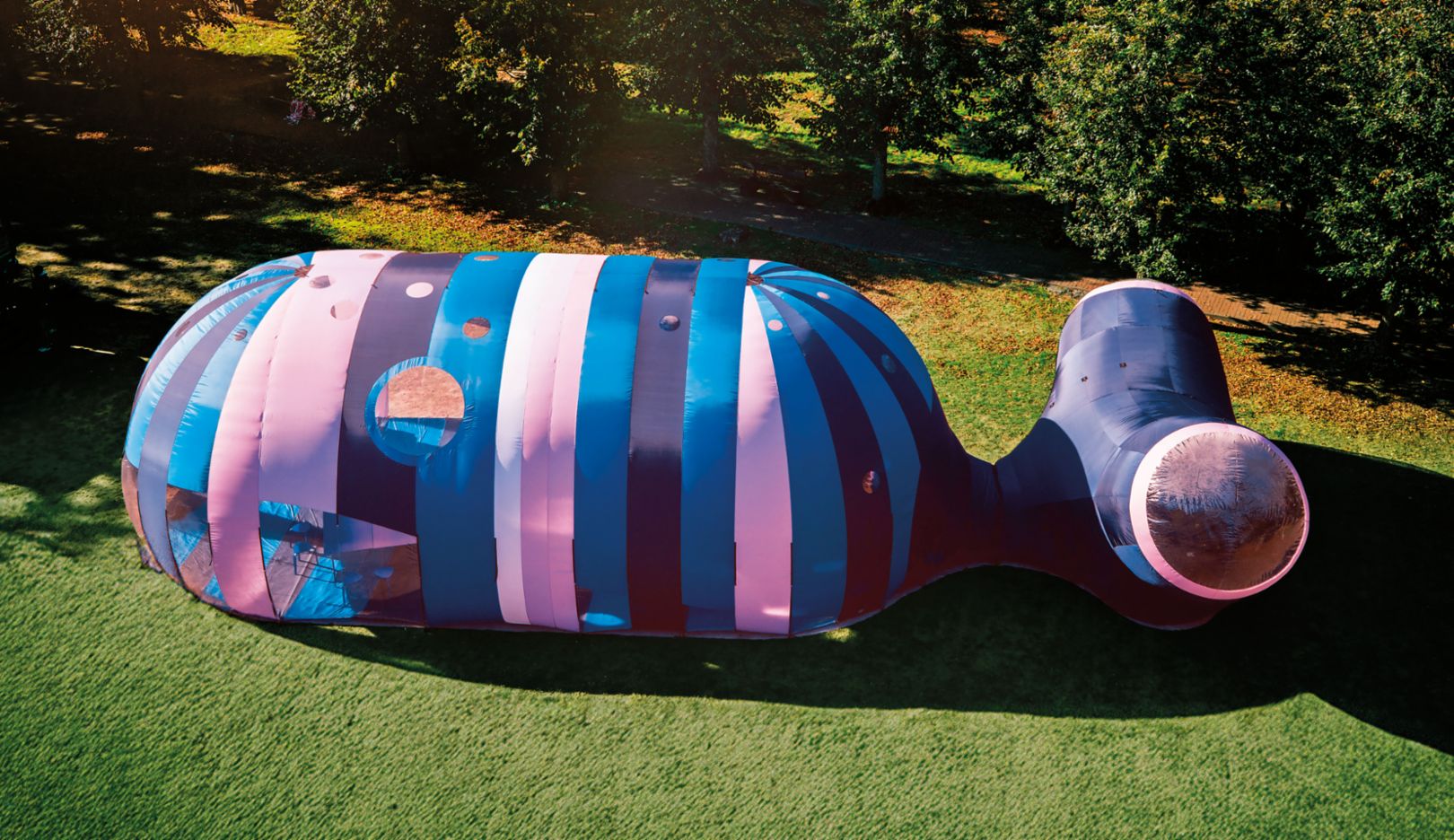
Time to be creative:
In the Pop Hub in the shape of a whale, the kids and teens can be children again and escape from everyday life in a crisis region.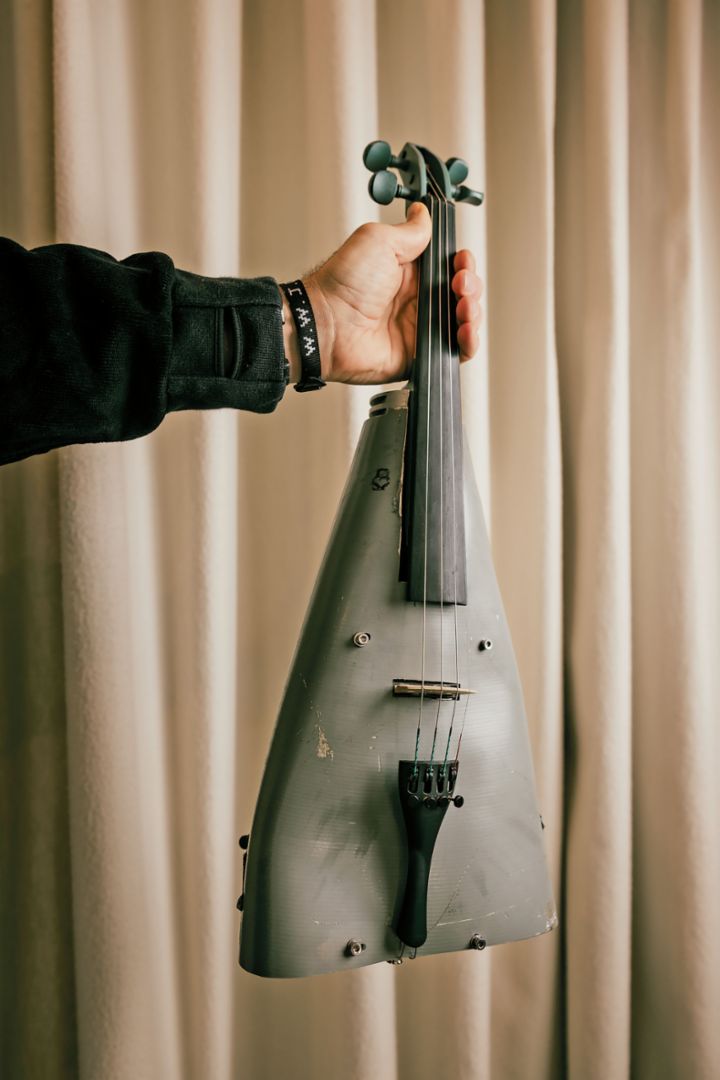
From destruction to sound:
These violins are made from rocket debris at the Creative Hub in Kiev.“Sometimes we only have a couple days to enable a key moment that could change a life,” says Tom Lupo. He cites the example of little Artem, who only participated in the Resistruments project by chance: This involves transforming war material into musical instruments. Sound boxes and violins are created from rocket debris. Artem plays the violin – and thanks to his skill became one of the key players in a piece of music. The video went viral and the project won several prizes. As a result, a German violin maker presented the boy with a new instrument. And another door has been opened: A Viennese lecturer is considering supporting Artem and helping him fulfill his dream of studying film music composition.
One of the primary responsibilities of the two hubs is to continuously train and support local Ukrainian art therapists, enabling them to operate on their own over the long term. In this way, Art Helps can not only create a functioning infrastructure, but also establish a sustainable system of secondary aid that enables concrete emotional stabilization on a daily basis. “Our goal is to ensure that one day we’re no longer necessary,” says Tom Lupo.
What once began with a grandfather who opened the door to the world of creativity for his grandson has extended to the bunkers of a war-ravaged country. Grandpa Franz could never have anticipated that his paints would one day become an echo heard far, far away. Art Helps carries this momentum forward and shows that sometimes a single room is enough to make a big difference.